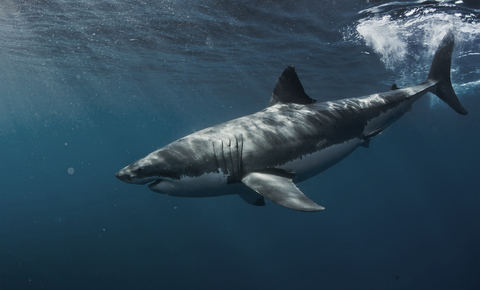
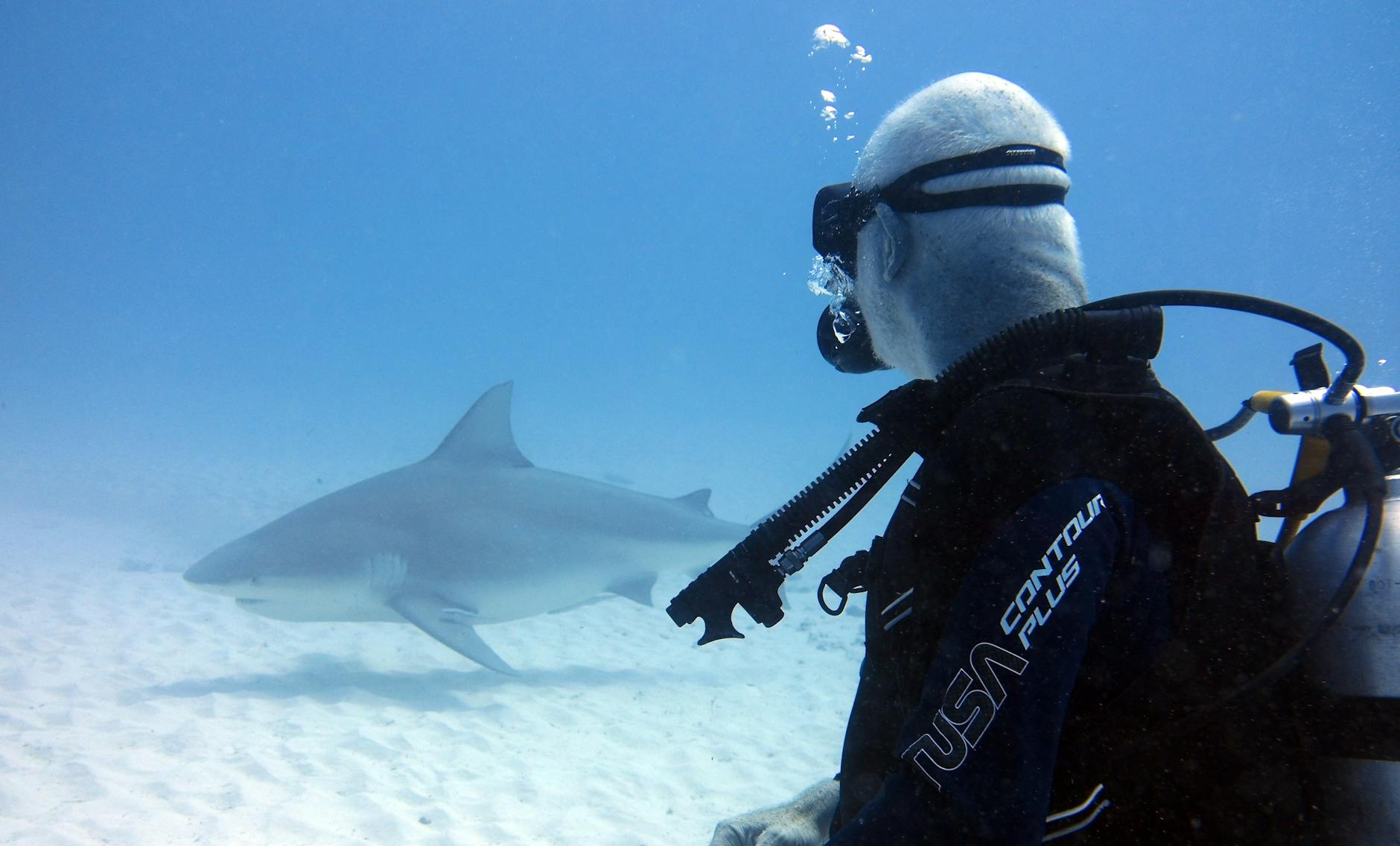
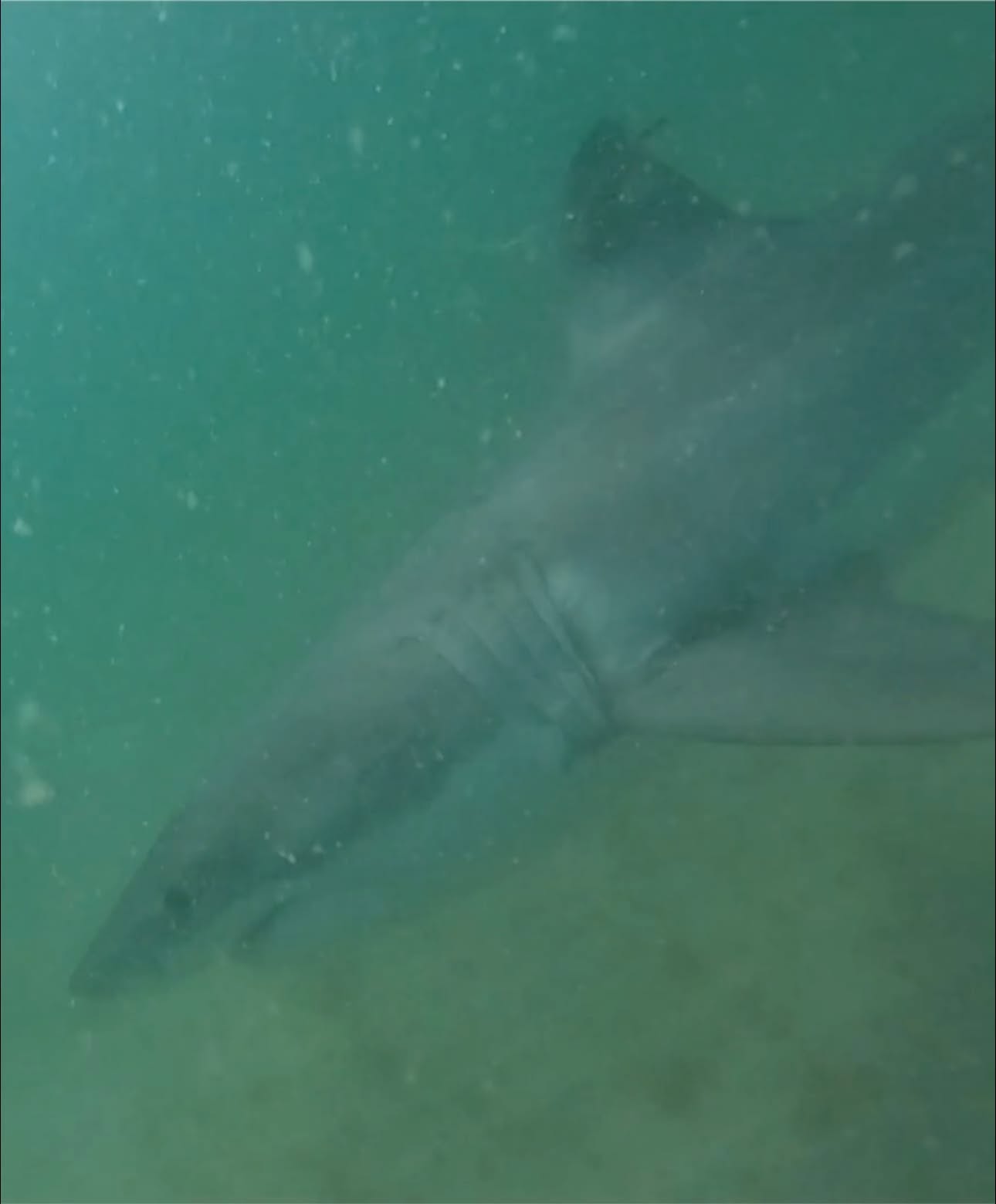
Great white sharks do appear in the Gulf of Mexico—but they are still far less common than several other large shark species that can look similar at a glance.
In many cases, what people believe is a great white is actually something else entirely.
Out on the water, especially in low visibility or from a distance, it’s easy to misjudge size, shape, and even behavior. Lighting can change how a shark looks, and a quick glimpse is often all someone gets. Even experienced anglers and divers can mistake one species for another—especially when dealing with large sharks.
One of the most likely candidates people confuse with great whites offshore is the shortfin mako.

Makos are close kin to great white sharks and share a very similar overall body design. They have that same torpedo-shaped build, pointed snout, and powerful swimming style. In the Gulf, they’re not as commonly discussed as other species, but they do show up—and when they do, they can easily be mistaken for a smaller great white.
Makos are typically more slender, with a longer, more pointed snout and a faster, more agile appearance in the water. While they are generally offshore sharks, there have been instances of makos appearing closer to shore, including along beaches in Florida and even around Padre Island in Texas at times. If someone sees a fast-moving, streamlined shark offshore, there’s a strong chance it could be a mako.
Another very common source of confusion is the tiger shark.
Tiger sharks are widespread in the Gulf and grow to impressive sizes. They have a heavy build that can resemble a great white from a distance, especially when seen just below the surface. Younger tiger sharks have visible striping, but in larger individuals those markings can fade, making them appear more uniform in color.

Their snout is more blunt and squared off compared to a great white, and their overall head shape is different, but in quick sightings those details can be easy to miss. A lot of “large shark” encounters in Gulf waters end up being tiger sharks.
Bull sharks are another species that frequently get mistaken for great whites, especially closer to shore.

They are extremely common in the Gulf and are well known for their ability to tolerate low salinity, which brings them into bays, passes, and nearshore waters. Bulls have a thick, stocky build and a blunt snout, giving them a powerful appearance. While they typically don’t reach the same maximum size as great whites, a large bull shark can still look very imposing and lead to misidentification—especially in murky water.
There is also a more obscure possibility: the porbeagle shark.
Porbeagles are closely related to great whites and share a very similar look, but they are primarily found in colder waters and are considered rare in the Gulf. While it’s not impossible for one to appear, it would be an uncommon event. Still, from a visual standpoint, they are one of the closest matches to a great white.

So how do you know if what you saw was actually a great white?
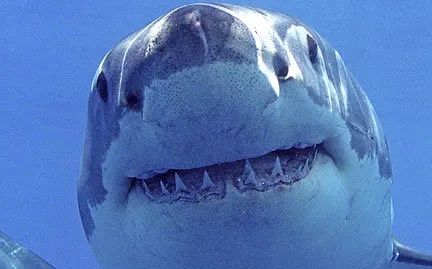
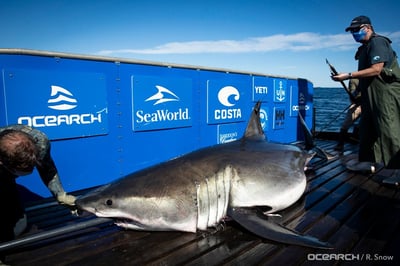
Great whites have a thick, powerful body, a more conical snout, and a distinct coloration pattern with a darker top and white underside. Their tail is strong and symmetrical, and their overall presence tends to look heavier and more deliberate in the water compared to faster, sleeker species like makos.

The reality is that great white sharks are part of the Gulf ecosystem, and sightings—both historical and recent—continue to support that. But many reports likely involve other large species that are far more common in these waters.
Understanding the differences helps separate real patterns from simple misidentification—and gives a clearer picture of what’s actually happening in the Gulf.
If you want to explore documented encounters and reported sightings across the region, you can view the full and newly renovated database here:
https://gulfgreatwhites.com/gulf-great-white-shark-sightings-database/
Chester Moore
Follow Chester Moore and Higher Calling Wildlife® on the following social media platforms
@gulfgreatwhitesharksociety on Instagram
@thechestermoore on Instagram
Higher Calling Wildlife on Facebook
Email Chester at chester@chestermoore.com.
Subscribe to the Dark Outdoors podcast on all major podcasting platforms.


Leave a Reply