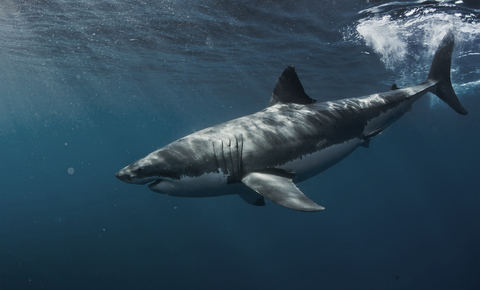
In recent months, reports of great white sharks caught or encountered along Florida beaches have raised a lot of questions.
For years, the idea of great white sharks in the Gulf of Mexico was debated, often dismissed, or simply misunderstood. Today, that conversation has changed. We now know these sharks are not only present—but part of a larger pattern tied to migration, feeding, and shifting ocean conditions.
What’s happening along Florida’s Gulf Coast, particularly from Pensacola through Destin to Panama City, is part of that pattern.
And it’s not random.
A Shift in Understanding
For decades, great white sharks were considered rare visitors to the Gulf. That perception was based on limited data, fewer documented encounters, and a lack of tracking technology.
That has changed in a big way.
Research from OCEARCH has helped confirm that great white sharks from the western North Atlantic population move farther south than once believed, with a high percentage entering the Gulf during cooler months.
I broke this down in detail here →
https://gulfgreatwhites.com/2026/03/18/gulf-great-white-sharks-what-ocearch-discovered-part-1/
That research shows these movements are not accidental. They are part of a broader migration pattern tied to seasonal changes, water temperature, and feeding opportunities.
There is also growing evidence that great whites may have historically entered the Gulf more often than previously recognized, but were underreported or misidentified.
Why Florida’s Gulf Coast?
The Florida Gulf Coast, particularly the Panhandle region from Pensacola through Destin to Panama City, sits at a convergence of currents, temperature zones, and prey movement.
One of the key factors is how relatively close offshore conditions are to the coast compared to much of the northern Gulf. While the Gulf is generally known for its broad continental shelf, this region allows access to deeper water and productive zones without the extreme distances seen farther west.
That matters for large sharks like great whites.
These sharks don’t have to move as far to enter areas that bring them closer to shore, especially around passes, drop-offs, and zones where currents concentrate bait.
During cooler months, these conditions can align in ways that make the area attractive to large predators moving south.
Baitfish concentrations, migratory species, and bottom structure all contribute to this. When those elements come together, it can create short-term feeding opportunities that draw in great white sharks.
This doesn’t mean great white sharks are common along beaches but it does help explain why encounters along Florida’s Gulf Coast are being reported more often than in the past.
A Bigger Picture in the Gulf
The growing number of reports and encounters is not happening in isolation.
It aligns with increasing great white shark populations in parts of the Atlantic, combined with better tracking, more awareness, and improved reporting.
As discussed in the OCEARCH research, the Gulf appears to function as part of a broader seasonal range for some of these sharks.
Changing ocean temperatures may also be playing a role, potentially expanding where great whites travel and appear.
All of this points to a simple conclusion:
The Gulf is part of their range.
Context Matters
Any time large sharks are mentioned near beaches, concern follows.
But context is important.
There have been no documented great white shark attacks in the Gulf of Mexico. Most great white sharks spend the majority of their time offshore, even when they move through coastal areas.
Encounters do happen, but they remain rare relative to the size of the Gulf and the number of people in the water.
Understanding what these sharks are doing and why they are here helps replace speculation with perspective.
Following the Activity
As more data becomes available and more encounters are documented, our understanding of great white sharks in the Gulf will continue to evolve.
What was once considered rare is now being recognized as part of a broader pattern and we will cover it here.
To follow documented encounters from the past to present→
https://gulfgreatwhites.com/gulf-great-white-shark-sightings-database/
Chester Moore
Follow Chester Moore and Higher Calling Wildlife® on the following social media platforms
@gulfgreatwhitesharksociety on Instagram
@thechestermoore on Instagram
Higher Calling Wildlife on Facebook
Email Chester at chester@chestermoore.com.
Subscribe to the Dark Outdoors podcast on all major podcasting platforms.




Leave a Reply