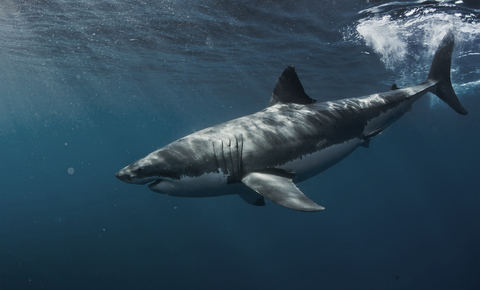
Great white sharks are showing up along the Florida Panhandle—and not just once in a while. From Destin to Panama City to Pensacola, encounters over the past several years have made it clear that these sharks are part of what’s happening in the Gulf of Mexico, not outside of it.
For a long time, the idea was that great whites were rare here. But between what’s being documented in the field and what science is now showing, that view is changing fast.

What we’re seeing now is a clearer picture of how these sharks are using Gulf waters—and the Florida Panhandle is right in the middle of it.
Recent Activity Along the Florida Panhandle
Over the last several years, I’ve tracked a steady increase in great white shark encounters along this stretch of coastline.
A 12-foot fish caught and released off Pensacola Beach in 2019 helped bring attention to it. In 2021, another large shark was landed from shore in that same region—something that would have been almost unheard of not long ago.
Since then, things have continued to build.
In 2025, a charter fisherman filmed a roughly 14-foot great white about nine miles off Destin. In early 2026, multiple large sharks—some over 13 and 14 feet—were caught and released near Navarre Beach and Pensacola.
These are not isolated incidents.
They are part of a broader pattern of great white shark activity we’re seeing across the Gulf of Mexico →
👉 https://gulfgreatwhites.com/great-white-sharks-in-the-gulf-of-mexico-complete-guide/
What They’re Doing Here
One of the biggest questions I get is simple:
Why are they here?
The short answer is that they’re doing what great white sharks do—moving, feeding, and using available habitat.
In 2024, multiple great white sharks were documented feeding on a floating whale carcass off Sarasota. That kind of event shows just how opportunistic they can be when a major food source becomes available.
But along the Panhandle, the story gets even more interesting.
Charter Captain Zachary Burnette of Drop Zone Fishing Charters and his clients have caught and released several large great whites near Navarre Beach in early 2026.

I’ve seen enough reports now to say this with confidence—these sharks are not wandering in by accident.
They are responding to food, conditions, and opportunity.
This matches what we’re seeing in other documented encounters across the Gulf →
👉 https://gulfgreatwhites.com/2026/03/02/great-whites-caught-on-florida-beaches-what-are-they-eating/
What the Science Is Showing
At the same time these encounters are increasing, the science is starting to line up with what fishermen and observers have been seeing.
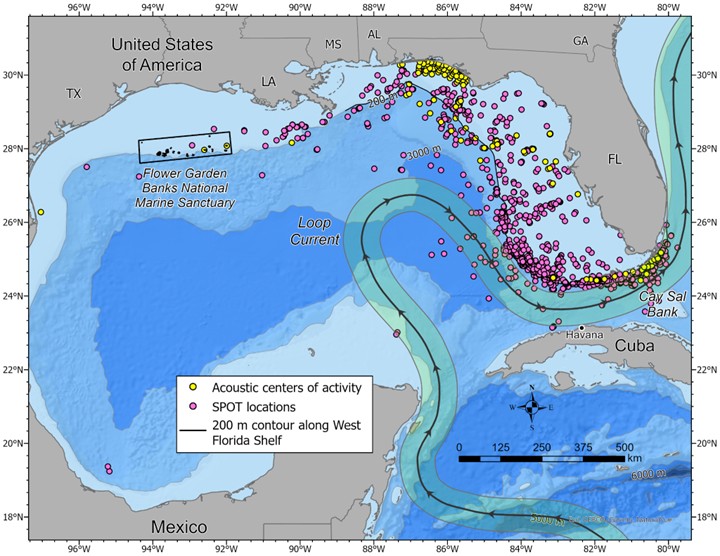
Some of this is now being backed up by large-scale tracking work. An OCEARCH-led study on great white shark movement showed the Gulf of Mexico being used as an overwintering area by western North Atlantic sharks, particularly from December through May.

What’s important is not just that sharks are entering the Gulf—but that they’re doing it repeatedly and in patterns that line up with what we’re seeing in real-world encounters.
Tracking data from dozens of sharks shows repeated movement into the Gulf, with some individuals returning across multiple seasons.
There are even cases where sharks show site fidelity—coming back to the same general areas year after year, including parts of the northeastern Gulf.
That kind of data changes the conversation. It supports the idea that the Gulf isn’t just a place great whites occasionally visit—it’s part of their range.
You can read more about that research here →
👉 https://gulfgreatwhites.com/2026/03/18/gulf-great-white-sharks-what-ocearch-discovered-part-1/
Why This Area Matters
The Florida Panhandle sits in a position that makes it particularly important.
You’ve got deep water access not far offshore, migration pathways connecting to the Atlantic, strong seasonal prey availability, and productive reef and shelf systems.
All of that lines up with what great white sharks need.
It also lines up with where we’re seeing them.
Interest in great white sharks is especially high along this stretch—from Destin to Panama City to Pensacola—and based on what’s being documented, that’s not by chance.
This Isn’t New—We’re Just Seeing It More Clearly
Great white sharks have been documented in the Gulf for decades.
There are records going back to the mid-1900s, including captures off Florida and sightings tied to offshore fisheries. In more recent years, that has expanded into video footage, angler encounters, and confirmed catches across multiple states.
From Panama City videos in 2015 to Pensacola shore-based catches and a growing number of recent encounters, the pattern is becoming harder to ignore.
These records are part of a growing body of documented Gulf activity →
👉https://gulfgreatwhites.com/gulf-great-white-shark-sightings-database/
What’s changed is not necessarily the sharks.
It’s our ability to document them.
Why We’re Seeing More of Them Now
There’s no single explanation.
Instead, it’s a combination of factors working together:
Recovering Atlantic great white shark populations, advances in satellite and acoustic tracking, more time spent offshore by anglers and divers, and better reporting and documentation.
Increasing detections in recent years suggest that great white shark presence in the Gulf may be more common than historically recognized.
In other words, they’ve likely been here longer than most people realized.
Are They Dangerous?
While shark encounters do occur, there have been no documented great white shark attacks in the Gulf of Mexico.
Most of these sharks remain offshore and are focused on natural prey and most of their activities in the Gulf are in winter and early spring.
They are large, powerful predators and the potential for attacks is there but even in Cape Cod where they are common on busy beaches, attacks are extremely rare.
The Bottom Line
Great white sharks are present along the Florida Panhandle.
What we’re seeing now is a combination of better science, better documentation, and more time spent on the water.
The more this is tracked and recorded, the clearer it becomes that the Gulf—especially areas like Destin, Panama City, and Pensacola—is part of their world.
And we’re just starting to understand how they use it.
Track Great White Sharks in the Gulf — FREE
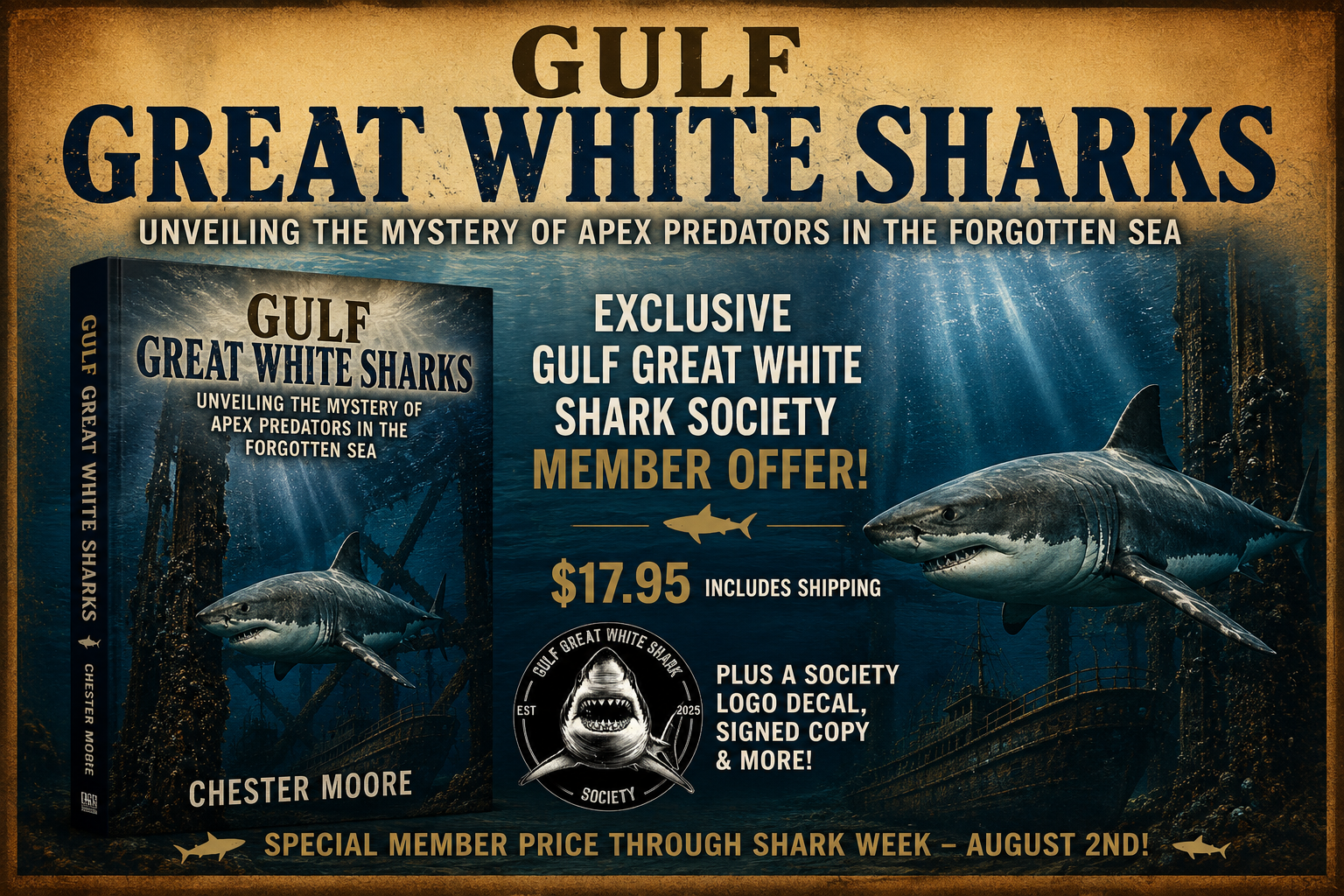
Be the first to see real sightings, reports, and the latest news across the Gulf of Mexico by subscribing and becoming a member of the Gulf Great White Shark Society for FREE. You will get all blog posts, plus a private email for members-only every month and more.
Chester Moore
Follow Chester Moore and Higher Calling Wildlife® on the following social media platforms
@gulfgreatwhitesharksociety on Instagram
@thechestermoore on Instagram
Higher Calling Wildlife on Facebook
Email Chester at chester@chestermoore.com.
Subscribe to the Dark Outdoors podcast on all major podcasting platforms.




Leave a Reply