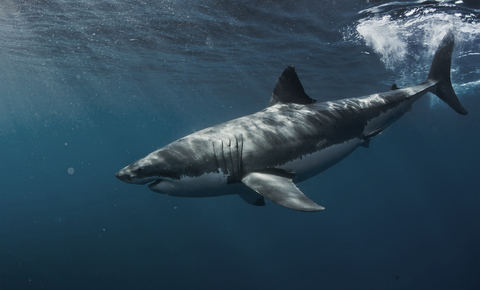
Large Sharks of the Gulf of Mexico (10 Feet and Larger)
The Gulf of Mexico is home to some of the largest sharks in the world, including species that exceed 10 feet in length and move through these waters more often than many people realize.
From great white sharks to tiger sharks and deepwater species rarely seen, the Gulf supports a wide range of large sharks tied to both coastal and offshore environments.
These are the upper-tier predators of the Gulf—animals built for long-distance movement, high-energy feeding, and in many cases, seasonal migrations that connect Gulf waters to the broader Atlantic.
Some are regularly encountered in offshore environments. Others appear only under specific conditions, offering insight into just how connected the Gulf ecosystem is to larger ocean systems. We focus on sharks that regularly grow to 10 feet or more.
While great white sharks often draw the most public attention, they are part of a broader group of large sharks that use the Gulf in very different ways depending on season, prey availability, and environmental conditions.
Great White Shark
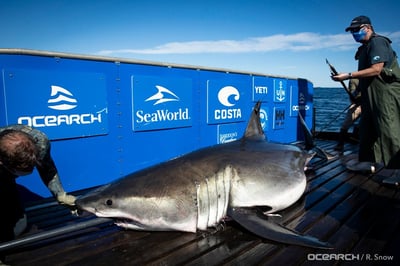
Great white sharks (Carcharodon carcharias) represent one of the most significant large shark species now being documented in the Gulf of Mexico.
Long thought to be rare in the region, multiple lines of evidence—including satellite tracking, verified encounters, and documented observations—now confirm that great whites enter the Gulf, particularly during cooler months.

These sharks are highly migratory and appear to move into the Gulf in connection with seasonal shifts in temperature and prey availability. Large fish such as tuna, rays, and other pelagic species likely play a role in attracting them.
There is also growing evidence that great whites may have historically used the Gulf more than previously recognized but were underreported or misidentified.
Learn more →
https://gulfgreatwhites.com/great-white-sharks-in-the-gulf-of-mexico-complete-guide/
Bull Shark
Bull sharks (Carcharhinus leucas) are one of the most commonly encountered large sharks in the Gulf, though individuals exceeding 10 feet represent the upper end of their size range rather than the norm.
Most adult bull sharks fall slightly below that mark, but their heavy build, power, and ability to move into very shallow water make them one of the most significant sharks in nearshore Gulf environments.

They are uniquely adapted to tolerate freshwater and are frequently found in bays, estuaries, and river systems.
Bull sharks feed on fish, rays, and other sharks and are often present in areas where prey concentrates, including passes, river mouths, and coastal structure.
Tiger Shark
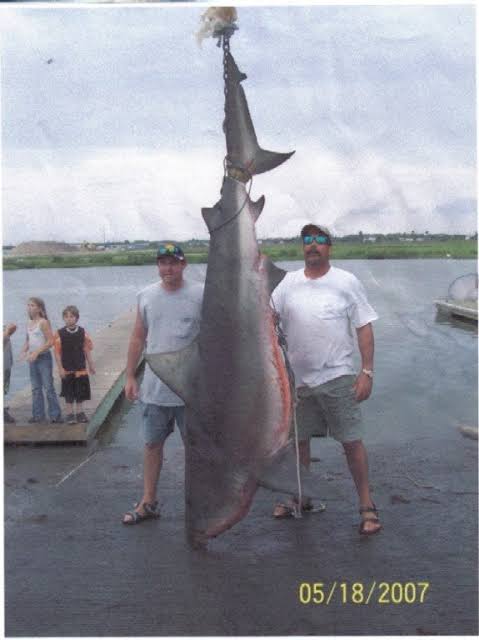
Tiger sharks (Galeocerdo cuvier) are one of the true giants of the Gulf and regularly exceed 10 feet in length.
They are wide-ranging predators found from nearshore waters to deep offshore environments and are particularly associated with warmer water periods.

Tiger sharks are opportunistic feeders with a highly varied diet that includes fish, rays, sea turtles, and carrion. Their feeding behavior makes them important in maintaining ecological balance.
In the Gulf, they are frequently encountered by offshore anglers and are known to patrol areas with abundant prey.
Great Hammerhead Shark
The great hammerhead (Sphyrna mokarran) is the largest hammerhead species and a true large shark of the Gulf, commonly exceeding 10 feet.
They are found throughout the region, often in offshore waters but also moving into shallower areas, particularly where stingrays are abundant.

Their cephalofoil enhances sensory detection, allowing them to locate prey with precision.
Great hammerheads are typically solitary and are among the most powerful predators in the Gulf.
Scalloped Hammerhead Shark
Scalloped hammerheads (Sphyrna lewini) can reach or exceed 10 feet, though many individuals are smaller.
They are more commonly associated with offshore and deeper coastal waters and are known for forming large schools, especially as juveniles.

As they mature, they tend to become more solitary.
Their presence in the Gulf reflects the region’s connection to broader migratory routes, particularly in deeper water environments.
Lemon Shark
Lemon sharks (Negaprion brevirostris) are a common coastal species in the Gulf and are typically found in shallow, nearshore waters, often around bays, estuaries, and mangrove habitats.
They are easily recognized by their yellowish-brown coloration, which provides effective camouflage over sandy bottoms. Most individuals range between 7 and 10 feet in length, though larger specimens do occur.

Lemon sharks are relatively slow-moving but powerful predators, feeding primarily on fish, crustaceans, and smaller sharks. They are known for their site fidelity, often returning to the same nursery and feeding areas year after year.
In the Gulf, lemon sharks are most frequently encountered in warm, shallow waters and are especially common in regions with structured coastal habitats that support abundant prey.
Oceanic Whitetip Shark
Oceanic whitetip sharks (Carcharhinus longimanus) are one of the classic open-ocean sharks and historically were among the most abundant large sharks in offshore Gulf waters.
They regularly exceed 10 feet and are built for life in pelagic environments far from shore.

Their numbers have declined significantly, but they are still present in deeper Gulf waters.
They are known for their bold, inquisitive behavior and are often among the first sharks to investigate activity in open water, particularly around fishing vessels.
Dusky Shark
Dusky sharks (Carcharhinus obscurus) are large coastal and offshore sharks that can exceed 10 feet and are found along the Gulf’s continental shelf.
They favor deeper water but can move into coastal areas, particularly as juveniles.

Dusky sharks grow slowly and reproduce at low rates, making them vulnerable to population decline. Their presence in the Gulf is an important indicator of ecosystem health.
Silky Shark
Silky sharks (Carcharhinus falciformis) are common in offshore Gulf waters and can reach lengths approaching or exceeding 10 feet.
They are strongly associated with pelagic environments and are often found around floating objects, offshore rigs, and areas where baitfish concentrate.

Silky sharks frequently interact with schools of tuna and are a regular presence in offshore fishing zones.
Shortfin Mako Shark
Shortfin mako sharks (Isurus oxyrinchus) are among the fastest sharks in the ocean and can exceed 10 feet in length.
They are typically found in deeper offshore waters and are known for their speed, agility, and power.

While less commonly encountered in the Gulf compared to other regions, they are part of the broader pelagic shark community connected to the area.
Porbeagle Shark
Porbeagle sharks (Lamna nasus) are a cold-water species closely related to great white sharks.

Their presence in the Gulf of Mexico is considered rare and is typically associated with deeper, cooler offshore conditions.
Their occasional appearance highlights how wide-ranging some shark species can be and how environmental conditions can influence their movements.
Galapagos Shark
Galapagos sharks (Carcharhinus galapagensis) are large, powerful sharks that can exceed 10 feet and are found in parts of the Gulf, particularly around offshore structures, reefs, and remote environments.

They are closely related to dusky sharks and are known for their strong, investigative behavior.
In the Gulf, they are often associated with oil platforms, artificial reefs, and areas where prey species are concentrated.
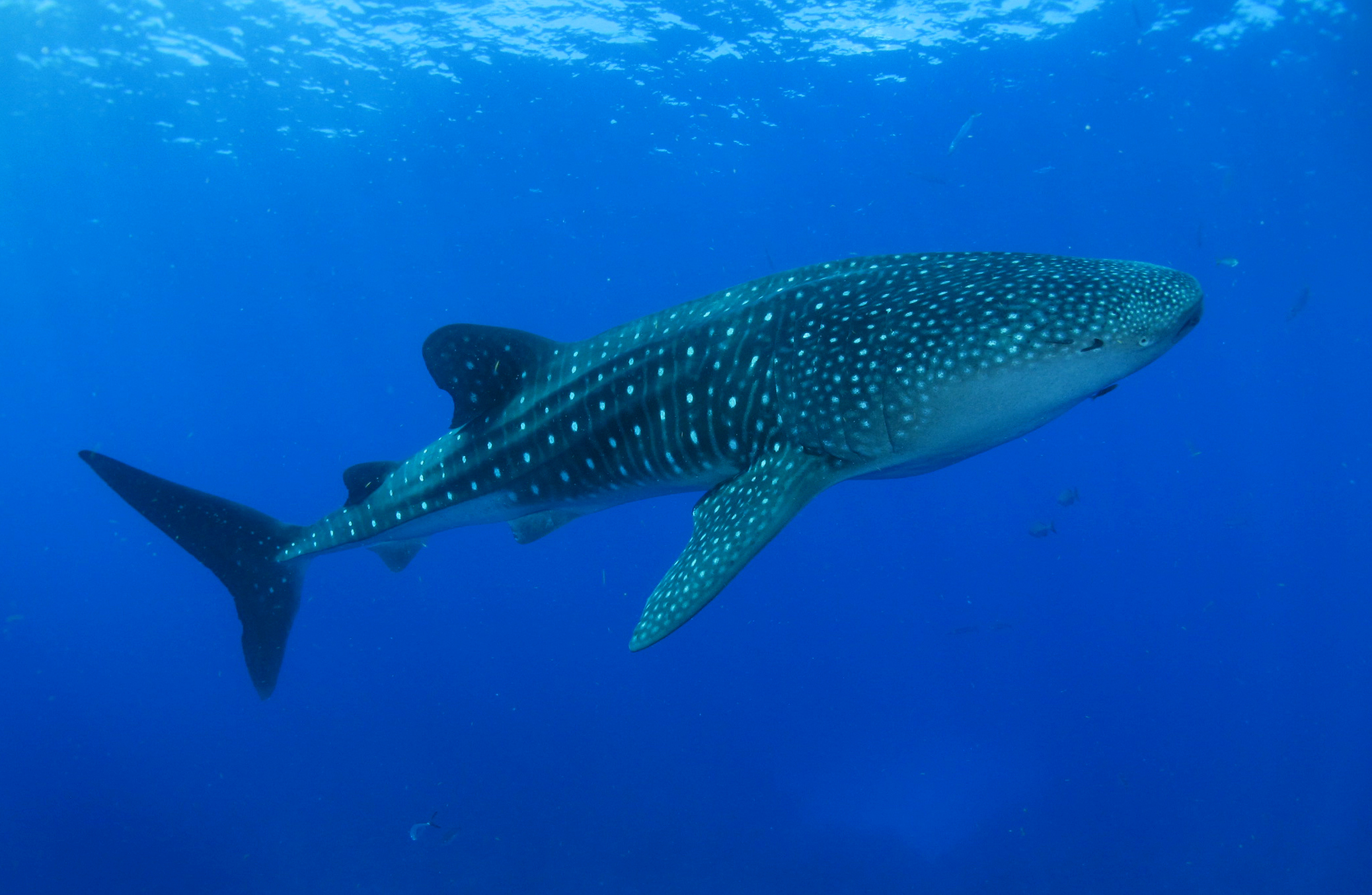
Whale Shark
Whale sharks (Rhincodon typus) are the largest fish in the ocean and can exceed 30 feet in length, making them by far the biggest shark species found in the Gulf of Mexico.
Unlike the other sharks on this list, whale sharks are filter feeders, feeding primarily on plankton, fish eggs, and small schooling fish. Despite their massive size, they are harmless to humans.

In the Gulf, whale sharks are most often encountered offshore, particularly during the summer months, where they are sometimes seen feeding at the surface around concentrations of baitfish or spawning events.
Encounters are typically brief but memorable, often involving a single large animal moving slowly through open water.
Their presence highlights the diversity of the Gulf’s shark population and reinforces the idea that not all large sharks are apex predators.
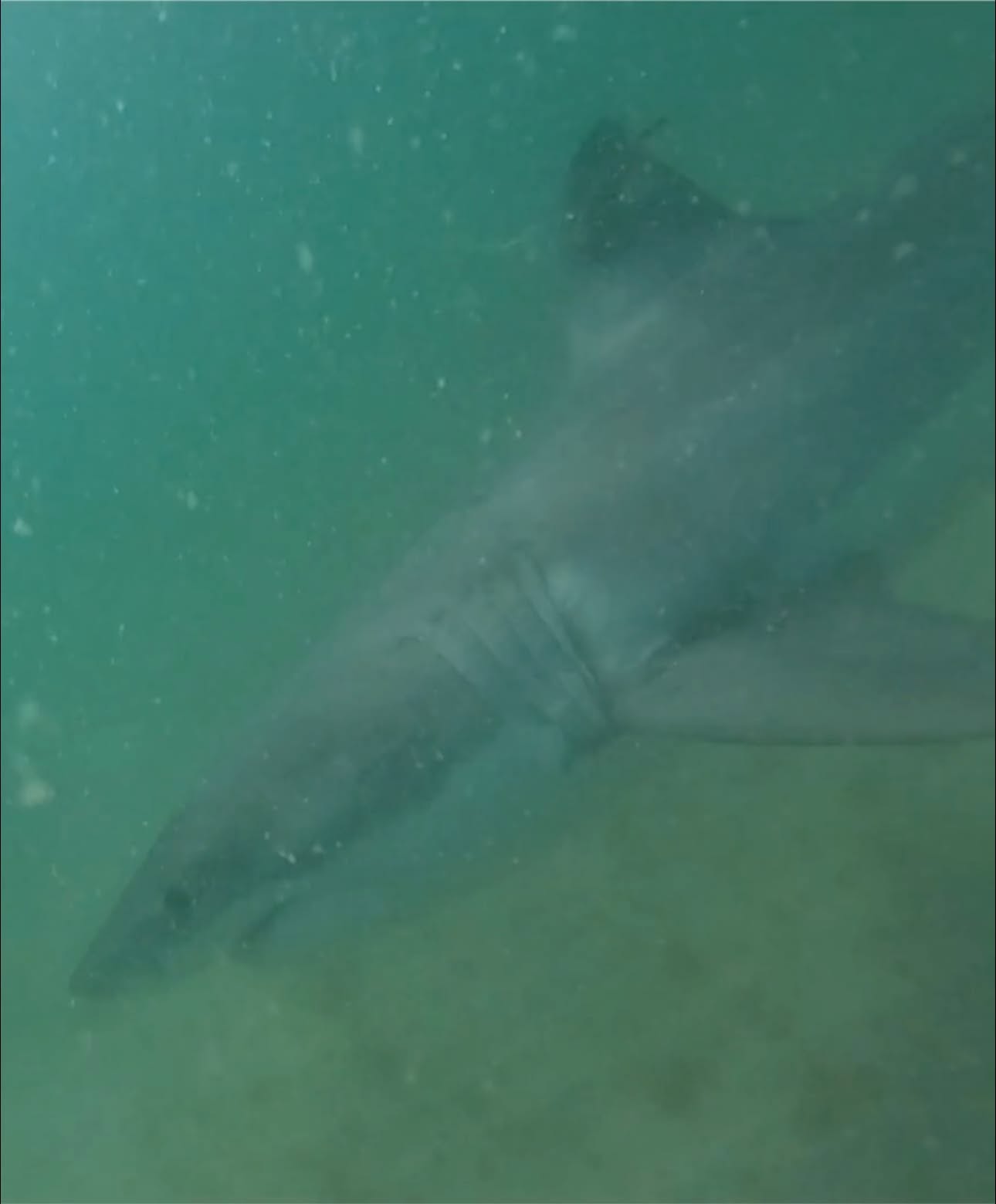
Bluntnose Sixgill Shark
The bluntnose sixgill shark (Hexanchus griseus) is one of the largest and most primitive shark species in the world, capable of exceeding 15 feet in length.
In the Gulf of Mexico, sixgill sharks are associated with deep offshore environments, typically along the continental slope at depths rarely accessed by anglers or observers.

Because of their deepwater habitat, they are seldom encountered or documented in the Gulf, but their presence is part of the broader offshore ecosystem.
Sixgill sharks are slow-moving predators that feed on fish, squid, and carrion, and their biology reflects an ancient lineage of sharks adapted to life in low-light environments.
Why These Large Sharks Matter
Large sharks are essential to the health of the Gulf of Mexico.
They regulate prey populations, influence ecosystem structure, and serve as indicators of ocean health.
Understanding how these sharks use the Gulf—whether seasonally, offshore, or only occasionally—helps build a clearer and more accurate picture of the marine environment.
Frequently Asked Questions About Large Sharks in the Gulf of Mexico
What is the largest shark in the Gulf of Mexico?
The whale shark is the largest shark found in the Gulf and can exceed 30 feet in length. Among predatory sharks, species like tiger sharks and great white sharks are among the largest.
Are there sharks over 10 feet in the Gulf of Mexico?
Yes. Several species can exceed 10 feet, including great white sharks, tiger sharks, great hammerheads, oceanic whitetip sharks, and others found in offshore waters.
Are large sharks common in the Gulf?
Some large sharks are regularly present, particularly offshore, while others are rare or seasonal visitors depending on water conditions and prey availability.
Are these sharks dangerous to humans?
Encounters with large sharks are rare in the Gulf, and most species spend the majority of their time offshore, limiting interaction with people.
Where Large Sharks Are Found in the Gulf
Large sharks in the Gulf of Mexico are not evenly distributed and are often tied to specific habitats.
Nearshore waters and passes are more likely to hold species like bull sharks, particularly where baitfish and currents concentrate prey.
Offshore environments, including oil rigs, reefs, and deepwater zones, are where many of the largest sharks are encountered, including tiger sharks, silky sharks, and oceanic species.
Deepwater areas along the continental slope hold species like sixgill sharks, rarely seen but part of the Gulf’s broader ecosystem.
Understanding where these sharks are most likely to be found helps put sightings and encounters into proper context.
Shark Encounters in the Gulf
Encounters with large sharks do occur, but they are relatively uncommon given the scale of the Gulf.
Most of these species spend significant time offshore, limiting direct interaction with people.
Understanding which sharks are present—and how they behave—helps bring context to those encounters and reduces misinformation.
For more on great white shark activity →
https://gulfgreatwhites.com/great-white-sharks-in-the-gulf-of-mexico-complete-guide/
About the Author

Chester Moore is an award-winning wildlife journalist, ocean wildlife specialist, and conservationist with a focus on great white sharks and other large shark species of the Gulf of Mexico. He began his journalistic search for great white sharks more than two decades ago and has spent years documenting their presence, behavior, and significance through field reporting, research, and firsthand encounters.
Through GulfGreatWhites.com and the Gulf Great White Shark Society, his work focuses on tracking real-world shark sightings and connecting them with emerging scientific understanding of shark movement in the Gulf.
Follow real shark sightings and research updates →
https://gulfgreatwhites.com/gulf-great-white-shark-sightings-database/