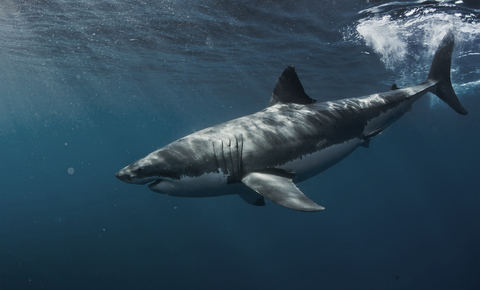

When conversations turn to giant sharks in Gulf waters, tiger sharks, great hammerheads, and increasingly great whites tend to dominate the discussion. Yet lurking just below the spotlight is another impressive predator that rarely gets the recognition it deserves—the lemon shark.

With its stocky build, powerful jaws, and ability to reach truly impressive sizes, the lemon shark (Negaprion brevirostris) is one of the Gulf’s most underrated giants. While it lacks the fearsome reputation of a great white or the iconic profile of a hammerhead, this coastal predator plays a vital role in Gulf ecosystems and can grow far larger than many people realize.
One person who knows this firsthand is Derek York of the Texas Parks and Wildlife Department’s Coastal Fisheries Division. York is among the biologists who operate longline survey vessels that conduct shark-tagging research along the upper Texas coast. Through this important work, scientists gather valuable information on shark populations, movements, and the health of Gulf ecosystems.
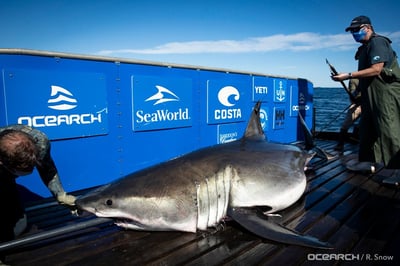
During one of these research efforts, York and his team encountered what remains one of the most astonishing sharks ever documented in their surveys—a lemon shark measuring an incredible 13 feet in length.
In shark terms, that’s a monster.
Most people think of lemon sharks as medium-sized coastal predators, but a 13-foot specimen is a truly exceptional shark and among the largest lemon sharks most people will ever hear about. It serves as a powerful reminder that lemon sharks are far more impressive than their reputation suggests.
Named for their subtle yellow-brown coloration, lemon sharks are perfectly adapted to life in sandy coastal environments. Their coloration helps them blend into shallow bays, estuaries, and nearshore waters throughout the Gulf. They are found throughout tropical and subtropical waters of the western Atlantic, including portions of the Gulf where warm, productive coastal habitats provide ideal conditions.
Unlike highly migratory pelagic sharks that spend much of their lives in the open ocean, lemon sharks are often closely associated with coastal ecosystems. Bays, estuaries, seagrass flats, and mangrove shorelines serve as important habitat, particularly for young sharks.
One of the most fascinating things about lemon sharks is that they helped change the way scientists think about shark behavior. For decades, sharks were largely viewed as solitary predators. Research led by Kevin M. Guttridge and colleagues and published in Animal Behaviour found that juvenile lemon sharks form preferred social associations rather than simply gathering randomly. Their work suggested that social factors influence how groups of young lemon sharks are formed in the wild.
Lemon sharks have also played an important role in research on shark intelligence. In a study published in Animal Cognition, Guttridge and fellow researchers demonstrated social learning in juvenile lemon sharks, showing that young sharks can acquire information by observing the behavior of other sharks.

Further research by Finger, Guttridge, Wilson, Gruber and colleagues found consistent differences in sociability among individual juvenile lemon sharks. Published in Behavioral Ecology and Sociobiology, the study showed that some sharks are consistently more social than others, highlighting a level of behavioral individuality that was once thought unlikely in sharks.
Together, these studies have helped transform scientific understanding of shark behavior, revealing lemon sharks as far more socially complex than many people once believed.
Another remarkable characteristic of lemon sharks is their loyalty to home waters. Female lemon sharks often return to the same nursery areas where they were born to give birth to their own pups. Young sharks may spend several years in shallow coastal habitats before moving into deeper waters as they mature.
Lemon sharks are also equipped with an impressive set of hunting tools. Their broad heads contain highly developed sensory organs capable of detecting movement, vibrations, and electrical signals produced by prey. Their diet includes fish, rays, crustaceans, and occasionally smaller sharks. They are especially active during low-light periods and nighttime hours when many prey species are on the move.
Despite their size and power, lemon sharks are generally regarded as less aggressive toward humans than many other large shark species. Their relative tolerance for observation has made them one of the most extensively studied sharks in the world, providing scientists with valuable opportunities to learn more about shark behavior and ecology.
Like many shark species, however, lemon sharks face significant challenges. Coastal development, habitat degradation, fishing pressure, and accidental capture can all impact local populations. Because young lemon sharks depend heavily on shallow nursery habitats, protecting bays, estuaries, marshes, and other coastal ecosystems is critical to their future.
For Gulf shark enthusiasts, the lemon shark represents something special. It is a reminder that not every giant shark becomes famous. Some quietly patrol our bays and coastal waters, playing an essential ecological role while remaining largely overlooked by the public.
That is why the story of Derek York’s 13-foot lemon shark is so important. It reminds us that beneath the Gulf’s surface lives a shark capable of reaching extraordinary proportions—a true giant hiding in plain sight.
The next time someone starts talking about the Gulf’s biggest sharks, don’t forget the lemon shark.
It may be the most underappreciated giant of them all.
Chester Moore
Follow Chester Moore and Higher Calling Wildlife® on the following social media platforms
@gulfgreatwhitesharksociety on Instagram
@thechestermoore on Instagram
Higher Calling Wildlife on Facebook
Email Chester at chester@chestermoore.com.
Subscribe to the Dark Outdoors podcast on all major podcasting platforms.



Leave a Reply