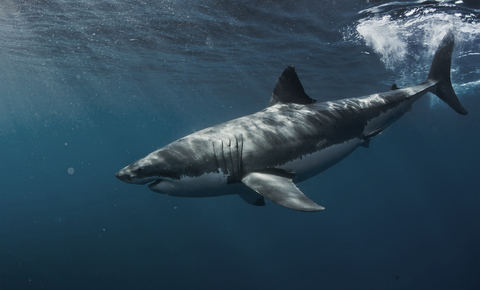
Sharks are among the most recognizable animals on Earth.
You can travel thousands of miles from the ocean, walk into a room filled with people gathered for something that has absolutely nothing to do with marine life, and eventually somebody will want to talk about sharks.
Especially great white sharks.
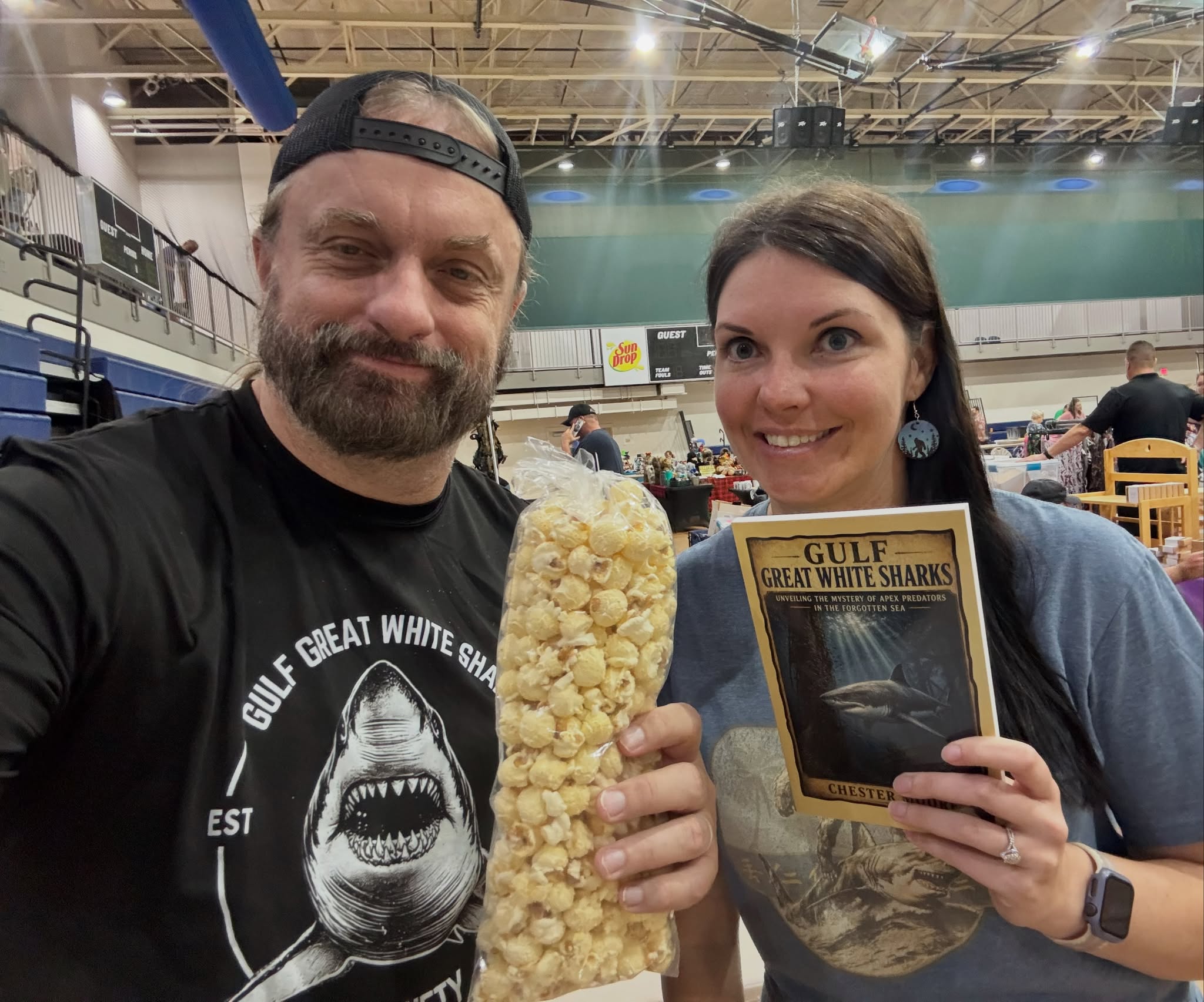
I was reminded of that recently while speaking at an event in Tennessee. I wasn’t there representing the Gulf Great White Shark Society or giving one of my presentations about great whites in the Gulf of Mexico. I was there speaking through my Dark Outdoors® media platform about some of the stranger and more mysterious things I have investigated over the years.
But sharks found their way into the conversation anyway.
And I loved every minute of it.
One of the highlights was getting to see my friend Rachel from Lakeside Kettle Corn again. First of all, I have to give credit where it is due: She makes the best kettle corn I’ve ever had in my life. That’s not hype. It’s the truth.

But somewhere along the way, our conversation turned toward sharks.
Rachel showed me her collection of Megalodon teeth, those incredible fossil remnants of one of the largest predatory sharks ever to swim the world’s oceans. Holding or even looking closely at a Megalodon tooth has a way of putting things into perspective. You’re looking at tangible evidence of an animal from another world, a predator that disappeared millions of years before any of us arrived but continues to capture the human imagination.
And Rachel wasn’t the only shark connection I made in Tennessee.
People came up and showed me their shark tattoos. Others wanted to talk about great whites. Some picked up copies of my Gulf Great White Sharks book. Conversations moved from fossil sharks to modern great whites, shark encounters, conservation and the incredible diversity of these animals.

It struck me again that sharks have become something bigger than simply another group of fish.
An International Symbol of the Ocean
In many ways, sharks are international symbols of the oceans themselves.
People who have never seen a shark in the wild are fascinated by them. Children who live hundreds of miles from saltwater can identify a great white shark almost instantly. Shark teeth are collected around the world. People wear shark shirts, necklaces and hats, decorate their homes with shark artwork and permanently put sharks on their bodies as tattoos.
There are countless marine animals worthy of attention, but relatively few have crossed so completely into global culture.
The great white stands at the top of that list.
Its silhouette is unmistakable. Its reputation precedes it everywhere. Unfortunately, much of that reputation was built around fear, but something interesting has happened over the last several decades. As scientists, photographers, filmmakers and conservationists have revealed more about great whites, fascination has increasingly moved beyond the old image of a mindless man-eater.
People want to understand them.
Where do they go? How far do they travel? Why do they migrate? How long do they live? Where do they breed? What role do they play in marine ecosystems?
Those questions cross borders.
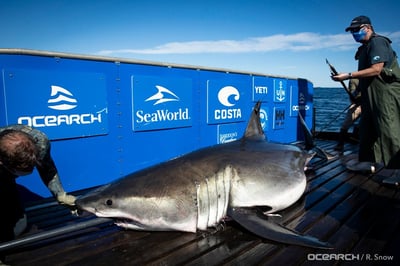
A great white shark tagged in one part of the Atlantic can eventually capture the attention of people hundreds or even thousands of miles away. A photograph, tracking ping or remarkable encounter can generate conversations among people who otherwise might have very little in common.
That’s powerful.
A Connection Bigger Than Sharks
One of the great privileges of my career has been meeting people through wildlife.
Sometimes those connections begin in expected places: fishing camps, wildlife conferences, research projects and outdoor events. Other times they happen somewhere completely unexpected.
That’s what made the Tennessee experience special.
I wasn’t there to talk about sharks. Yet there I was looking at Megalodon teeth, checking out shark tattoos, signing shark books and having conversations about great whites with people far from the Gulf Coast.

Nobody had to agree on everything else happening in the world.
For a few minutes, we could simply talk about sharks.
In a time when seemingly everything can divide people, wildlife has an amazing ability to create common ground. A shared fascination with an animal can start a conversation between two people who might never otherwise have spoken to one another.
Sharks seem particularly good at doing that.
Maybe it’s because they combine so many things that have always fascinated humanity: mystery, danger, beauty, wilderness and the unknown. They inhabit a world that covers most of our planet but remains largely hidden from us.
And the great white may embody that mystery better than any other animal in the sea.
The Great Whites of the Forgotten Sea
That sense of connection is one of the reasons I founded the Gulf Great White Shark Society and why I continue investigating great white sharks in the Gulf of Mexico.
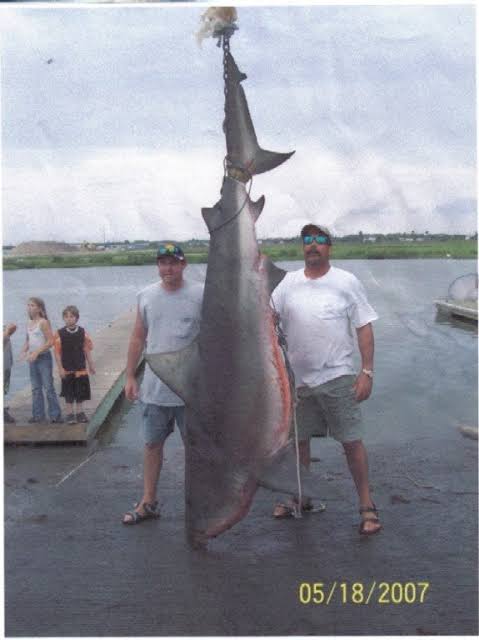
For years, great whites in the Gulf existed on the edge of mainstream awareness. Fishermen had stories. Historical records contained intriguing accounts. Scientists knew these animals were capable of enormous movements, but the average person rarely associated the Gulf with great white sharks.
Modern research and tracking technology have helped change that conversation.
We’re getting a better understanding of something that fishermen and others along the coast have known for generations: There are enormous mysteries swimming through the Gulf of Mexico.
The more we learn about these animals, the more opportunities we have to replace fear with understanding and fascination with conservation.
That’s ultimately what the Gulf Great White Shark Society is about.
Yes, we love great white sharks. We love investigating their presence in the Gulf and digging into historical encounters, modern science and the stories of the people who have crossed paths with them.
But there is something larger at work.
Sharks can open the door to conversations about the Gulf, marine conservation, fisheries, migration, ocean health and our relationship with wild creatures. They can inspire a kid who has never seen the ocean. They can fascinate a lifelong fisherman who has spent decades on the water.
And sometimes they can turn a conversation at an event in Tennessee into an unexpected celebration of the ocean.
That’s something worth appreciating.
I went to Tennessee to talk about the Dark Outdoors.
I’m heading home reminded of something much brighter.
Sharks can bring people together.
Chester Moore
Follow Chester Moore and Higher Calling Wildlife® on the following social media platforms
@gulfgreatwhitesharksociety on Instagram
@thechestermoore on Instagram
Higher Calling Wildlife on Facebook
Email Chester at chester@chestermoore.com.
Subscribe to the Dark Outdoors podcast on all major podcasting platforms.




Leave a Reply