Every day, thousands of vessels move through the Gulf of Mexico. Massive cargo ships, oil tankers, offshore service vessels, cruise ships and commercial fishing boats crisscross one of the busiest bodies of water in the world.
Looking back at a groundbreaking study published a few years ago reminded me just how little we still know about the effects all of that traffic may have on the Gulf’s largest marine wildlife.
Researchers with the <a href=”https://www.eurekalert.org/news-releases/951806” target=”_blank”>Marine Biological Association</a>, the University of Southampton and the Global Shark Movement Project published research suggesting that collisions with large commercial vessels may be killing far more whale sharks than previously believed, potentially contributing to population declines around the globe.
The international team analyzed satellite tracking data from nearly 350 whale sharks collected by scientists from 50 research institutions and universities.
What they found was eye-opening.

More than 90 percent of the tracked whale sharks spent time within the footprint of commercial shipping activity. Even more alarming, satellite tags frequently stopped transmitting after sharks entered busy shipping lanes. In several cases, tags equipped with depth sensors showed the sharks descending hundreds of feet to the seafloor after entering those shipping corridors.
Researchers described those events as the “smoking gun” of fatal ship strikes.
Lead researcher Freya Womersley said the maritime shipping industry may be playing a much larger role in whale shark declines than scientists had realized. Professor David Sims added that many of these deaths have likely occurred unnoticed because whale sharks sink after dying, leaving little evidence behind.
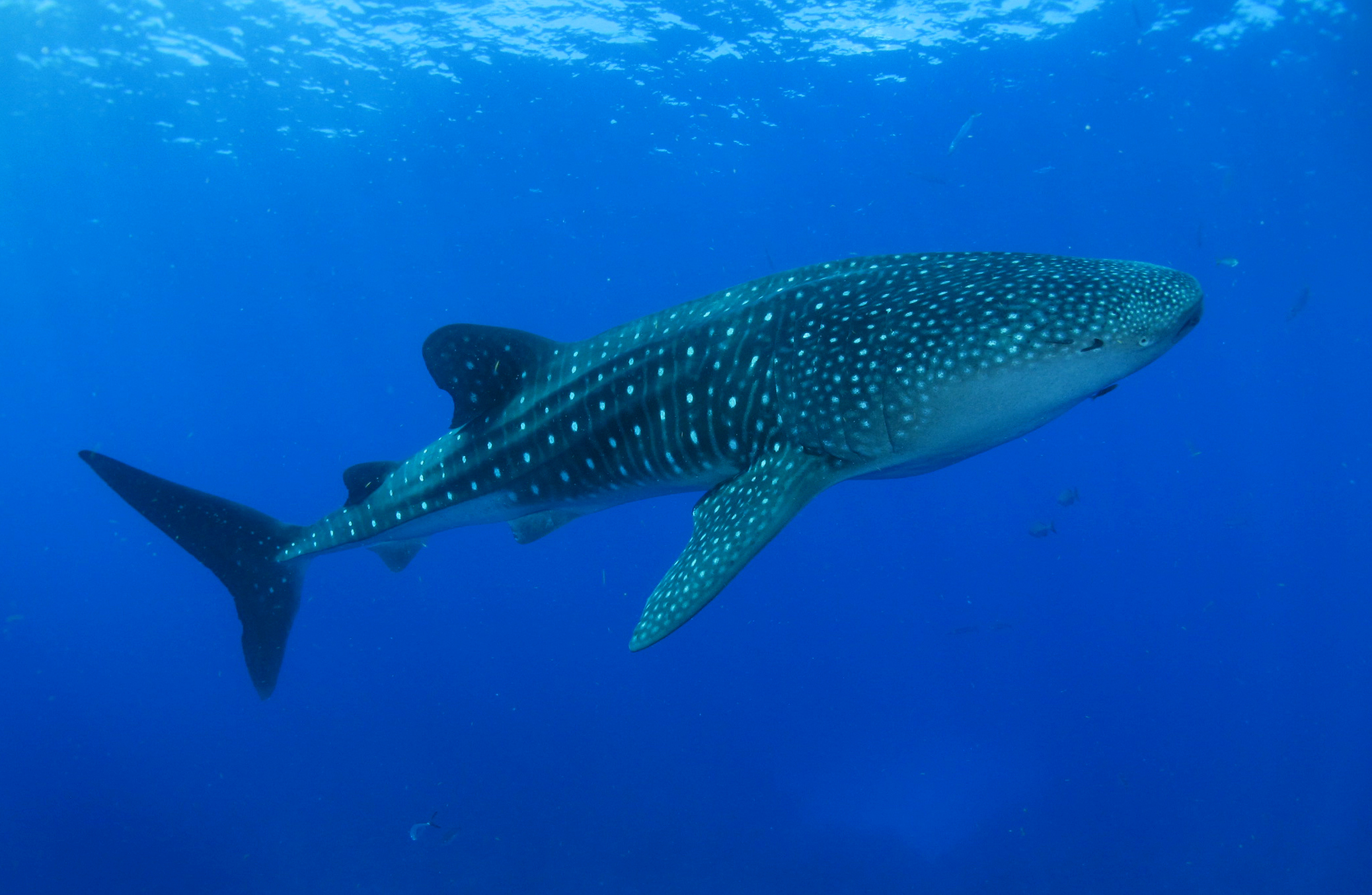
Whale sharks, the largest fish on Earth, can exceed 60 feet in length but are remarkably gentle animals that feed primarily on plankton. They spend much of their lives cruising near the surface where they are especially vulnerable to collisions with cargo ships, tankers and cruise vessels.
The study made me immediately think about the Gulf.
From the Houston Ship Channel and Port of Corpus Christi to Louisiana’s offshore energy infrastructure and the busy ports of Tampa, Mobile and New Orleans, commercial shipping is a constant presence throughout Gulf waters.
While this research focused specifically on whale sharks, it also raises important questions about other large shark species.

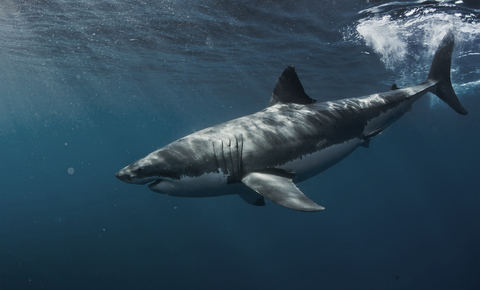
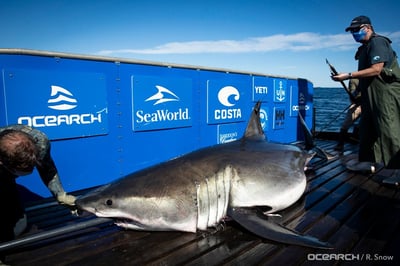
Great white sharks regularly travel through the Gulf during seasonal migrations. Satellite tagging by OCEARCH has documented dozens of white sharks entering Gulf waters over the last decade, while acoustic detections have confirmed their presence from Texas to Florida. Although great whites often spend more time deeper in the water column than whale sharks, they also utilize surface waters and travel through heavily trafficked shipping corridors.
As researchers continue learning more about shark movements, vessel interactions may become an increasingly important conservation issue for multiple species.
Fortunately, more recent research has suggested that relatively modest changes in shipping routes around known whale shark aggregation sites could dramatically reduce collision risk while adding very little travel time for commercial vessels.
It’s an issue worth watching in the Gulf, where shipping continues to grow alongside expanding knowledge of large shark movements.
Explore More on Gulf Great White Shark Society
If you enjoy learning about the Gulf’s largest sharks, check out these features:
- Great White Sharks in the Gulf of Mexico: Complete Guide
https://gulfgreatwhites.com/great-white-sharks-in-the-gulf-of-mexico/ - Large Sharks of the Gulf of Mexico: Biggest Species Guide
https://gulfgreatwhites.com/large-sharks-of-the-gulf-of-mexico/ - The First-Ever Book on Great White Sharks in the Gulf of Mexico
https://gulfgreatwhites.com/2026/07/24/new-book-released-the-first-ever-book-on-great-white-sharks-in-the-gulf-of-mexico/ - Join the Gulf Great White Shark Society (Free Membership)
https://gulfgreatwhites.com/join-the-gulf-great-white-shark-society/
Original research announcement: https://www.eurekalert.org/news-releases/951806
Chester Moore
Follow Chester Moore and Higher Calling Wildlife® on the following social media platforms
@gulfgreatwhitesharksociety on Instagram
@thechestermoore on Instagram
Higher Calling Wildlife on Facebook
Email Chester at chester@chestermoore.com.
Subscribe to the Dark Outdoors podcast on all major podcasting platforms.



Leave a Reply