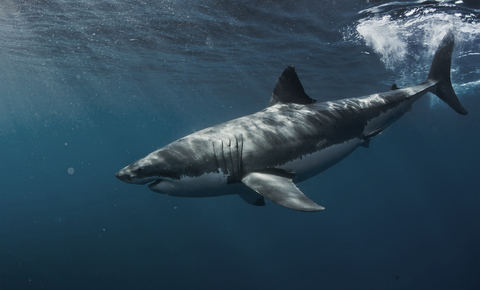
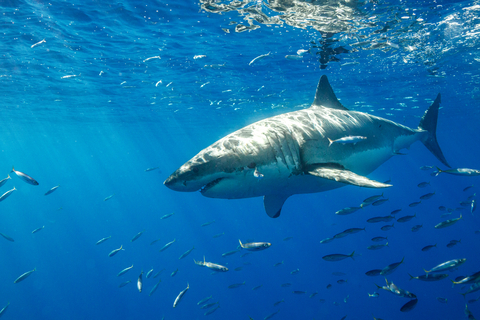
After compiling and overhauling one of the most complete publicly available databases of great white shark sightings in the Gulf of Mexico, a few things become clear.
Great white sharks in the Gulf are not just rare, random occurrences—they appear to be part of a broader pattern that has been largely overlooked.
Our database includes reported sightings going back to the 1930s, along with more recent encounters from anglers, divers, and charter operators. While this is not satellite tagging data, it provides valuable context and helps fill in gaps between known tracking points.
Looking at the data as a whole, several trends stand out.
One of the most important is that great white sharks are not new to the Gulf.
Historical records show consistent reports over decades, including longline captures, offshore sightings, and observations near oil platforms. This suggests their presence in the region is not a recent development, even if awareness of it has grown in recent years.
Another clear pattern is geographic concentration.
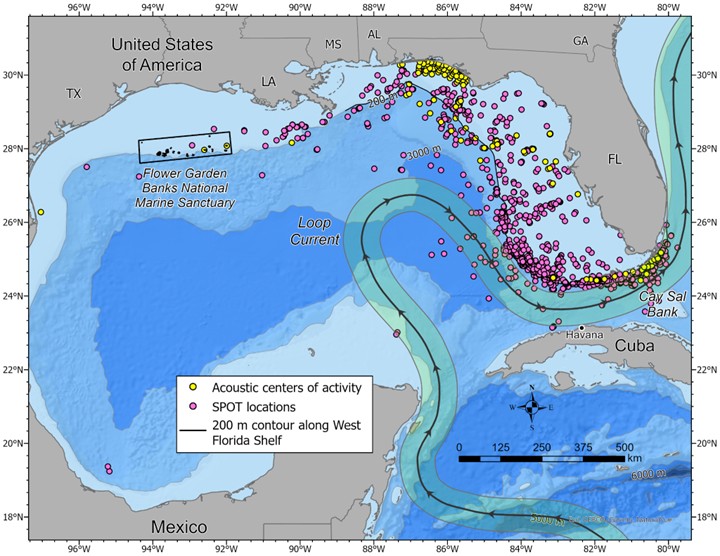
The Florida Panhandle—particularly the stretch from Pensacola to Destin to Panama City—stands out as one of the most active areas for great white encounters. Multiple recent sightings, including sharks caught, filmed, and observed offshore, point to this region as a primary hotspot.
South Louisiana, especially around the Chandeleur Islands, also shows repeated activity. Sightings near barrier islands, offshore drop-offs, and oil infrastructure suggest this area may serve as a secondary hotspot.
At the same time, broader movement patterns begin to take shape.
The Straits of Florida appear to act as a transition zone between the Atlantic and Gulf, potentially influencing when and how sharks move into Gulf waters. Offshore structures such as oil rigs and reef systems—including areas like the Flower Garden Banks—also show up repeatedly in both sightings and tracking data, reinforcing their importance in the Gulf ecosystem.
Another takeaway is that not every large shark reported is necessarily a great white.
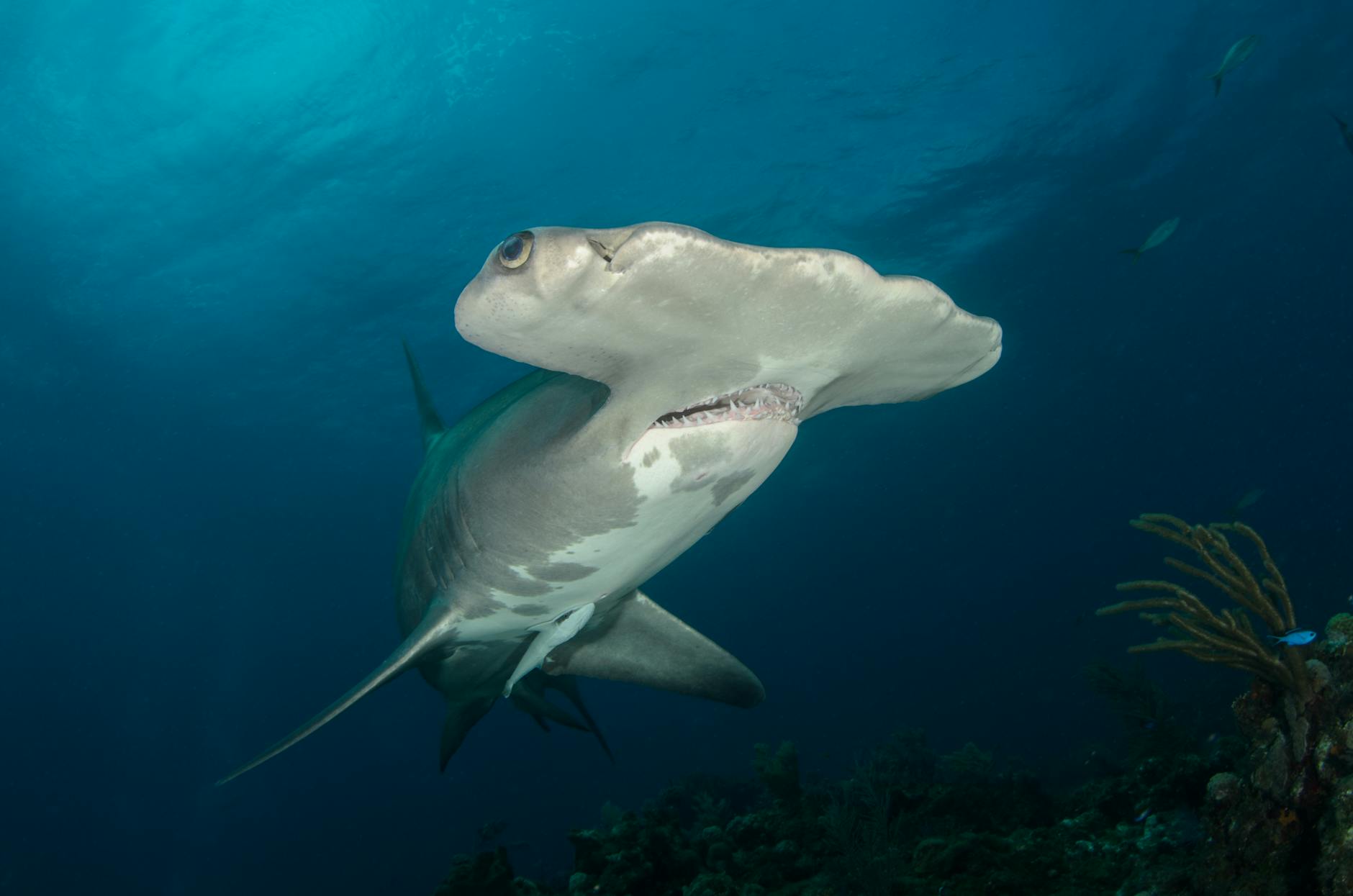
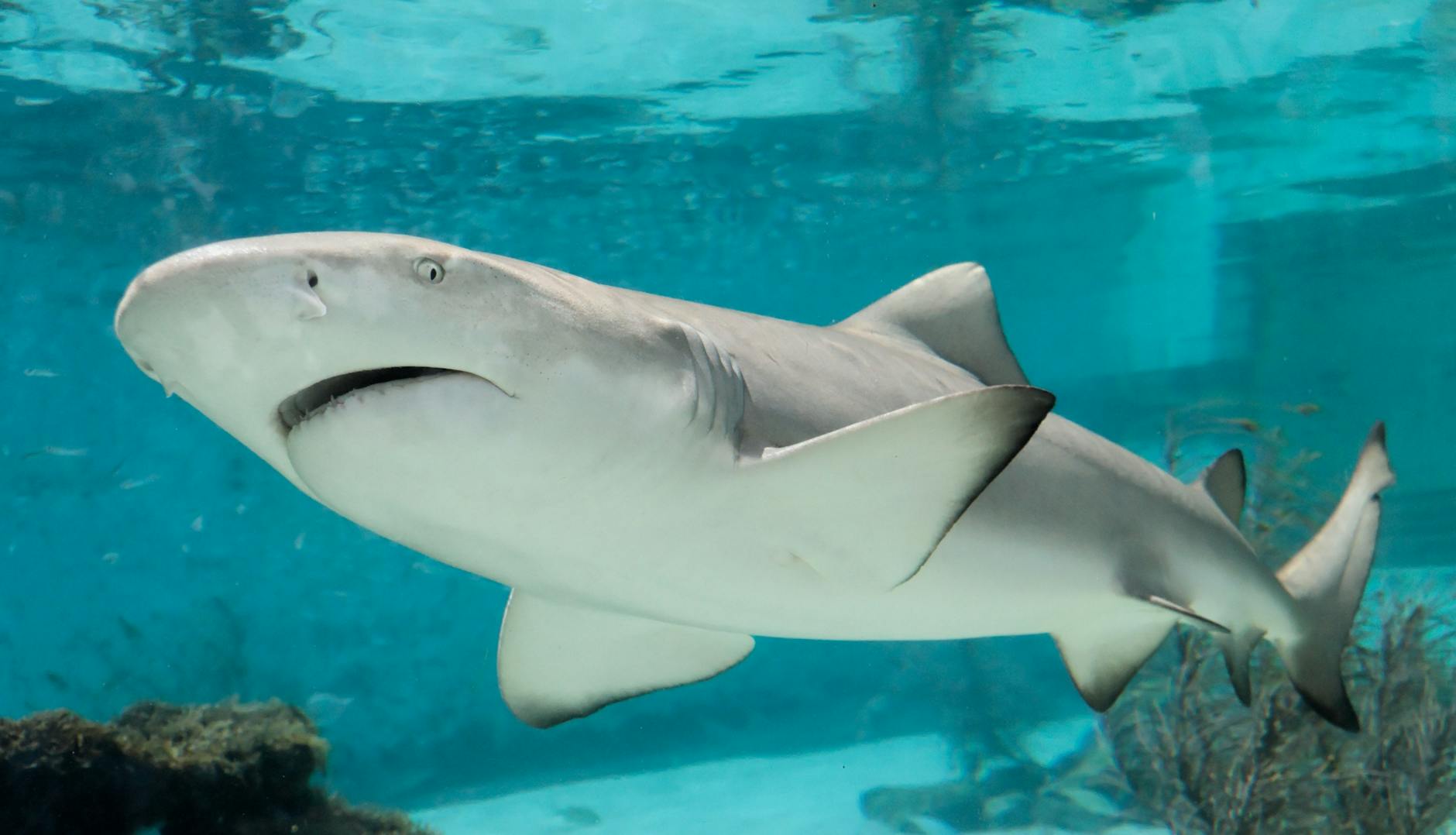
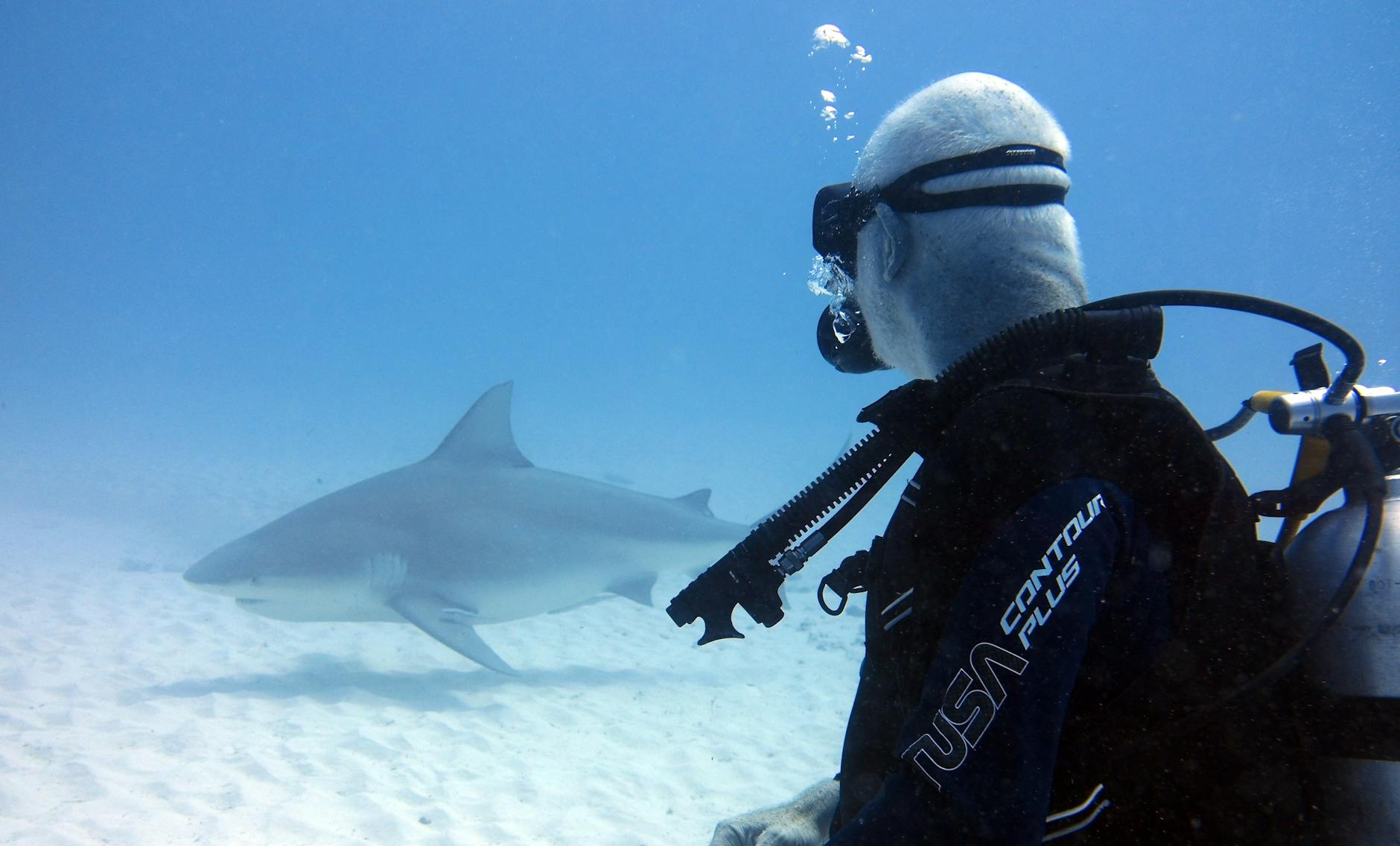
Misidentification is always a factor, especially in open water or low visibility. Species like mako sharks, tiger sharks, and bull sharks can all resemble great whites under the right conditions. That said, the consistency and spread of sightings across decades still point to a real and ongoing presence.
Taken together, the data suggests that great white sharks are not simply passing through the Gulf at random. Instead, they appear to be using specific regions and structures in ways that are only now starting to come into focus.
As more sightings are reported and more tracking data becomes available, the picture will continue to evolve. But even now, the idea that great whites are only rare visitors to the Gulf is becoming harder to support.
If you want to explore the full list of reported sightings and see how these patterns come together, you can view the complete database here:
https://gulfgreatwhites.com/gulf-great-white-shark-sightings-database/
Chester Moore
Follow Chester Moore and Higher Calling Wildlife® on the following social media platforms
@gulfgreatwhitesharksociety on Instagram
@thechestermoore on Instagram
Higher Calling Wildlife on Facebook
Email Chester at chester@chestermoore.com.
Subscribe to the Dark Outdoors podcast on all major podcasting platforms.

Leave a Reply