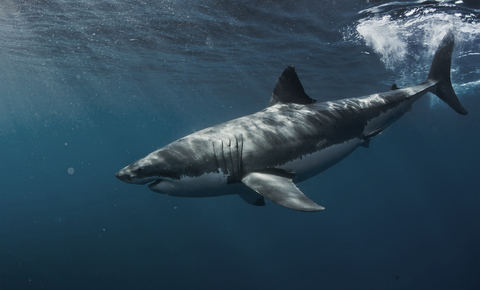
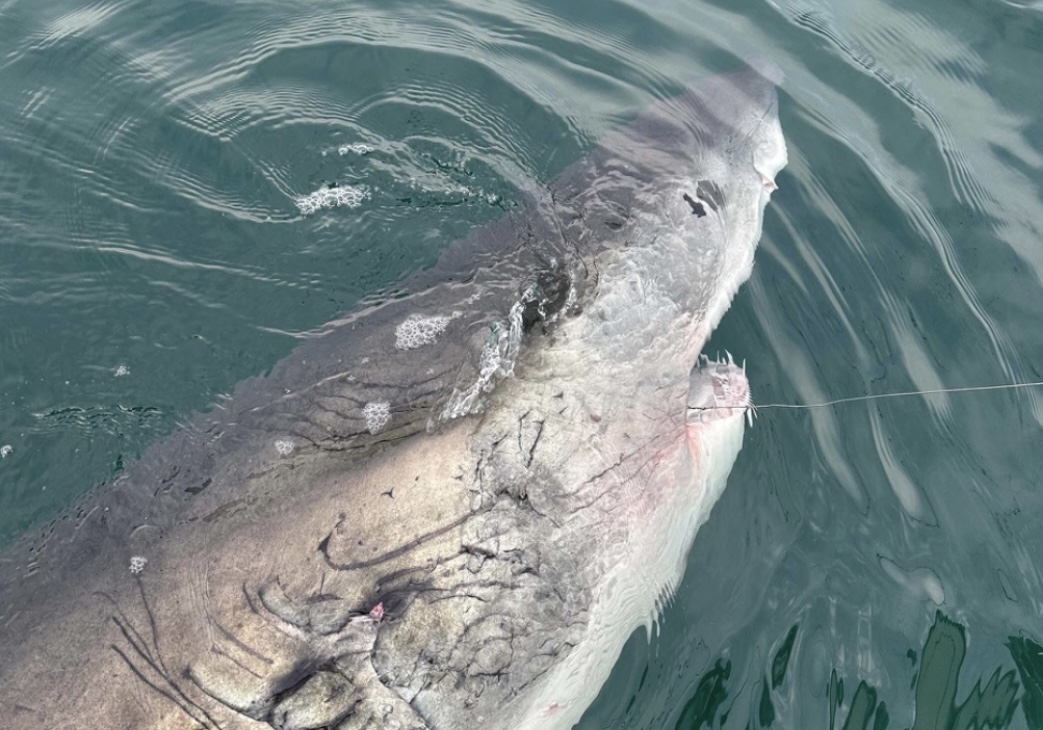
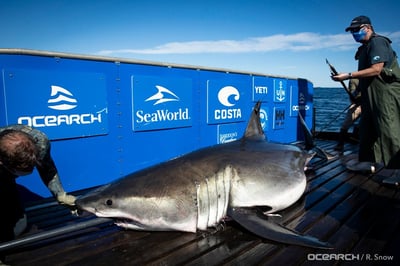
In recent days, a viral post has been making the rounds across social media platforms, claiming that the famed tagged great white shark “LeeBeth” has once again returned to the Texas coast for what some are calling a “spring break migration.”
The post includes a sensational graphic stating: “A 2,600 pound Great White shark named Leebeth has traveled 2,000 miles to the Texas coast for spring break. This map shows where she has surfaced over the last week.”

While it’s an exciting and engaging narrative, it’s also completely untrue.
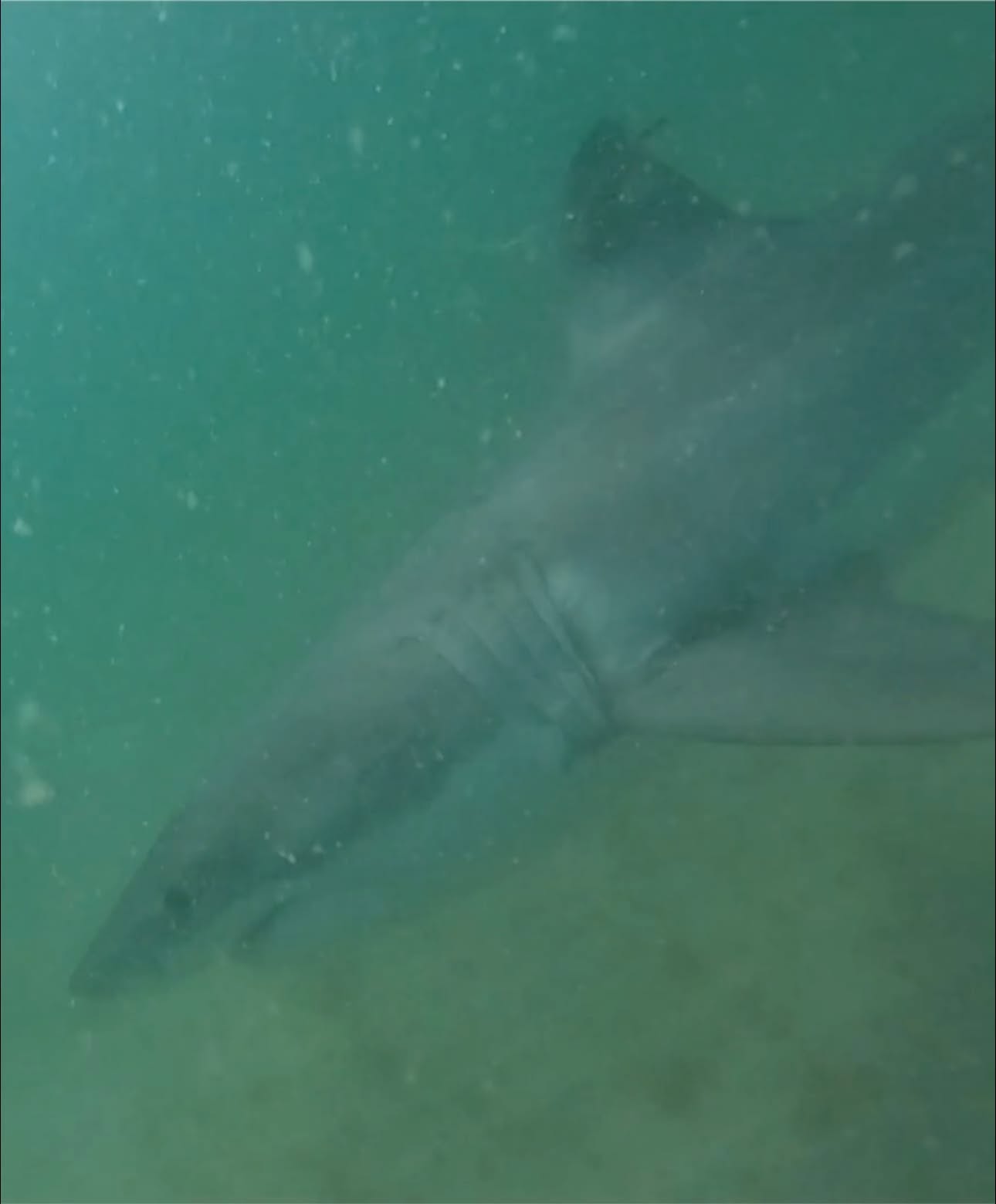
The reality is that LeeBeth, who captured public attention with her epic trip through the Gulf of Mexico in 2024, is not currently being tracked by satellite. As of now, her satellite tag is no longer transmitting. Although she also carries an acoustic transmitter, no acoustic signals have been detected in the Gulf region recently. And unlike satellite tags that give real-time info, the acoustic tags are only taken periodically.
LeeBeth did show up again in Cape Cod last November via acoustic tag as we reported here in our July 9 article.
However, there is no evidence of her being in the Gulf and in fact, if she took the same path as she did last year, she is probably back up in Canadian waters. Her last satellite ping was Oct. 1, 2024 just off the coast of Nova Scotia.

Organizations like the Atlantic White Shark Conservancy and dedicated conservationists such as Captain Chip Michalove have contributed greatly to our understanding of these incredible animals. Their efforts in tagging and monitoring great whites have been instrumental in tracking migration patterns and understanding shark behavior in the Atlantic and Gulf regions.
It’s important to acknowledge the public fascination with LeeBeth, and rightfully so. Her presence in Gulf waters last year marked a significant moment in marine biology and conservation, as highlighted in our June 9 article, “Why LeeBeth the Great White Shark’s Appearance Matters”.
But this time, the excitement is based on speculation, not science. Spreading misinformation—even if well-intentioned—undermines the work of marine researchers and may lead to public confusion or unnecessary concern.
We encourage ocean lovers and curious minds to stay engaged with verified updates from research organizations and trusted scientific sources. If you’re interested in LeeBeth check out the Sharktivity app and the AWSC’s Logbook entries for her.
If and when LeeBeth surfaces again, you can be sure it will be reported with data-backed confirmation. and I will have it here at Gulfgreatwhites.com as soon as I hear about it.
Have a great “Jaws 50” weekend!
Chester Moore
Follow Chester Moore and Higher Calling Wildlife® on the following social media platforms
To support the efforts of Higher Calling Wildlife® click here.
Subscribe to the Dark Outdoors podcast on all major podcasting platforms.
Higher Calling Wildlife on Facebook
Email Chester at chester@chestermoore.com.


Leave a Reply