Last fall, I stood on the deck of the Island Home ferry pulling away from Woods Hole, MA bound for Martha’s Vineyard. It was a pilgrimage, really—a chance to see where Jaws was filmed and soak in the mythology firsthand.
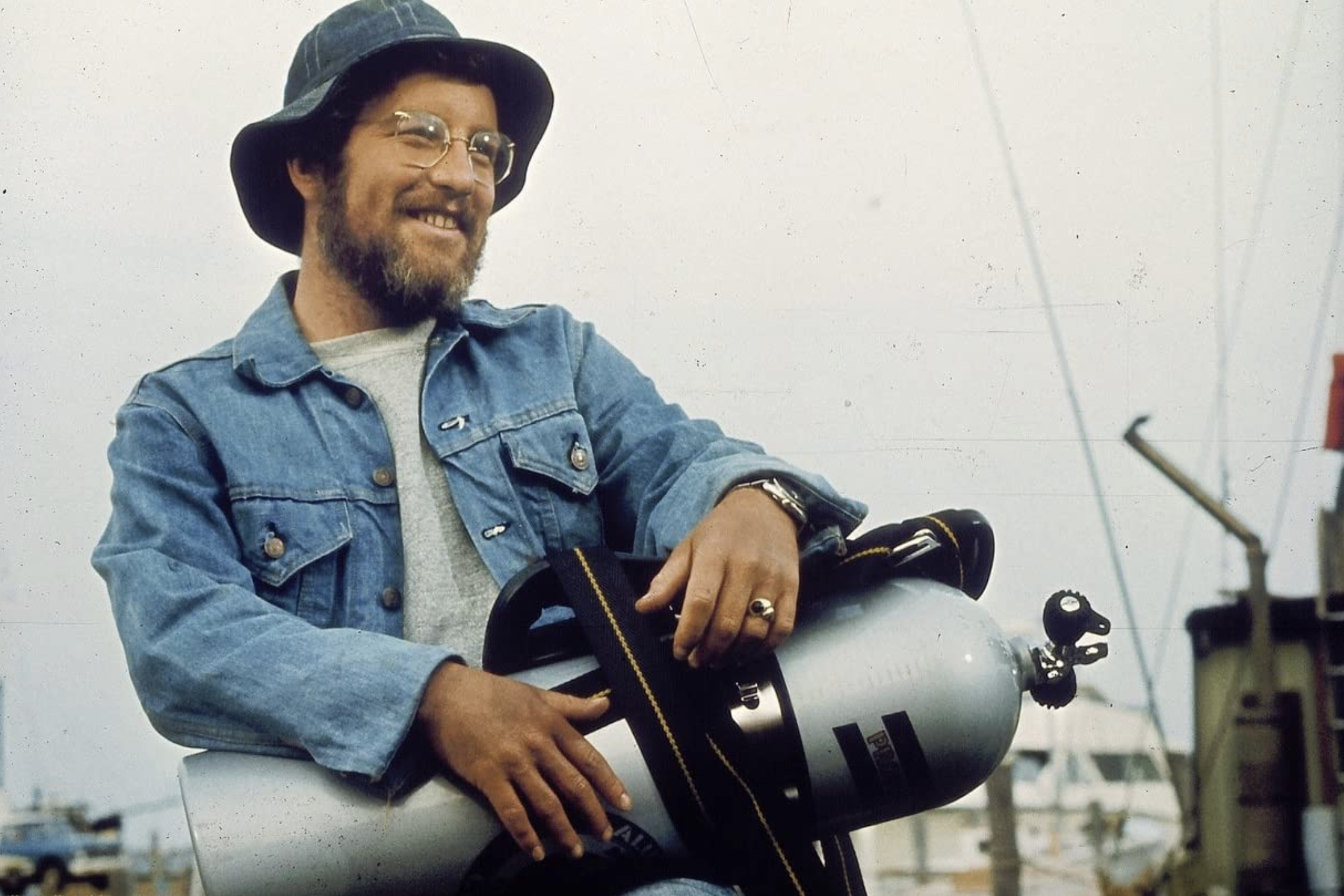
As the ferry churned through the channel, I glanced back at the Woods Hole Oceanographic Institution and grinned. That iconic sign pulled me straight into a scene from the film: Richard Dreyfuss stepping off the boat, walking with purpose, declaring, “I’m from the Oceanographic Institute on the mainland.”
It was surreal. A movie that once changed the course of my life was suddenly merging with my real surroundings.
Today, we mark the 50th anniversary of the release of Jaws, a movie that left an indelible mark not just on cinema—but on science, conservation, and people like me. I didn’t see it in theaters. I was a kid on the Texas Gulf Coast when it aired on ABC’s Movie of the Week, and even on a flickering home screen, it hit with full impact. The idea that such a creature—a massive, powerful, almost mythic predator—could exist out there in the ocean sent a shock through my system. That night, something deep inside me shifted.

The Question That Started It All
A few years after that unforgettable night, my dad took me and a buddy out to Galveston’s 61st Street Pier. Under a full moon, anglers were pulling up bonnetheads—small, harmless sharks not much bigger than a dog. But to me, they might as well have been great whites. The sea shimmered with mystery and possibility, and I found myself asking, “Do great whites ever come here?”
Dad answered, “Maybe so.”
That maybe was all I needed.
The idea that a great white could cruise into the same waters I fished in, swam in, and admired from the shore took root in my brain and never let go. I was hooked—not just on sharks, but on discovering the truth about them. That obsession led me down some pretty amazing paths that the little boy who saw the film could only dream of.
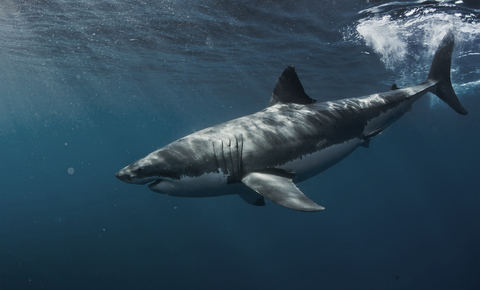
It led me into a shark cage in the Farallon Islands off the coast of San Francisco where I got to see four huge great whites breach like the famous ones of South Africa.
When we saw the first shark, one of the men in the boat with me quite naturally said, “We’re going to need a bigger boat.”
A total Jaws moment.
It inspired me to write and publish dozens of articles on great white sharks with the hope of spread awareness of their conservation and eventually to create this blog and website.
The Mixed Legacy of Jaws
There’s no denying Jaws cast a long shadow—for better and worse.
In the years immediately following its release, shark populations suffered. Fueled by fear and misunderstanding, trophy hunts and shark-killing tournaments surged. In many ways, the film created a villain out of an animal that was simply doing what evolution designed it to do. The white shark became a monster, a menace, and tragically, a target.
But as time passed, something unexpected happened. Jaws began to inspire more than it terrified. Kids who once watched through their fingers became marine biologists, conservationists, and science communicators. The film’s depiction of the ocean as vast, wild, and thrilling sparked curiosity as much as fear.

Today, it’s arguably the only film in history that makes millions of people think of the ocean the moment its name is mentioned. And in 2025, most of that thought is no longer horror—but awe. Wonder. A sense of connection to something ancient and enormous.
Yes, Jaws started as a thriller. But it became a gateway. A way into deeper understanding of the sea and the species that command it. And that arc—from terror to reverence—is perhaps the film’s greatest legacy.
Jaws From the Screen to the Sea
One of the most remarkable things about Jaws is how it has echoed through real science. Dr. Greg Skomal, Massachusetts’ leading white shark biologist, told me directly that his career path was inspired by the movie—by the character of Matt Hooper. The film that terrified a generation also created a generation of marine scientists.
We’ve evolved past the man-eating monster myth. The work now is about understanding, respecting, and conserving. White sharks are apex predators. Remove them from the ecosystem, and the entire oceanic balance starts to tip. They’re not villains—they’re actually vital.
Walking around Martha’s Vineyard last fall, seeing the beaches and piers that doubled as Amity Island, I understood something important: Jaws may have been filmed in Massachusetts, but its spirit belongs everywhere sharks swim—including the Gulf of Mexico.
People can debate the long-term impact of the film all they want, but no one can deny its sense of adventure. And no one can deny the reason we like great white sharks isn’t because they are eating tofu.
These are apex predators and Jaws in Hollywood-style reminds us of that.

As I stood on a familiar Texas pier filming a segment to wrap up our documentary I thought of the fact I have been blessed to see great whites both in the Pacific and Atlantic. It was almost as if I heard the echo of Capt. Quint’s gravelly voice.
“Back home we got a taxidermy man. He gonna have a heart attack when he sees what I brung him.”
It was part bravado, part truth—but behind it was the awe, the pride, the wonder. That’s what this journey has been about. Not trophies, not fear—but revelation of the importance of conserving great white sharks.
From the Vineyard to the Gulf, these waters hold more than just sharks—they hold stories that connect science and soul. Fifty years after Jaws, the adventure isn’t over. In fact, it’s just beginning.
Chester Moore
Follow Chester Moore and Higher Calling Wildlife® on the following social media platforms
To support the efforts of Higher Calling Wildlife® click here.
Subscribe to the Dark Outdoors podcast on all major podcasting platforms.
Higher Calling Wildlife on Facebook
Email Chester at chester@chestermoore.com.





Leave a Reply