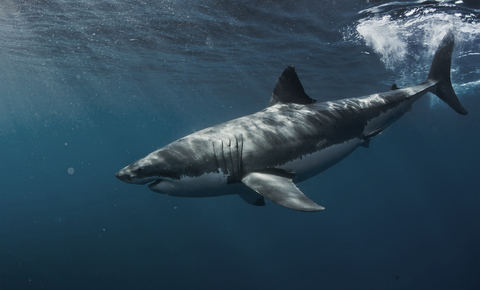

Dietary habits of great white sharks in the Gulf of Mexico are a bit mysterious and are a part of current research on the species. We talk about this subject with Megan Winton of the Atlantic White Shark Conservancy in part four of our video series.
Great white sharks (Carcharodon carcharias), formidable apex predators, have long intrigued scientists and enthusiasts alike with their diet and hunting strategies, particularly in the Atlantic Ocean. Their diet is integral to understanding their ecological role and has been a focal point of numerous studies.
In the Atlantic, the diet of great white sharks is diverse, reflecting their status as apex predators. Juvenile great whites predominantly consume fish, including smaller sharks and rays, a diet that provides the necessary energy for rapid growth. As they mature, their dietary preferences evolve, and they begin to target larger prey, showcasing remarkable versatility and adaptability.
Adult great whites in the Atlantic are known for preying on a variety of marine mammals, including seals, sea lions, and small cetaceans like dolphins. These high-energy prey provide the substantial caloric intake needed to sustain their large size and energy demands. Seals, for instance, are particularly favored due to their blubber content, which is rich in energy.
Interestingly, the hunting strategies of great white sharks also highlight their intelligence and adaptability. They often employ ambush tactics, attacking from below with incredible speed and force, a testament to their evolved predatory skills. Observations in the Atlantic have shown that great whites can modify their hunting techniques based on the type of prey and environmental conditions, indicating a high level of cognitive ability.
Seasonal and geographical variations also influence the diet of great whites in the Atlantic. In different regions and times of the year, they may focus on different prey, adapting to the availability of food sources. This adaptability ensures their survival and dominance in the marine food web.
In summary, the diet of great white sharks in the Atlantic is a testament to their role as top predators, characterized by diversity, adaptability, and strategic hunting. Their feeding habits not only reflect their ecological niche but also their evolutionary success as one of the ocean’s most formidable predators.
It will be interesting to see what science learns about their habits in the Gulf of Mexico.
Chester Moore
Follow Chester Moore and Higher Calling Wildlife® on the following social media platforms
@thechestermoore on Instagram
Higher Calling Wildlife on Facebook
Email Chester at chester@chestermoore.com.
Subscribe to the Dark Outdoors and Higher Calling Wildlife podcasts on all major podcasting platforms.




Leave a Reply