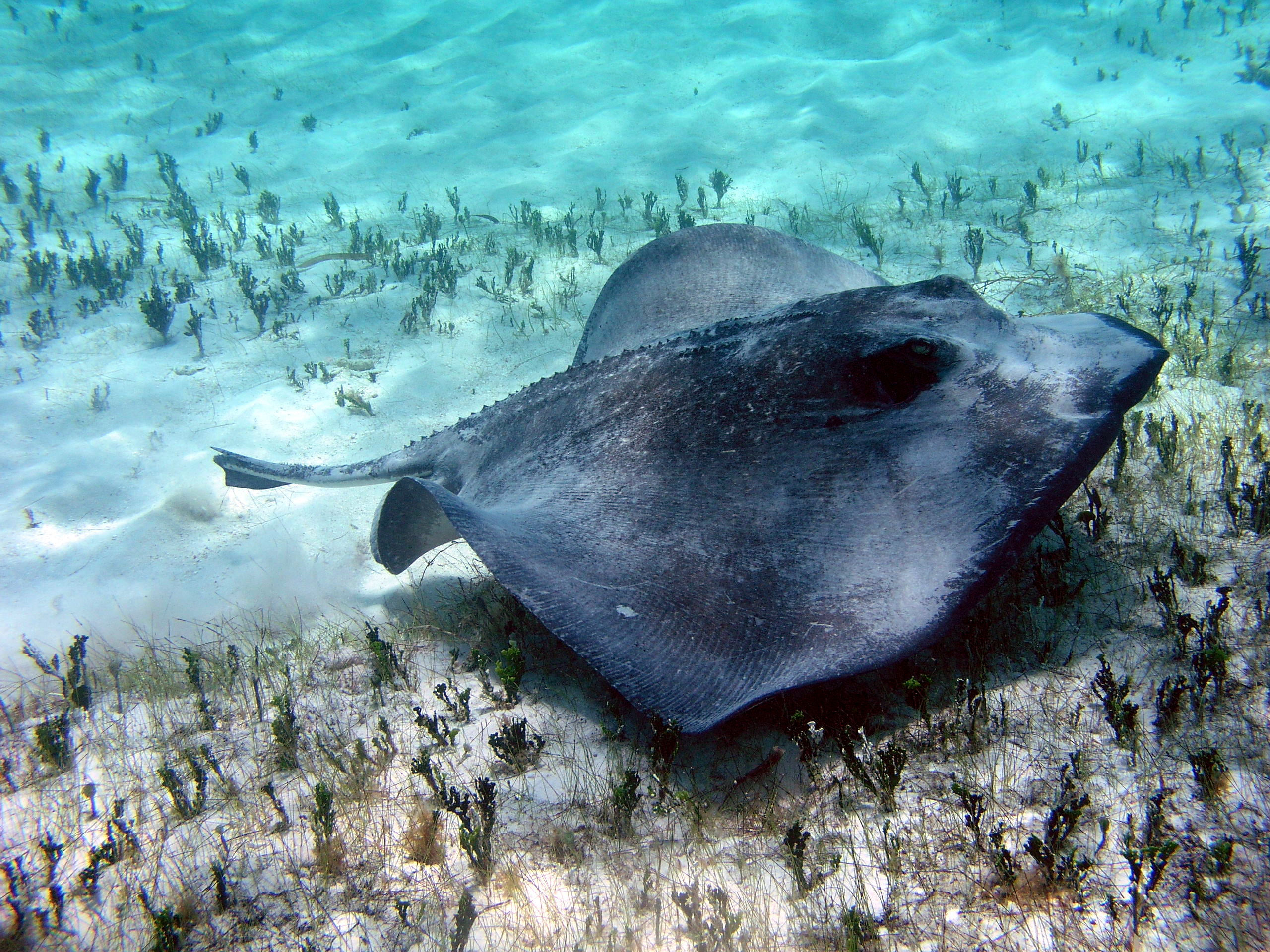
If you have spent much time wading the Gulf Coast, you probably know about the stingray shuffle.
Instead of picking up your feet and stepping across a sandy flat, you slide them along the bottom. The idea is simple. If a stingray is buried in the sand, you would much rather bump it and give it a chance to move than plant your foot directly on top of it.
I’ve spent a lifetime fishing Gulf waters, and stingrays have always fascinated me. They are incredibly well-designed animals that can seemingly disappear into the bottom, and they come equipped with a defensive weapon capable of making any angler’s day go south in a hurry.
To us, that barb is something to avoid.

To some of the Gulf’s biggest sharks, it apparently isn’t much of a deterrent.
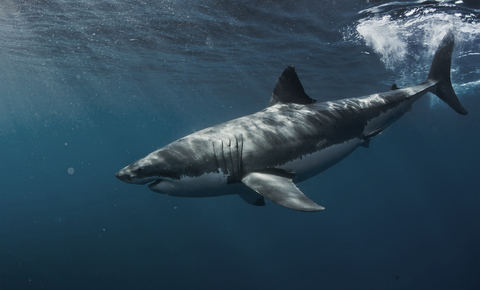
Great hammerheads are famous predators of stingrays, and bull sharks will gladly eat them as well. In fact, when you start looking closely at the relationship between sharks and rays, you get a fascinating glimpse into what is actually happening beneath the surface of the Gulf while we’re wading, fishing and running boats over it.
We spend a lot of time wondering about sharks.
Maybe we should spend more time wondering what the sharks are hunting.
A Familiar Gulf Coast Creature
Stingrays are part of life along the Gulf Coast.
Anglers encounter them while fishing from beaches and piers, drifting bays and working passes. Wade fishermen occasionally see one explode out of the sand a few feet away, although plenty of rays probably remain buried without us ever knowing they were there.
The Gulf contains several species of stingrays and related rays occupying habitats ranging from shallow bays and beaches to offshore waters. Southern stingrays are among the better-known species in warm coastal waters, while Atlantic stingrays are particularly interesting because they can tolerate extremely low salinity and even live in freshwater.
Stingrays feed heavily on animals associated with the bottom, including crustaceans, mollusks, worms and small fishes. Their flattened bodies allow them to settle against the substrate, and some species will cover themselves with sand until little more than their eyes and spiracles are exposed.
That’s great camouflage against something hunting primarily by sight.
A hammerhead has other options.
The Hammerhead and the Ray
I’ve always considered the great hammerhead one of the most impressive predators in the Gulf.
A truly large hammerhead is an unforgettable animal. Everything about it looks exaggerated, especially that enormous head, but the hammer-shaped cephalofoil isn’t some bizarre accident of nature. It gives the shark significant sensory advantages.

Like other sharks, hammerheads possess the ampullae of Lorenzini, specialized organs that detect weak electrical fields produced by living animals. Those receptors are distributed across the broad hammerhead, giving the shark an impressive ability to search for prey.
That’s a pretty handy piece of equipment when one of your favorite foods specializes in hiding beneath sand.
A stingray can disappear visually, but it can’t simply turn off the electrical activity generated by its body.
Great hammerheads are also known to use that broad head while attacking rays, pinning or controlling them against the bottom while getting into position to bite. That puts a whole different perspective on the hammerhead’s strange appearance.
That head is part of the hunting package.
And the prey it’s designed to help capture can fight back.
A Dangerous Meal
Anyone who has ever been hit by a stingray spine doesn’t need an explanation of what that weapon can do.
The spine isn’t there for hunting. Stingrays generally use it defensively when threatened, stepped on or attacked. For a shark attempting to eat one, that means dinner comes armed.
There are records of sharks carrying stingray spines embedded in their bodies, including hammerheads with multiple barbs. I find that remarkable because it shows these predator-prey encounters aren’t always clean or easy.
The ray gets its shots in.
That should tell us something about how valuable rays are as prey. A big hammerhead is willing to attack an animal capable of driving a serrated spine into its body because the potential meal is apparently worth the risk.
That’s the real Gulf of Mexico.
It’s not the sanitized version we see from the beach. There is a constant struggle for survival occurring from the shallowest bay to the deepest offshore water, and sometimes it involves two animals equipped with some pretty remarkable hardware.
Bull Sharks Will Take Them, Too
Bull sharks aren’t as specialized for hunting rays as hammerheads, but they’re among the most adaptable predators in Gulf waters.
Anyone who follows my work knows I have tremendous respect for bull sharks. They’re powerful, opportunistic and capable of operating in an astonishing range of environments. A bull can be offshore one day and moving through an estuary, bay or even freshwater another time.

That versatility puts bull sharks into plenty of ray habitat.
Fish make up an important part of their diet, but bull sharks also prey on other sharks and rays. If something represents a reasonable meal and a bull shark can catch it, there’s a good chance it will at least investigate the opportunity.
That’s one reason bull sharks do so well in the Gulf.
They’re built to take advantage of what is available.
A ray doesn’t have to be the bull shark’s favorite food for the relationship to matter. When you’re talking about a predator that uses bays, beachfronts, passes and offshore waters, the ability to exploit different prey is a huge advantage.
Look at What’s Under the Shark
One thing I’ve learned from spending decades investigating sharks is that people tend to focus entirely on the predator.
We want to know where the shark is.
How big is it?
How many are there?
Could it hurt somebody?
Those are understandable questions, but I’ve become increasingly interested in another one.
What’s underneath the shark?
If you want to understand predators, look at their prey.
A hammerhead moving across a Gulf flat isn’t simply wandering around looking sinister. It may be searching for rays buried beneath the bottom. A bull shark cruising a pass might be taking advantage of fish and rays moving through a natural feeding corridor.
The same principle applies offshore. Find bait, and you often find larger predators. Find concentrations of larger fish, and eventually something capable of eating those predators might show up.
That’s the food chain, and sharks are part of it rather than somehow existing above it.
More Than Something to Avoid
Most Gulf Coast fishermen probably think about stingrays primarily as something they don’t want to step on or accidentally grab beside the boat.
I understand that completely.
But the more you look at these animals, the more interesting they become. They’re close relatives of sharks with highly specialized bodies, impressive camouflage, remarkable sensory abilities of their own and one of the most effective defensive weapons encountered in Gulf shallows.
They also occupy an important place in the food web.
The next time you’re wading a Gulf beach and doing the stingray shuffle, consider what might be happening beyond your feet. Somewhere along that same stretch of coast, a ray could be buried beneath the sand while a hammerhead searches the bottom using senses we can barely comprehend.
The ray has camouflage and a nasty barb.
The hammerhead has that incredible head and millions of years of predatory specialization.
And the bull shark doesn’t need anything fancy. If it finds an opportunity, it eats.
That’s the kind of Gulf Coast wildlife story I love because it’s happening in waters many of us have fished our entire lives. We might never witness the encounter, but the evidence is there in the animals themselves.
Sometimes understanding sharks isn’t about looking at the shark at all.
It’s about looking at what’s on the menu.
Chester Moore
Follow Chester Moore and Higher Calling Wildlife® on the following social media platforms
@gulfgreatwhitesharksociety on Instagram
@thechestermoore on Instagram
Higher Calling Wildlife on Facebook
Email Chester at chester@chestermoore.com.
Subscribe to the Dark Outdoors podcast on all major podcasting platforms.




Leave a Reply