Chester Moore Files #3
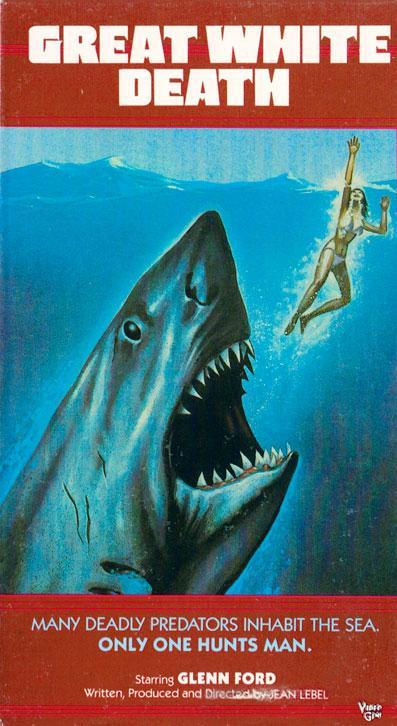
There were a handful of things that helped shape my fascination with sharks when I was a kid. Jaws was obviously one of them, and Jacques Cousteau opened an entirely different window into the mysteries of the sea. Those were formative influences, the kind of things I can look back on now and clearly see in the path my career eventually took. Then there was Great White Death.
I would not put the 1981 film in quite the same category as Jaws or Cousteau in terms of its influence on me, but I remember seeing it as a kid and being fascinated. It had real sharks, divers working around them, horrific attack accounts, strange places and a dark presentation that fit perfectly into an era when great white sharks existed somewhere between wildlife and monster in the public imagination. For a kid already fascinated with sharks and the mysteries of the ocean, it was powerful stuff.
Adding another layer of gravitas to the strange production was its narrator, legendary Hollywood actor Glenn Ford, whose familiar, authoritative voice gave even the film’s most sensational claims the weight of a serious wildlife documentary.

Watching it again all these years later is a different experience. Some of the science is badly dated, some of the narration is sensational beyond belief and parts of the movie carry the unmistakable atmosphere of the mondo-style films that were popular during that era. Yet it would be a mistake to dismiss Great White Death as simply an anti-shark exploitation film because buried beneath all the dramatic language is an acknowledgment that sharks have an important place in the ocean. That contradiction is what makes the movie worth revisiting.
The Great White as Real-Life Horror
Great White Death introduces the ocean as one of humanity’s great unexplored frontiers. The narration marvels that man had reached the moon while still knowing comparatively little about the waters covering much of our own planet, then moves into the mythology surrounding sharks as creatures alternately worshipped as gods and feared as demons.
Once the great white takes center stage, the language gets considerably darker. The shark is called an exterminator, monarch and “master pirate of the deep,” while the film repeats claims about enormous 30-foot whites and their capacity to inflict catastrophic injuries. For someone who didn’t live through that period, it’s difficult to communicate just how completely the great white occupied the role of real-life sea monster. Jaws had arrived in 1975 and changed popular culture, transforming the great white into something more than a dangerous wild animal. It became the fin in the distance, the unseen presence beneath the swimmer and perhaps the greatest real animal ever transformed into a horror icon.

Some of that language sounds outrageous today, but the danger itself should never be dismissed. Great white sharks are powerful predators capable of killing human beings. People have lost limbs, suffered devastating injuries and lost their lives in attacks, and I never want the conservation conversation to become so sanitized that we diminish those experiences. Respecting sharks does not require pretending they are harmless. In fact, I think the opposite is true. Real respect begins by seeing an animal for what it actually is, including its capabilities.
The Attack That Needed No Embellishment
That is one reason the testimony of diver Henri Bource remains one of the most powerful parts of Great White Death. Bource survived a horrific shark attack in Australia in 1964, and the film lets him describe being in the water around seals when the animals suddenly disappeared. Shortly afterward, the shark struck.
Bource describes the impact as being like getting hit by a train. The shark grabbed him, pulled him underwater and shook him violently before he eventually broke free and made it toward the surface. His leg was gone. There is no need to turn that into a monster story because what actually happened is frightening enough. What interests me almost as much, however, is that Bource eventually went back into the water and continued diving because he still loved the sea.
Here was a man who had perhaps the most legitimate reason imaginable to fear and even hate sharks, yet the attack didn’t destroy his connection to the ocean. His experience deserves more respect than any simplistic statement that sharks pose no real danger. They do, but the larger question is what we do with that reality. Danger and evil are two completely different things, and understanding that distinction is important to everything we do through the Gulf Great White Shark Society.
The Faces of Death Atmosphere
Anyone who grew up around the VHS era may notice another influence almost immediately. At times, Great White Death feels like a shark-centered cousin of Faces of Death, the infamous 1978 shock documentary that mixed authentic footage with staged material and blurred the boundaries between documentary and exploitation. Modern descriptions of Great White Death have made that comparison directly, with some sources describing portions of its shark-attack material as recreated or staged.

I looked for a direct personnel connection between the two films and couldn’t find one. The available credits indicate separate directors, writers and producers, so the connection appears to be stylistic rather than organizational. The resemblance nevertheless makes perfect sense. Faces of Death had demonstrated the appetite for material that felt dangerous, forbidden and perhaps a little too real, and the great white shark was almost perfectly suited for that treatment.
That distinction matters because Great White Death contains substantial genuine shark footage and real survivor testimony. What becomes difficult more than four decades later is knowing precisely where documentary ends and reconstruction begins in every sequence. That uncertainty is very much part of the mondo tradition, where genuine footage, reenactment and sensational presentation could be placed alongside one another with considerably less explanation than audiences would expect today.
Then Comes the Human Skull
One sequence in particular stayed with me, and watching it now raises even more questions. During the South African shark-netting portion of the film, viewers are shown what the narration says is a human skull that had recently been recovered from a large shark caught by the netting team. The film presents the skull as proof of what sharks are capable of consuming.
The shark associated visually with the sequence appears to be a tiger shark, although the narration itself does not identify the species. I have not found a reliable independent source documenting all of the circumstances surrounding that recovery, so I don’t want to present details as established fact that I can’t verify. Was the skull actually recovered from the shark shown? What were the circumstances? Was everything presented exactly as it occurred, or was some of the sequence constructed for the film? More than four decades later, those are reasonable questions.
But imagine watching that as a kid. I wasn’t sitting there analyzing documentary ethics, editing techniques or wondering about reconstruction. There was no Internet waiting in the next room where I could immediately fact-check what I had just watched. I was seeing what appeared to be a human skull taken from a shark, and that was about as dark as shark television could get.
That scene also demonstrates something important about the way sharks were presented during this period. The fact that large sharks can consume human remains is part of their biology as predators and scavengers, and tiger sharks in particular are famous for consuming an extraordinary range of prey. The problem wasn’t acknowledging what sharks could do. It was when their ability to kill and consume became virtually their entire identity.
So, How Much of This Was Real?
That’s a fair question, and the answer isn’t as clean as I would like. Several modern descriptions of Great White Death state that it contains recreated shark attacks and compare those sequences with the staged material associated with Faces of Death. That doesn’t mean everything disturbing in the film was fabricated. The shark footage is real, survivor testimony such as Bource’s is real, and there is substantial genuine wildlife material throughout the production.
What becomes difficult is establishing the provenance of every dramatic sequence. That doesn’t ruin the movie for me. In some ways, it makes Great White Death even more interesting as a cultural artifact because we’re watching a style of documentary filmmaking from a very different era. Authentic footage, reconstruction, sensational narration and shocking imagery could all occupy the same production without the clear boundaries we would expect today.
That’s also why I don’t think it’s fair simply to label the film fake and move on. There is too much genuine material in it for that. The more interesting question is how that genuine material was packaged, because Great White Death wasn’t simply showing audiences sharks. It was showing audiences how frightening sharks could be made to feel.
And then, remarkably, the movie begins defending them.
The Killing Machine Becomes an Environmentalist
After spending so much time building sharks into monsters, Great White Death starts asking whether we have misunderstood them. The narration explicitly says sharks are not indiscriminate killers and eventually describes them as important components of marine ecosystems. Most remarkably, it calls the shark a “champion environmentalist of the sea,” arguing that predators remove sick, weak and dying animals and contribute to the balance of ocean life.
For a movie called Great White Death, that’s quite a turn. We can refine some of that language with modern science, and I certainly wouldn’t endorse every ecological claim made in the film, but the underlying concept was pointing toward something that is fundamental to modern shark conservation. Predators aren’t mistakes. They have roles within the systems in which they evolved, and the fact that an animal is capable of killing does not negate its ecological importance.
A grizzly bear can be an important component of its ecosystem and kill a human being. A mountain lion is a magnificent predator that can also be dangerous, and a large alligator deserves conservation and respect while still being capable of inflicting catastrophic injuries. Great white sharks belong in that same conversation. The mistake is thinking we have to choose between acknowledging danger and appreciating the animal.
We don’t.
The World We Have Been Given
There is another statement in Great White Death that hits me differently now than it did when I was a kid. During its discussion of environmental problems, the film turns its attention toward humanity and says mankind has a responsibility to care for the world that has been given to us. That idea fits closely with the way I have always approached wildlife conservation.
Stewardship does not mean protecting only animals that are cute, harmless or convenient. It means understanding that we share creation with animals occupying very different roles, including predators. Some of them are potentially dangerous, and some will occasionally kill people. Acknowledging their ecological value does not make the pain experienced by victims or their families any less real, just as acknowledging an attack does not transform an entire species into an enemy.
Those truths can exist together, and I think they have to if we’re going to have an honest conversation about sharks.
From Monsters to Animals We Can Follow
Perhaps the greatest change since Great White Death was released is simply how much more we can see.
When I watched shark documentaries as a kid, the great white was almost entirely anonymous. You saw an enormous animal emerge from blue water, attack bait or pass a cage, and then it disappeared back into an ocean that remained largely unknowable. Today, satellite and acoustic tagging allow scientists to follow individual sharks across tremendous distances and document movements that earlier generations could only speculate about.

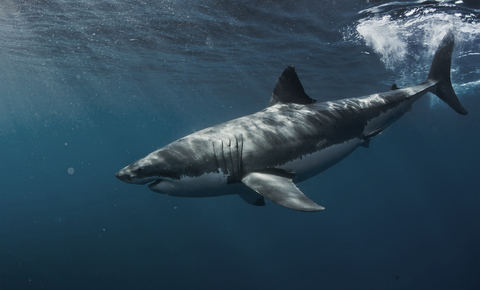
That has helped change public appreciation of these animals. A great white can now become an individual shark people recognize and follow as it moves through the Atlantic system and into places such as the Gulf of Mexico. We don’t have to get deeply into the science here to appreciate what that has done culturally. The great white is still a potentially dangerous apex predator, but it is no longer simply an anonymous set of teeth materializing from dark water.
We can watch it move.
We can begin to understand where it goes.
We can appreciate that it is part of a much larger ocean ecosystem.
None of that makes the shark tame, and it certainly doesn’t make it a cuddly companion. It simply makes the animal more real.
Appreciating Danger
I think modern shark conservation can sometimes become uncomfortable with the word dangerous. I am not.
Great white sharks are potentially dangerous to human beings. So are tiger sharks, bull sharks and several other large species under certain circumstances. People who have survived attacks don’t need anyone telling them otherwise, and families who have lost loved ones certainly don’t need their experiences minimized.
That reality doesn’t weaken the conservation argument. I think it strengthens it because there is something deeply impressive about sharing the planet with animals capable of reminding us that human beings are not in complete control everywhere we go. When we enter the ocean, we are entering an environment where we are physically vulnerable and where large predators operate on their own terms.
Interestingly, Great White Death recognizes that idea in its own dramatic way. The film repeatedly reminds viewers that the sea is the shark’s domain and that people entering it should do so with respect. Strip away the pirate language and mondo theatrics and that’s not a bad message at all. We don’t have to make the great white harmless in order to make it worthy of protection. We have to understand what it is.
Of course glorification of shark netting in South Africa that killed thousands of sharks, many of which rarely attack under any circumstnace ages very badly but even looking back on that teaches us something.
We’ve come a long way from the 80s in terms of conserving sharks.
Why Great White Death Still Matters to Me
When I saw Great White Death as a kid, I wasn’t thinking about any of this. I wanted sharks, mystery and the feeling that there were enormous animals moving through parts of the world I desperately wanted to understand. The film wasn’t foundational for me in the way Jaws or Jacques Cousteau were, but it added another layer to a fascination that never went away.
Years later, after spending much of my career interviewing scientists, talking with fishermen and investigating great white sharks in the Gulf, I can watch it through a completely different lens. I can see where the science went wrong, recognize the mondo-style sensationalism and wonder which portions might have been reconstructed. At the same time, I can appreciate the genuine shark footage, respect the people who survived terrifying encounters and recognize that even Great White Death ultimately understood something important.
The shark was potentially dangerous, and the shark was necessary. Those ideas do not cancel each other out.
That is probably the biggest difference between appreciating sharks and romanticizing them. I have no interest in romanticizing great white sharks. They are extraordinarily powerful wild predators, and people entering waters where they occur should understand that reality. They are also animals worthy of study, conservation and respect, and today we have opportunities to observe and track their movements that would have seemed almost unimaginable when Great White Death was made.
Looking back, maybe that’s why the movie has remained somewhere in my memory for all these years. It wasn’t because it convinced me the great white was a monster. It showed me an animal surrounded by mystery, danger and questions, and I wanted to know more.
More than four decades later, I still do.
Chester Moore
Follow Chester Moore and Higher Calling Wildlife® on the following social media platforms
@gulfgreatwhitesharksociety on Instagram
@thechestermoore on Instagram
Higher Calling Wildlife on Facebook
Email Chester at chester@chestermoore.com.
Subscribe to the Dark Outdoors podcast on all major podcasting platforms.




Leave a Reply