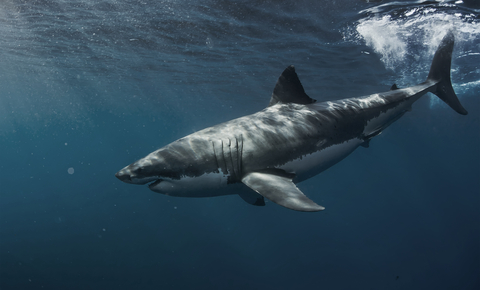
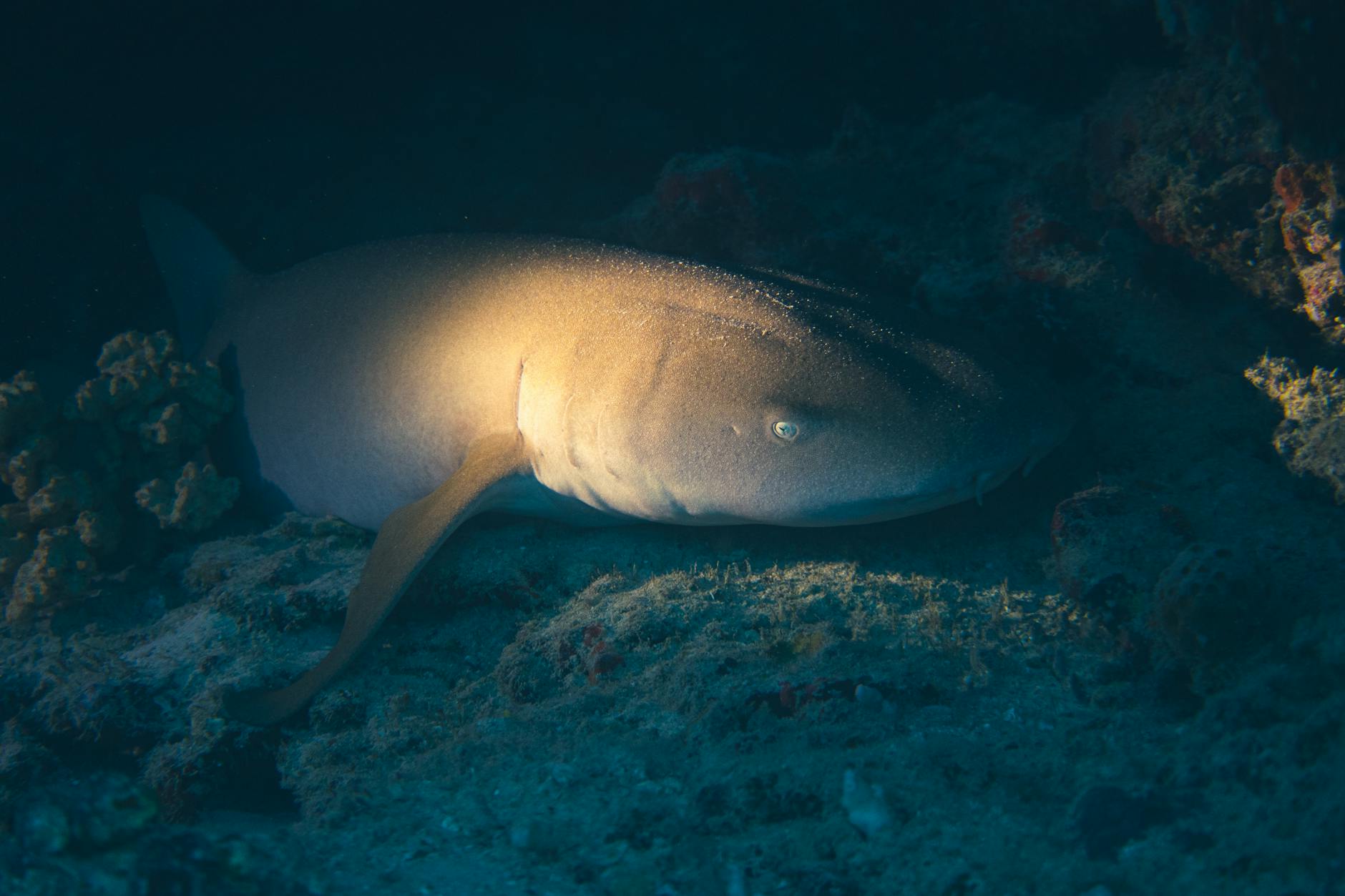
The phrase “cocaine sharks” sounds like something pulled from a SyFy script, right alongside Sharknado. But this isn’t fiction, and it didn’t start in the ocean.
When reports surfaced that sharks in The Bahamas had tested positive for cocaine and other pharmaceuticals, it was easy to treat it like a curiosity.
But for Dr. Tracy Fanara of Inspector Planet—an environmental engineer who has worked with everyone from NOAA to Mote Marine Laboratory there was nothing unusual about it.
Listen to our full interview with her here on an episode of Dark Outdoors® the podcast here.
Find Dark Outdoors® and subscribe on your favorite podcast platform here.

“When you understand how pollutants move through water systems, finding these kinds of chemicals in marine life isn’t surprising,” she said.
The 2025 study published in Environmental Pollution confirmed what many scientists already suspected. Sharks in coastal waters (lemon sharks, nurse sharks, Caribbean reef sharks) are carrying traces of human pharmaceuticals and illicit drugs. Cocaine made headlines, but it wasn’t alone. Caffeine, acetaminophen, and anti-inflammatory drugs were also found circulating in animals that spend their lives just offshore.
That detail matters.
These weren’t deep-water predators far removed from human activity. These were coastal sharks, living in the same waters where development, tourism, and wastewater systems intersect.

“It was just coastal sharks, which kind of tells us where some of these drugs might be coming from,” she said.
There’s no dramatic dumping event behind this. No single source you can point to and shut down. Instead, it’s the accumulation of everyday things most people never think about.
Wastewater that isn’t fully treated.
Septic systems that leak.
Storm events that overwhelm infrastructure and release untreated sewage.
“All of these things introduce chemicals into the environment that are untreated,” Fanara said.

Once those chemicals enter the water, they don’t just dilute and disappear. They move. They spread. They are taken up by smaller organisms, passed to fish, and eventually concentrated in larger predators.
By the time they reach a shark, they’re no longer theoretical.
They’re measurable.
The idea of “cocaine sharks” behaving like something out of a movie is easy to latch onto, but that’s not what the science shows according to past observations.
“Very few of them had increased activity. A lot of them got lazier, they didn’t meet their migration time period, reproduction slowed,” she said.
That kind of change doesn’t make headlines, but it matters more.
In the ocean, small disruptions have consequences. A shark that misses a migration window may miss a feeding opportunity. A population with reduced reproduction may not recover as quickly. An animal using more energy to process contaminants has less energy for growth and survival.
None of it is dramatic on its own. All of it adds up.
“Sharks are indicator species. What happens to them signals broader ecosystem problems,” Fanara said.
What’s showing up in these sharks isn’t isolated. It’s a reflection of what’s moving through the water around them.
The bigger issue isn’t cocaine. It’s chemistry.
Modern life depends on a constant stream of pharmaceuticals, personal care products, and industrial compounds. Those substances don’t stay contained. They enter wastewater systems, and from there, they move into the environment.
The problem is that our infrastructure wasn’t built to handle all of them.
“We treat what we test for,” Fanara said.
There are thousands of compounds in circulation, and testing for all of them is expensive and often impractical. Many slip through treatment processes, especially at low concentrations.
For years, the assumption was that those low concentrations didn’t matter.
But that assumption is starting to change.
Because exposure isn’t a one-time event. It’s constant. Day after day, year after year, those compounds remain in the system, circulating through water, through wildlife, and through the food web.
Places like The Bahamas are often seen as pristine. Clear water, healthy reefs, thriving ecosystems. But clarity doesn’t mean clean.
The presence of pharmaceuticals in sharks from these waters shows that even environments that appear untouched are already carrying the imprint of human activity.
And it doesn’t stay contained.
“We’re not making any new water,” Fanara said.
The water on this planet moves through a continuous cycle. What enters it doesn’t disappear. It shifts between land, ocean, and atmosphere, carrying whatever we’ve introduced along the way.
That’s what makes this story different from the headline. Because this didn’t start with sharks. It started on land.
It started with what we use, what we flush, and what we assume is being taken care of somewhere out of sight.
For Fanara, the first step in addressing the problem is awareness.
“Understand where your water comes from, where it goes when you flush your toilet, or when it goes down a drain. Just understanding that will start to change your brain,” she said.
From there, the actions are straightforward. Dispose of medications properly. Pay attention to local water issues. Support improvements to infrastructure that most people never see but rely on every day.
None of it is complicated.
But ignoring it is.
The reason “cocaine sharks” caught attention is obvious. Sharks have always had that effect. They draw people in. They hold attention.
The sharks aren’t the story. They’re the evidence. And what they’re showing is something that doesn’t stay offshore, doesn’t stay out of sight, and doesn’t go away.
It’s already in the water
Chester Moore
Follow Chester Moore and Higher Calling Wildlife® on the following social media platforms
@gulfgreatwhitesharksociety on Instagram
@thechestermoore on Instagram
Higher Calling Wildlife on Facebook
Email Chester at chester@chestermoore.com.
Subscribe to the Dark Outdoors podcast on all major podcasting platforms.






Leave a Reply