The Gulf of Mexico is home to a wide range of shark species, but only a handful qualify as true large predators.
These are sharks that can reach or exceed 10 feet in length and play a significant role at the top of the food chain.
While great white sharks often get the most attention, they are part of a broader group of large predatory sharks that use Gulf waters in very different ways depending on season, location, and environmental conditions.
Not All Large Sharks Are Predators
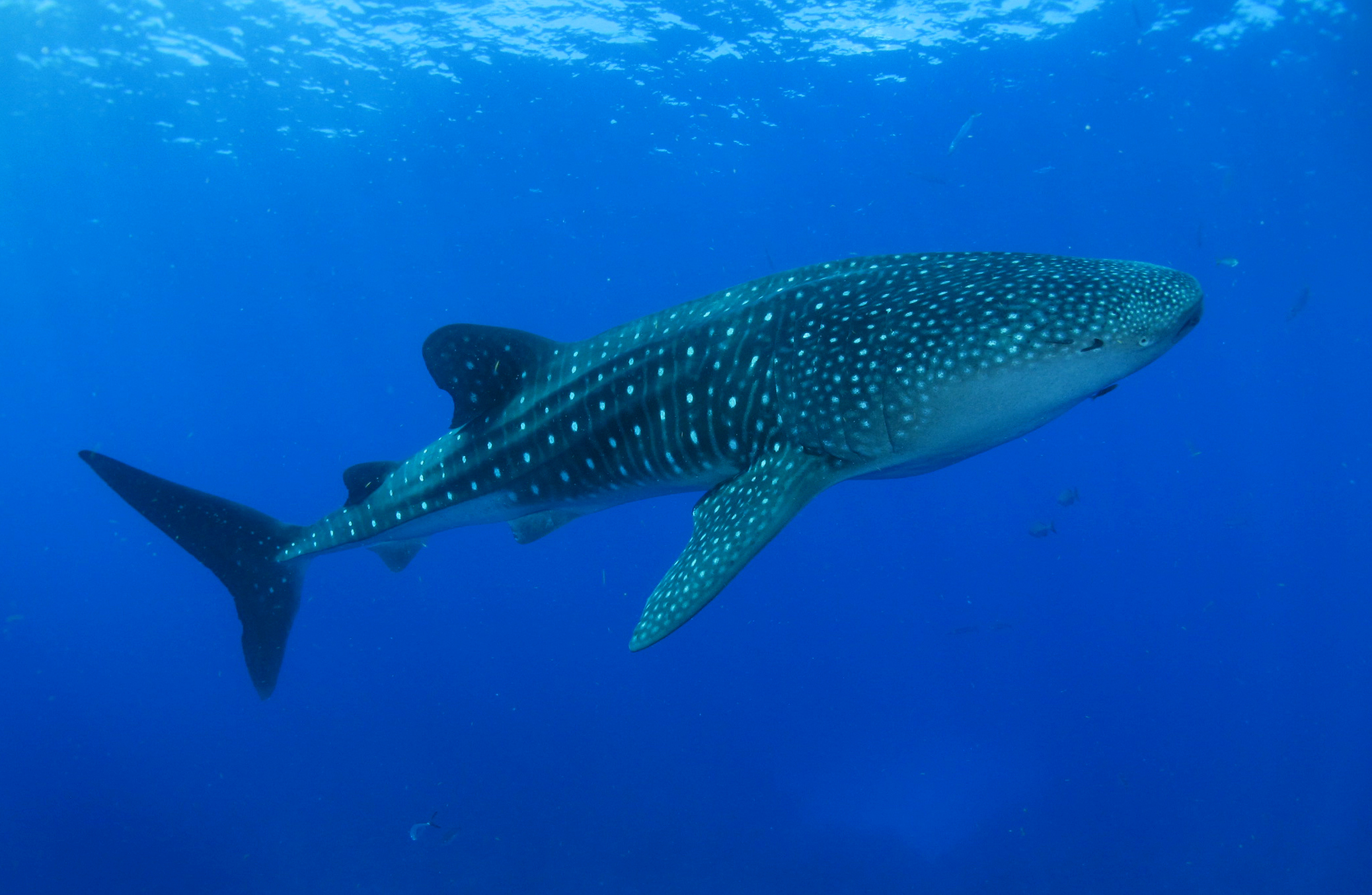
While this article focuses on large predatory sharks, it’s worth noting that the Gulf is also home to the largest shark of all—the whale shark.
Whale sharks can exceed 30 feet in length, but unlike the species covered here, they are filter feeders that consume plankton and small organisms.

Their presence highlights an important distinction: size alone doesn’t define a shark as a top predator.
The species that follow are the true apex and upper-level predators of the Gulf—animals built for hunting large prey and occupying the top tiers of the food chain.
Great White Sharks
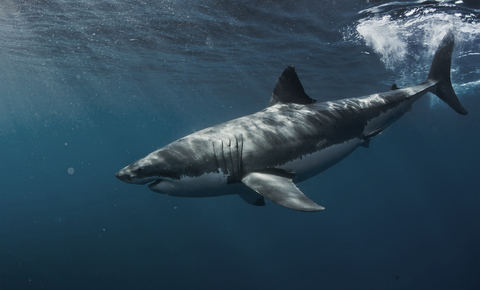
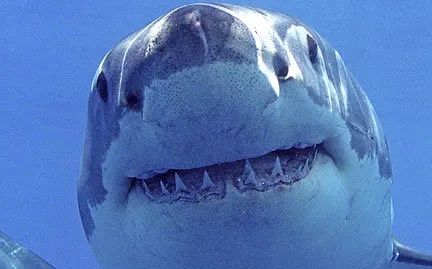
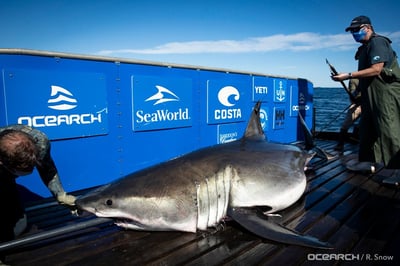
Great white sharks are among the most discussed large predators in the Gulf, largely because their presence was misunderstood for so long.
Recent research and documented encounters now confirm that they do enter the Gulf, particularly during cooler months.

Their movements appear to be tied to seasonal patterns and broader migration routes within the western North Atlantic population.
Tiger Sharks
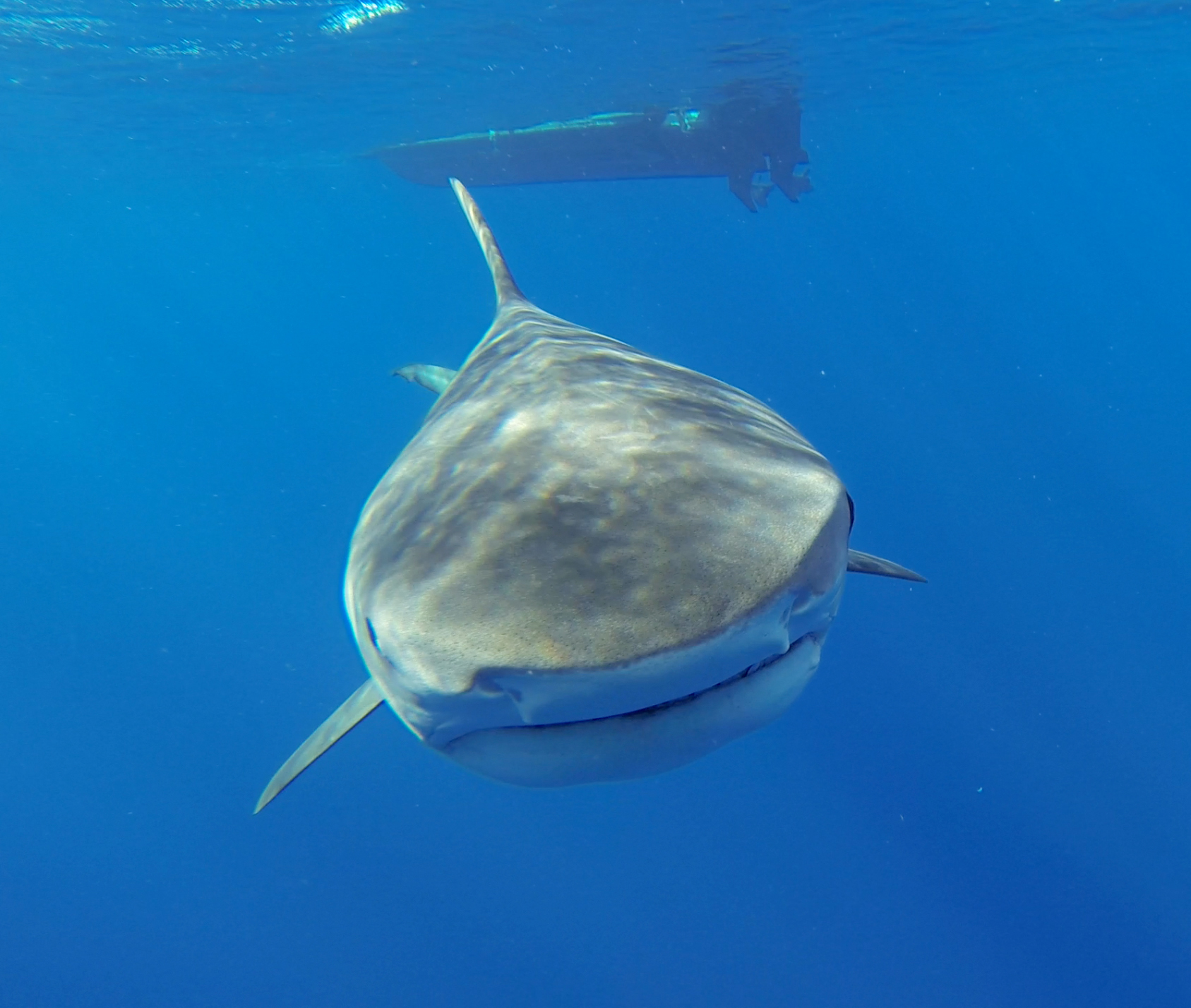
Tiger sharks are one of the most consistently large predatory sharks in the Gulf of Mexico.

They regularly exceed 10 feet and are known for their wide-ranging behavior, moving between coastal and offshore waters.
Their presence is often tied to areas where prey is abundant.
Great Hammerhead Sharks
Great hammerheads are among the most powerful predators in the Gulf.

They can exceed 10 feet and are commonly found in offshore waters, though they will move into shallower areas, particularly where stingrays are present.
Their unique head structure enhances their ability to detect prey.
Bull Sharks
Bull sharks are frequently encountered in Gulf waters and are one of the most important coastal predators.

While most individuals fall below 10 feet, large specimens can reach that size range.
Their ability to move into shallow and even freshwater environments makes them one of the most adaptable large sharks in the region.
Bluntnose Sixgill Shark
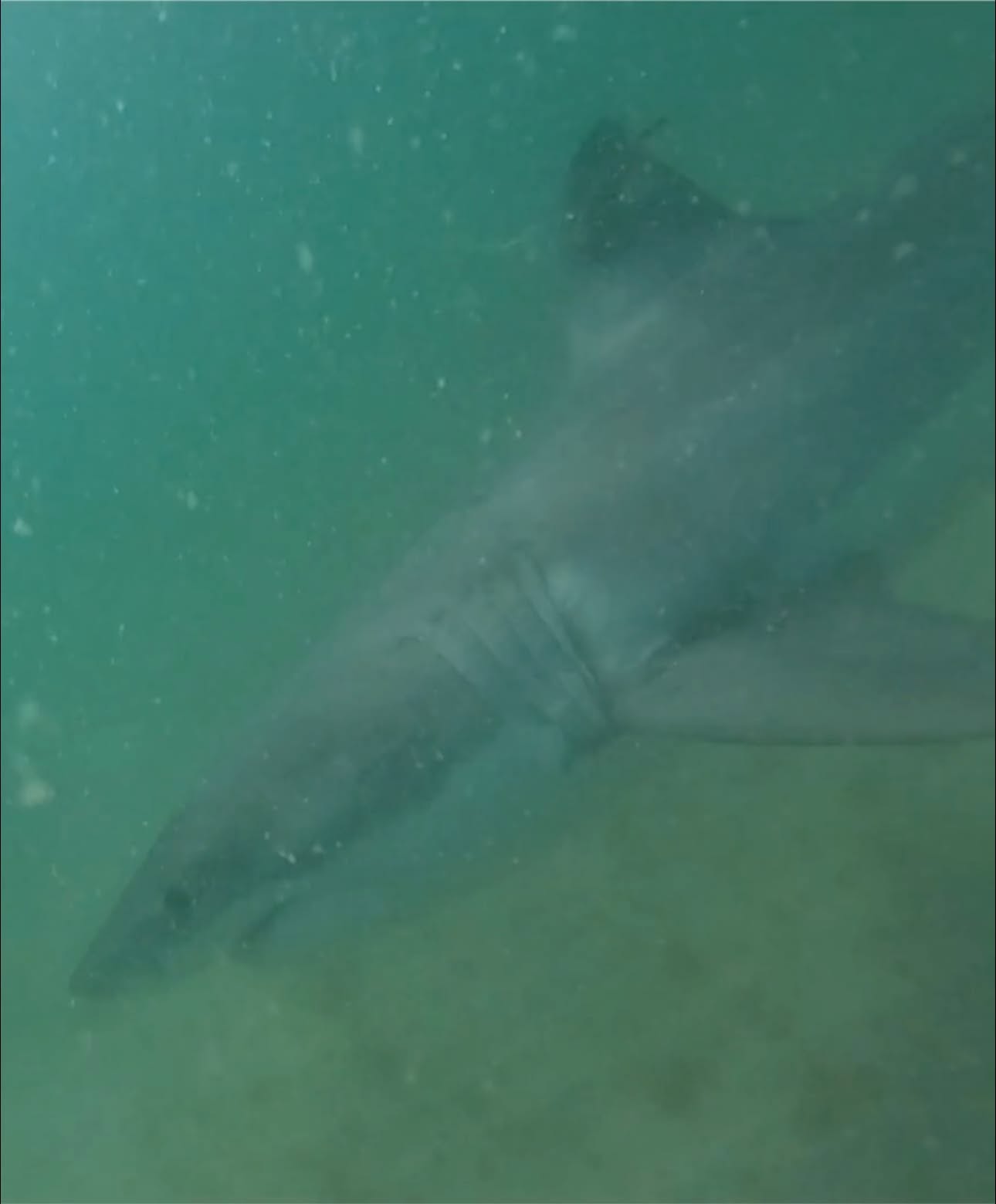
One of the least known—and most surprising—large predators in the Gulf of Mexico is the bluntnose sixgill shark (Hexanchus griseus).
This deepwater species can exceed 15 feet in length and represents a much more ancient lineage of sharks.

Sixgill sharks are rarely seen because they inhabit deep offshore waters along the continental slope, far below the depths typically accessed by anglers or divers.
Their presence in the Gulf highlights just how little is still seen of what lives in its deeper environments.
A Connected System
These sharks do not exist in isolation.
They are part of a connected system influenced by water temperature, prey movement, and seasonal changes.
Understanding how these species use the Gulf helps explain why certain encounters occur—and why some sharks appear in areas where they were once considered rare.
How This Connects to Great White Sharks
The presence of multiple large predatory sharks in the Gulf helps provide context for great white shark activity.
The same conditions that support tiger sharks, hammerheads, and other large predators also make the Gulf a viable environment for great whites under the right circumstances.
For a deeper look at all large sharks in the Gulf →
https://gulfgreatwhites.com/large-sharks-of-the-gulf-of-mexico-biggest-species-guide/
Chester Moore
Follow Chester Moore and Higher Calling Wildlife® on the following social media platforms
@gulfgreatwhitesharksociety on Instagram
@thechestermoore on Instagram
Higher Calling Wildlife on Facebook
Email Chester at chester@chestermoore.com.
Subscribe to the Dark Outdoors podcast on all major podcasting platforms.



Leave a Reply