If someone had told me I’d be writing about a Greenland shark in the Gulf of Mexico, I would have laughed. Sharks in the Gulf? Sure. Bull sharks, tiger sharks, hammerheads — no problem. But an Arctic wanderer, a species built for icy darkness, showing up in warm southern waters? That’s the kind of strange story that makes you stop and read twice.
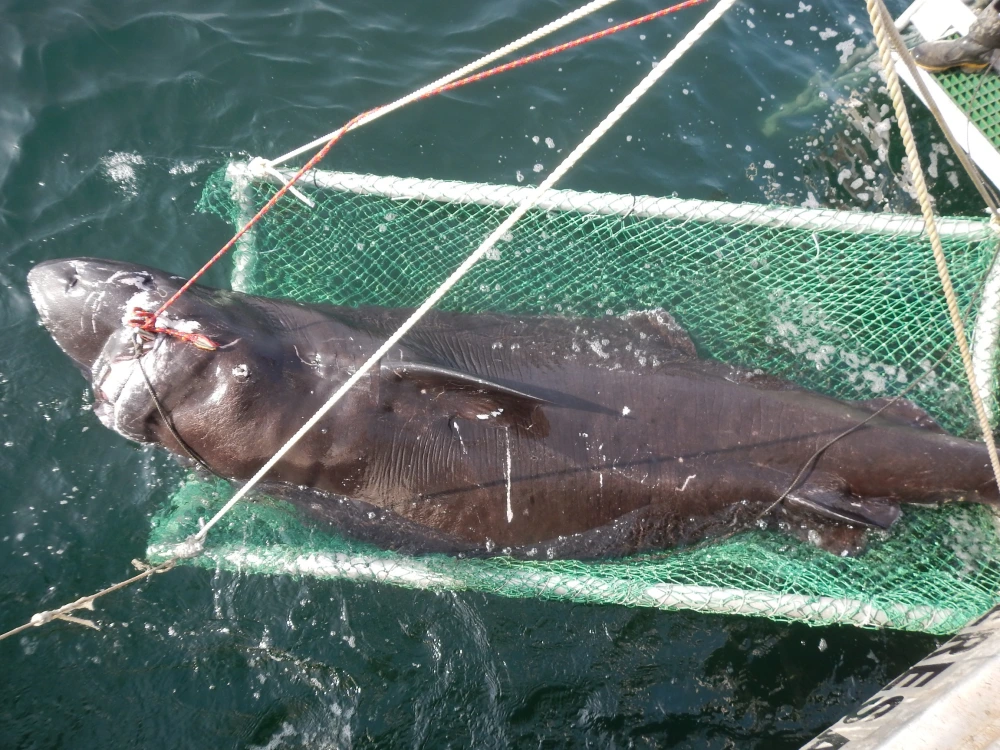
According to reporting by NBC News, scientists in August 2013 were conducting a deepwater research cruise when their nets hauled up a massive surprise: a 12-foot Greenland shark. The capture marked the first documented case of the species being found in the Gulf of Mexico. Even for seasoned marine researchers, it was a head-scratcher.
The scientists weren’t out there looking for oddball sharks. According to researchers involved in the project, the team was conducting surveys related to the aftermath of the Deepwater Horizon oil spill, sampling deep-sea fish communities to better understand how the spill may have affected life far below the surface. The Gulf’s deep waters are cold, dark, and largely unexplored, and that’s exactly where this shark was found — nearly 6,000 feet down, where temperatures hover just above freezing.

In other words, while the surface waters of the Gulf can feel almost tropical, the deep sea tells a different story. According to the scientists, those frigid depths may have provided suitable conditions for an Arctic species like the Greenland shark, even thousands of miles from where we expect it to live.
To appreciate just how strange this encounter was, you have to understand the Greenland shark itself.
According to marine biologists, Greenland sharks are among the most mysterious large predators on Earth. They’re found primarily in the Arctic and North Atlantic Oceans and are rarely seen by humans because they spend most of their lives in deep, cold water. When they do show up in nets or on camera, it’s often by accident.
One of the most astonishing facts about Greenland sharks is their age. According to scientific studies that analyzed eye tissue using radiocarbon dating, some Greenland sharks are estimated to be more than 250 years old, with the possibility that a few individuals may live close to 400 years. That means a living Greenland shark today could have been swimming the oceans before the American Revolution.
Scientists aren’t entirely sure why they live so long, but according to researchers, their slow metabolism and cold-water lifestyle likely play a major role. These sharks grow at an incredibly slow rate — often less than an inch per year — and don’t reach sexual maturity until they are well over a century old.
Their behavior matches their biology. According to observations, Greenland sharks are slow movers, cruising the depths at a pace that wouldn’t impress most predators. But slow doesn’t mean ineffective. Studies of stomach contents show that Greenland sharks eat a wide variety of prey, including fish, squid, and even seals. In some cases, remains of large mammals have been found, suggesting they also scavenge carcasses that sink to the ocean floor.
Another strange twist: according to researchers, many Greenland sharks are effectively blind. A small parasitic copepod often attaches itself to the shark’s eyes, clouding vision or rendering it useless. Yet the sharks seem unfazed. Scientists believe they rely heavily on their sense of smell and their ability to detect electrical signals produced by other animals.
Reproduction is just as unusual. According to scientists, Greenland sharks give live birth after long gestation periods, producing relatively few pups. Combined with their late maturity and long lifespan, this makes them especially vulnerable to human impacts like bycatch or deep-sea fishing.
That vulnerability is one reason the Deepwater Horizon survey work is so important. According to researchers involved in the Gulf studies, deep-sea ecosystems recover slowly from disturbances, and long-lived species like Greenland sharks could be affected in ways that aren’t immediately obvious. Discoveries like this one help scientists better understand what lives in the deep Gulf and how human activity may influence it.
The capture of a Greenland shark during a Deepwater Horizon-related survey wasn’t just a biological curiosity — it was a reminder of how little we truly know about the deep ocean. According to scientists, the find likely doesn’t mean Greenland sharks are suddenly migrating south en masse. Instead, it highlights the fact that cold, stable environments exist far below the surface, even in places we think of as warm-water seas.
For a creature that can live for centuries, move slowly through the darkness, and appear where no one expects it, the Greenland shark feels like a messenger from another time. Its appearance in the Gulf of Mexico is strange, yes — but it’s also a powerful reminder that the ocean still holds secrets waiting to be discovered, often when we’re looking for something else entirely.
Chester Moore
Follow Chester Moore and Higher Calling Wildlife® on the following social media platforms
@thechestermoore on Instagram
Higher Calling Wildlife on Facebook
Email Chester at chester@chestermoore.com.
Subscribe to the Dark Outdoors and Higher Calling Wildlife podcasts on all major podcasting platforms.






Leave a Reply