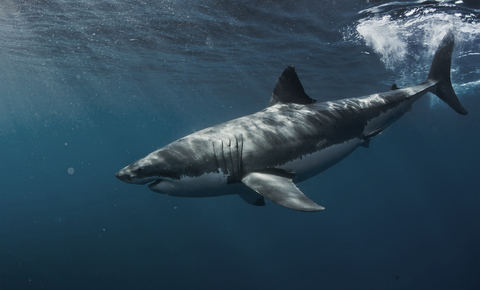
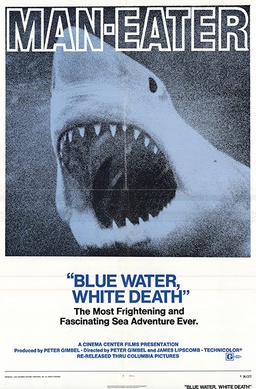
Long before Jaws made people afraid to go in the water, another film was introducing audiences to the world’s most famous shark in a way no one had ever seen before.
This year marks the 55th anniversary of Blue Water, White Death, a groundbreaking documentary that took viewers on an incredible journey across the globe in search of great white sharks. Released in 1971, it wasn’t just a shark movie. It was an adventure into the unknown at a time when great whites were still largely a mystery.
As someone who has spent decades studying sharks and sharing their stories, I can say without hesitation that Blue Water, White Death is one of the most important shark films ever made.
Searching for the Ultimate Predator
Today we can pull up hundreds of videos of great white sharks with a few clicks. In 1971, things were very different.
Very few people had ever seen a great white shark underwater. There were no satellite tags, no drone footage, and very little public understanding of these animals.

The filmmakers behind Blue Water, White Death set out on a quest that sounds almost unbelievable today. They traveled thousands of miles across the world’s oceans, following clues, rumors, and local knowledge in search of great whites.
When they finally encountered the sharks off Australia’s Dangerous Reef, what they captured was revolutionary.
For the first time, audiences could see great white sharks as living animals in their natural environment rather than as mysterious creatures described in books or newspaper reports.
Before Jaws, There Was Blue Water, White Death
When most people think of great white sharks in popular culture, they immediately think of Jaws.
What many don’t realize is that Blue Water, White Death helped pave the way.
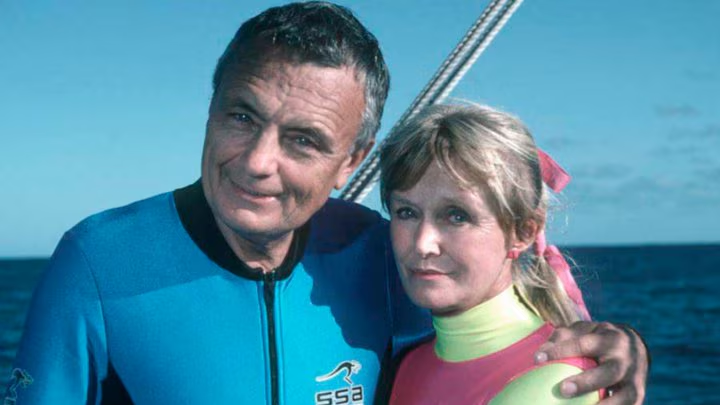
The film featured shark pioneers Ron and Valerie Taylor, whose experience with great whites later played a significant role in the production of Jaws. In many ways, Blue Water, White Death gave filmmakers and audiences their first real glimpse into the world of the great white shark.
But unlike Hollywood thrillers, the documentary wasn’t built around a monster.
It was built around discovery.
A Time of True Exploration
One reason I still enjoy watching this film is that it captures a spirit of exploration that is increasingly rare.
These filmmakers and divers were venturing into largely uncharted territory. Much of what we know about shark behavior today simply wasn’t known at the time.
Some of the scenes are breathtaking. Others will make modern shark researchers cringe a little because safety standards were very different back then.

But that’s part of what makes the documentary so fascinating. You are watching people push the boundaries of knowledge in real time.
Their willingness to take risks helped open the door to decades of shark research that followed.
More Than a Shark Movie
What stands out most to me about Blue Water, White Death is that it encourages wonder.
Yes, the sharks are powerful. Yes, they can be intimidating. But the film also presents them as incredible animals worthy of respect and study.
That message is especially important today.
We live in a time when many shark species face serious conservation challenges. Habitat loss, overfishing, and demand for shark fins have taken a tremendous toll on shark populations around the world.
Conservation begins with appreciation. People protect what they value, and they value what they understand.
Films like Blue Water, White Death helped create that understanding.
A Legacy That Still Matters
Fifty-five years later, the documentary remains one of the most important shark films ever made.
Its influence can be seen in everything from modern shark documentaries to conservation efforts and even the careers of many marine biologists and shark researchers.
I often talk about how fear can become fascination and fascination can become conservation. Blue Water, White Death is one of the best examples of that process.
The film introduced people to great white sharks not as myths or monsters, but as real animals living in a complex and fascinating ocean world.
That’s a legacy worth celebrating.
As we mark the 55th anniversary of Blue Water, White Death, we honor the explorers, filmmakers, and shark pioneers who dared to venture into the unknown. Their work helped lay the foundation for much of what we know about great white sharks today.
It’s not a PC documentary. They follow a whaling vessel out and you see sharks gather around a whale carcass. And it’s not slick.
It’s a raw, real experience where you even see a diver get the “bends”.
It’s intense.
But perhaps most importantly, they reminded us that some of the ocean’s greatest mysteries are worth pursuing—not out of fear, but out of wonder.
For anyone who loves sharks, wildlife, adventure, or the sea itself, Blue Water, White Death remains essential viewing 55 years later.
Chester Moore
Follow Chester Moore and Higher Calling Wildlife® on the following social media platforms
@gulfgreatwhitesharksociety on Instagram
@thechestermoore on Instagram
Higher Calling Wildlife on Facebook
Email Chester at chester@chestermoore.com.
Subscribe to the Dark Outdoors podcast on all major podcasting platforms.




Leave a Reply