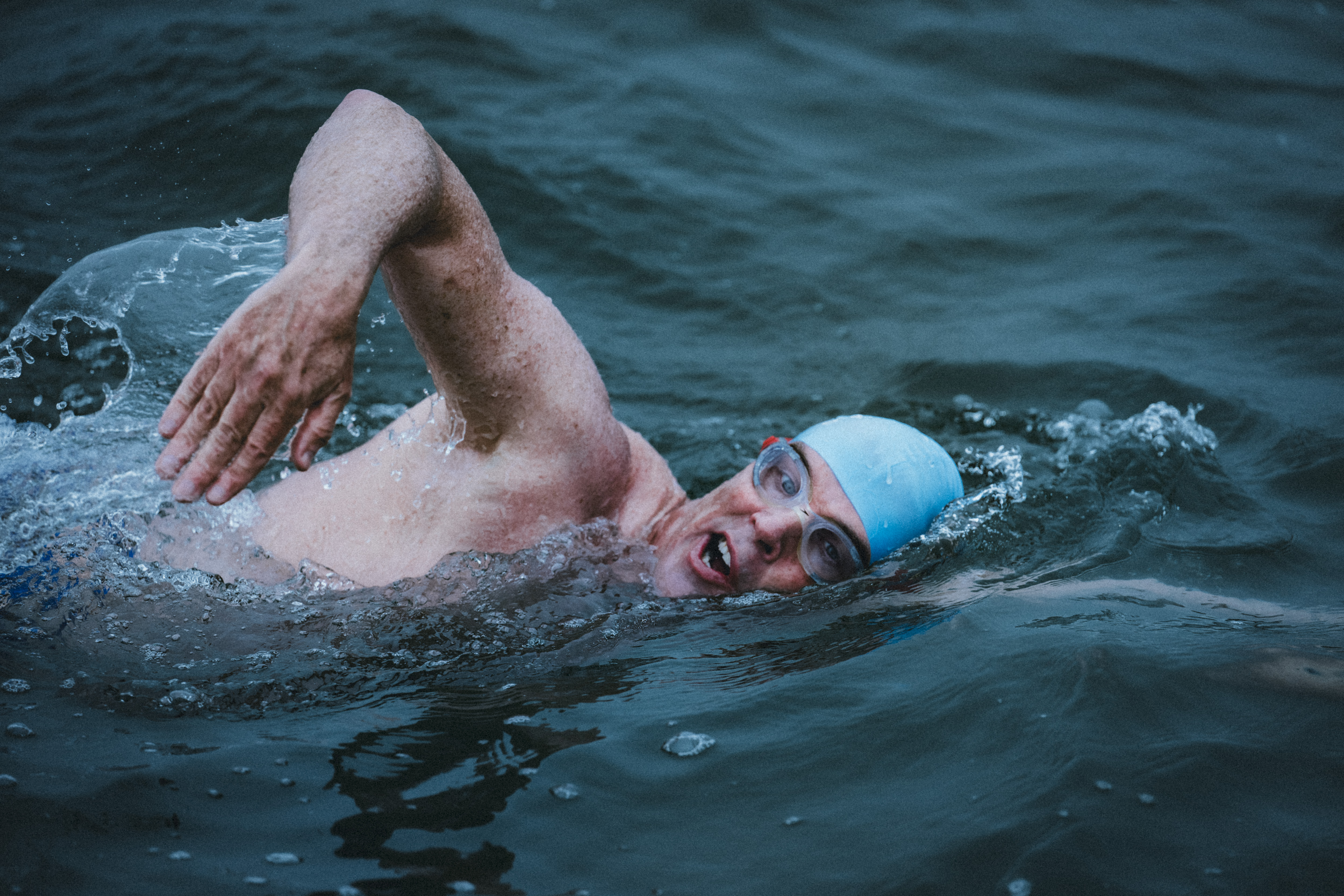
In an extraordinary feat that blends athletic endurance with environmental advocacy, renowned endurance swimmer and ocean advocate Lewis Pugh recently completed a nearly 100-kilometer swim around Martha’s Vineyard. The journey, taking place during the 50th anniversary of Jaws, wasn’t just a test of physical limits—it was a message to the world about the importance of ocean conservation, and specifically, the role sharks play in healthy marine ecosystems.
Pugh is no stranger to dramatic swims in high-risk waters. From crossing the North Pole to swimming the Red Sea and navigating the dangerous currents of Cape Horn, he has built a reputation as someone who uses his body and endurance as tools for ocean advocacy. But he admits that his Martha’s Vineyard swim was among the most difficult of his career.
“I thought it would be cold and long,” said Pugh. “What I didn’t anticipate was just how bad the weather would be.”
A Swim Born from a Cultural Moment
Why Martha’s Vineyard, and why now?
The 50th anniversary of Jaws, Steven Spielberg’s 1975 blockbuster that turned sharks into cinematic villains, presented what Pugh called a “once-in-a-generation opportunity” to reshape the narrative. And the film was created at Martha’s Vineyard.
“Jaws depicted sharks as man-eating monsters,” said Pugh. “But now it’s time for a new narrative—one that celebrates sharks as magnificent and essential creatures that are, tragically, seriously endangered.”
The symbolism wasn’t lost on Pugh. While Jaws stoked fear, his swim aimed to inspire respect—and a sense of urgency about the plight of marine predators. In the decades since the film’s release, public perception of sharks has shifted a lot and many have even found inspiration to conserve sharks through Jaws, but Pugh believes we’re still a long way from the full conservation mindset required to protect them effectively.

Twelve Days of Challenge
The swim around the island took 12 days—each one a battle against cold water, brutal storms, and fierce currents. Pugh swam wearing only a speedo, cap, and goggles, braving the elements without a wetsuit or thermal gear.
Storms plagued the route, particularly along the island’s south side.
“We had only two days of decent weather—one at the start and one at the end,” Pugh said..
“The rest was storm after storm. It made for one of the toughest swims of my life.”
Navigation was as much about reading the ocean as it was about physical stamina.
“There were places where I swam flat-out for an hour and only covered one mile,” he said.
“You can’t fight those currents—you have to work with them.”
Swimming in Shark Waters
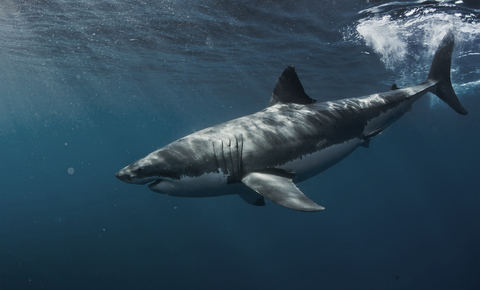
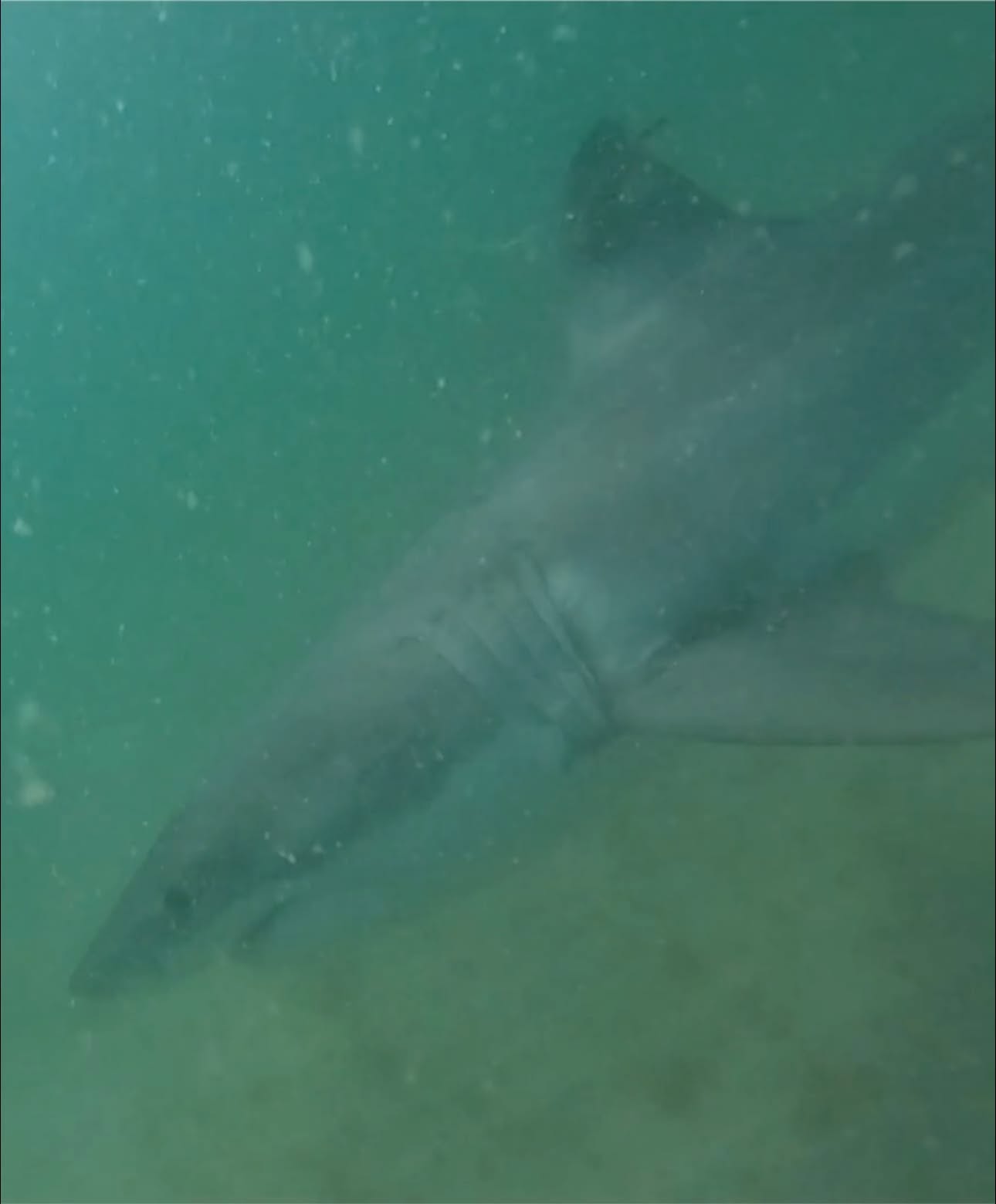
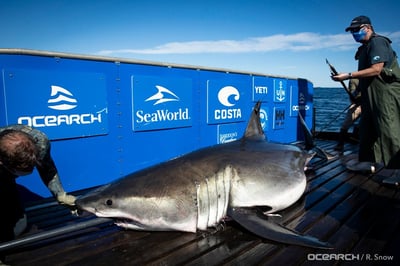
Adding to the psychological challenge was the knowledge that the waters off Cape Cod and Martha’s Vineyard are home to a thriving great white shark population. The region’s booming seal numbers—Pugh saw many during his swim—indicate that apex predators could be nearby.
After all, that is the number one target of white sharks in the region.
“We have a cardinal rule on our swims: never talk about sharks,” Pugh said.
“But this time, we had to break it. I was doing media interviews about sharks every day, and then getting into the water right after.”
He described how shifting sea grass and changes in water clarity could trick the mind into seeing shadows and shapes—real or imagined—beneath the waves.
“You have to stay calm. Trust your team and just keep swimming.”
Community and Global Reception
Despite being an outsider bringing a message to American shores, Pugh was met with overwhelming warmth.
“You have to deliver that kind of message with humility,” he emphasized.
“But the reception was incredible. Interview after interview, people wanted to hear about sharks and why they matter.”
The media buzz surrounding the event, fueled by its symbolic timing and Pugh’s reputation helped amplify his message far beyond New England. His swim became part of a larger global dialogue about marine conservation.
The Message: Sharks Matter
If there’s one takeaway Pugh hopes people remember, it’s this: sharks are not to be feared but to be protected.
“Predators like sharks are essential for healthy oceans. They maintain balance in marine ecosystems,” Pugh said.
“Without them, the whole structure begins to unravel.”
In his talks around the world, including at major UN conferences, Pugh simplifies his message into three powerful numbers:
- 50 – The anniversary of Jaws, the cultural moment that sparked public fear of sharks.
- 274,000 – The average number of sharks killed every single day.
- 100 million – The number of sharks killed annually.
“These numbers are staggering. This level of destruction is unsustainable,” Pugh said.
Looking Ahead
Pugh’s work is far from done. He’s set to deliver a keynote at the United Nations Ocean Conference in Nice, where he’ll urge global leaders to act boldly in defense of marine predators. While he hopes for large-scale policy changes, he also sees value in symbolic actions like his swim that capture the public imagination and build momentum for change.
When asked if there’s a sequel to this mission, Pugh smiled and said, “Well, Jaws had sequels, didn’t it?”
As the world continues to grapple with ocean health and biodiversity loss, it’s clear that voices like Pugh’s are more important than ever. His swim wasn’t just a test of will or a media stunt. It was a visceral reminder that every stroke forward in the water can be a step forward for the planet.
Chester Moore
Follow Chester Moore and Higher Calling Wildlife® on the following social media platforms
To support the efforts of Higher Calling Wildlife® click here.
Subscribe to the Dark Outdoors podcast on all major podcasting platforms.
Higher Calling Wildlife on Facebook
Email Chester at chester@chestermoore.com.



Leave a Reply