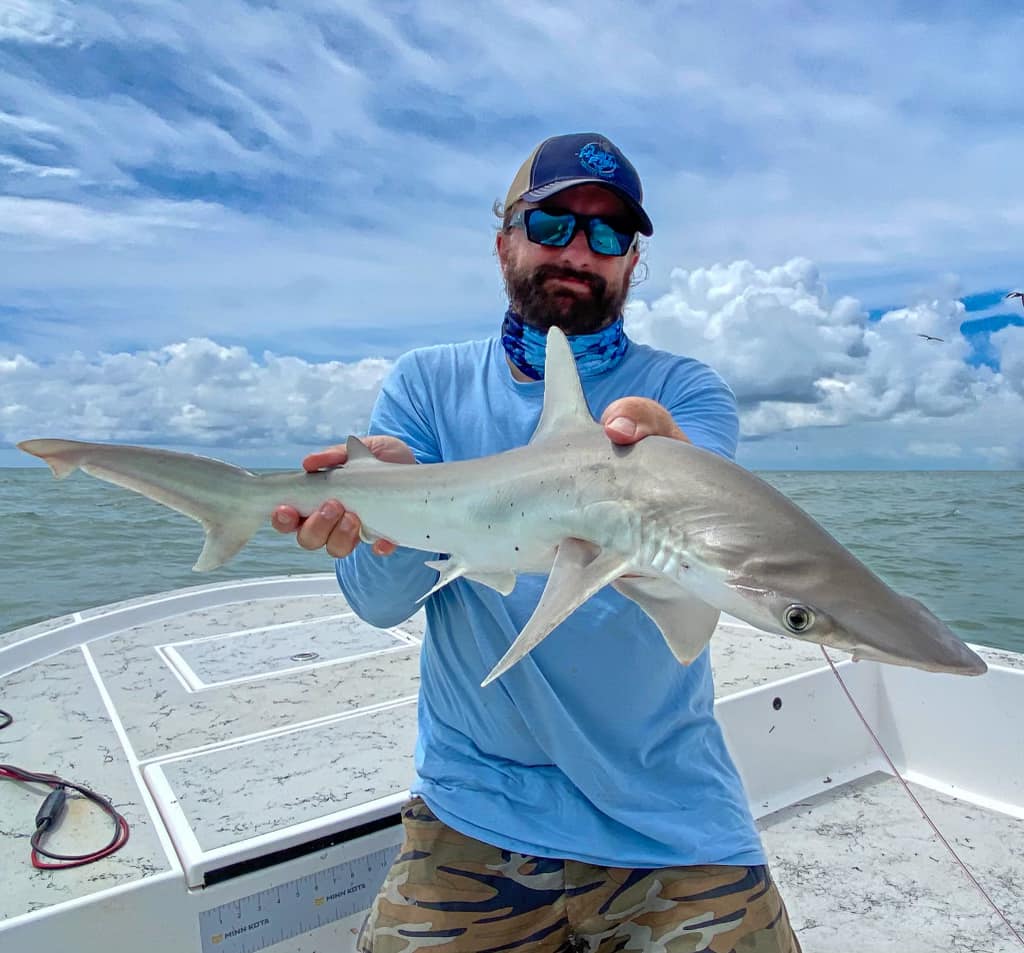
The bonnethead shark (Sphyrna tiburo), also known as the bonnet shark or shovelhead, is the smallest member of the hammerhead family (Sphyrnidae).
Characterized by its distinct, smooth, spade-shaped head, the bonnethead is commonly found in the warm, shallow coastal waters of the Gulf of Mexico. These sharks are abundant in nearshore Florida waters, often seen over shallow sand and mud flats, and move into deeper coastal waters during the colder months.
Typically, bonnethead sharks reach lengths of about 2.6 to 3.0 feet, with a maximum size of approximately 4.9 feet.

The heaviest recorded bonnethead shark weighed 24 pounds.
Due to their small size and distinctive head shape, bonnethead sharks are often mistaken for juvenile hammerhead sharks.
However, bonnetheads have a more rounded, shovel-like head compared to the broader, hammer-shaped heads of other hammerhead species. This unique morphology not only distinguishes them from their relatives but also aids in their feeding habits, as they use their head to dig in the sand for prey according to the Dutch Shark Society
Bonnethead sharks are generally harmless to humans but can bite if mishandled during catch and release. They are often displayed in aquaria due to their manageable size and unique appearance according to the Florida Wildlife officials.
Their diet primarily consists of crabs, shrimp, mollusks, and small fishes. Interestingly, they are the only known omnivorous shark species, as they also consume seagrass, making up a significant portion of their diet.
In summary, the bonnethead shark is a unique and abundant species in the Gulf of Mexico, easily distinguishable from other hammerheads by its smaller size and spade-shaped head.
While often mistaken for juvenile hammerheads, bonnetheads have distinct characteristics and behaviors that set them apart within the diverse shark populations of the Gulf.
I always thought bonnetheads were super cool and looked a little bit like the U.S.S. Enterprise from Stark Trek.
Although not a Trekkie (I’m a Star Wars guy), I can say I’m glad these sharks are doing well and doing their best to “live long and prosper”.
Follow Chester Moore and Higher Calling Wildlife® on the following social media platforms
@thechestermoore on Instagram
Higher Calling Wildlife on Facebook
Email Chester at chester@chestermoore.com.
Subscribe to the Dark Outdoors and Higher Calling Wildlife podcasts on all major podcasting platforms.


Leave a Reply