
A shark attack that involved multiple people July 4 at South Padre Island has been covered by dozens of media outlets with stories shared via thousands of social media accounts.
On Monday morning, as I got my day started, I searched for updates and came across one that had some “interesting” details.
The article said that, “South Padre Island and Cameron County Parks officials harnessed the shark in order to move it towards the sea, according to Captain Dowdy from Texas Parks and Wildlife.”

I have heard many things in relation to sharks and shark attacks over the years but never any agency able to capture, handle and “harness” a shark in open water to “move it toward the sea”.
I reached out to Texas Parks & Wildlife Department (TPWD) officials, sending them a link to the story and asked if they could confirm or deny any such actions.

“I’m not sure where this article got that information from as we neither “harnessed” the shark nor were we able to identify the type of shark it was. I really don’t know where the “harness” comment came from,” said Meggie Berger, Public Information Officer for TPWD’s law enforcement division.
Besides the “harnessing” story, various outlets have reported TPWD confirmed the attacking shark was a bull shark.
“My best guess on the identity of the shark is that one of our game wardens participated in a live interview on Friday alongside a shark expert. That shark expert, who is not affiliated with TPWD, identified the shark. We are unable to confirm if what he said is accurate or not.”
*Subscribe to this blog (bottom of page for mobile) right side for desktop/laptop for in-depth shark info.
With that said, bull shark makes sense.
They are a large, potentially aggressive shark that is common along the Texas Coast and when we spoke with well-known shark fishing guide and conservationist Capt. Eric Ozolins mentioned there have been 6-7 foot bulls in the surf. But there are a host of large sharks abundant in the region ranging from sandbars to tigers and blacktips.

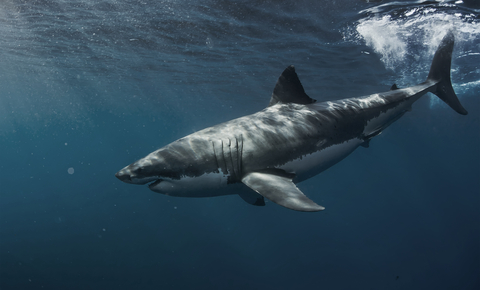
Some early comments on the attacks on social media had people throwing a great white shark as a possible candidate.
This was most likely tied to the fact a great white with a satellite tag was verified in the surf at South Padre Island Feb. 26.
This was not the work of a great white shark.
The shark that showed up at South Padre is in Nova Scotia now. She is 3,000 miles away. And for the most part great white using the Gulf are here for wintering and return to the Atlantic during summer and fall.

As I said in a previous post, let’s not put the blame for this shark attack on a great white. It just doesn’t make any sense whatsoever.
According to officials with South Padre Island, the actual attacking shark impacted four people.
“It is an unprecedented event that has never happened before,”stated Patrick McNulty, Mayor,
“Prayers to the individuals and their families.”
Here’s the breakdown on the victims.
A 35-year-old male from La Vernia, Texas:
- Required surgery
- In stable condition
A 49-year-old male from Celina, Texas:
- Treated and discharged
A 47-year-old female from Celina, Texas:
- Required surgery
- In stable condition
A fourth person:
- Received minor injuries
- Treated at the scene
The 47-year old female was Tabatha Sullivent who received a severe attack on her calf.
‘I turned around, and all I saw was something gray in the water. So, I just kicked at it, because I thought it was a huge fish, and it was coming at us. That’s when I think it grabbed my leg,’ Sullivent told CBS News Texas from her hospital bed.
In a story at The Daily Mail, Sullivent credits her husband (one of the attack victims-bitten when responding ) for saving her life.
‘If my husband didn’t jump into action and everyone else on the beach, if I didn’t have people pulling me out – not just to pull me out but jumping between the shark and me – I don’t think it would’ve stopped,’ she said.
Humans are not typically targets of sharks, but shark attacks do happen. They are unfortunate and in this case, the silver lining is that a man was able to sacrifice his own safety to save his wife from what could have been a worse situation.
Listen to my Dark Outdoors episode about rising shark numbers, shark attacks and shark safety on Apple Podcasts, IHeartradio and Spotify. Click here for Apple Podcasts or click the icon below to listen directly via Podbean.

Everyone who enters coastal waters should use this as a moment to pause and reflect on the presence of sharks and utilize the common sense approach to shark safety outlined by beach and wildlife officials.
*Don’t swim at night or at dawn or dusk.
*Don’t go in the water alone
*Leave the water when schools of baitfish turn up
*Avoid being in the water while bleeding
*If large sharks have been seen in the vicinity recently, stay on the shore.
*Avoid too much splashing.
*Pay attention to flags on the beach indicating shark presence.
*Don’t swim too far from shore.
*Avoid murky water
*If you’re wadefishing have a long stringer and basket and keep fish caught away from your body.
And remember, sharks are almost always within a short swim of the beach and while the chance of shark attack are slim that’s no consolation to those who had to endure watching a shark sink razor sharp teeth into their flesh.
Let’s respect the sharks and also those who have survived their rare but frightening attacks.
Chester Moore
Follow Chester Moore and Higher Calling Wildlife® on the following social media platforms
@thechestermoore on Instagram
Higher Calling Wildlife on Facebook
Email Chester at chester@chestermoore.com.
Subscribe to the Dark Outdoors and Higher Calling Wildlife podcasts on all major podcasting platforms.






Leave a Reply