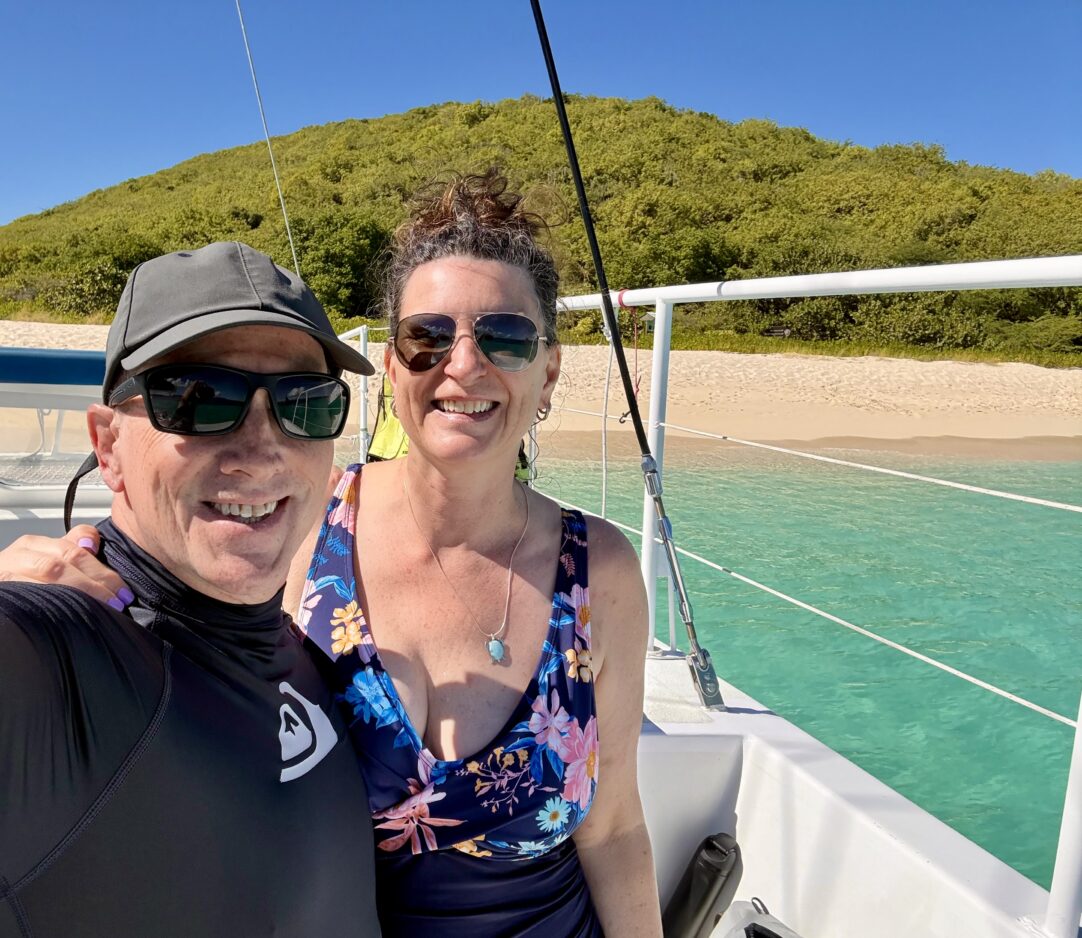
Chris Carroll wasn’t looking for danger.
He and his wife had traveled from their home in Utah to St. Croix to celebrate their wedding anniversary, continuing a tradition that allowed them to escape winter and unwind after the relentless pace of life in healthcare.
As an operating room registered nurse and director of surgical services, Carroll knew what long days, pressure and life-and-death decisions felt like, but vacations offered quiet and rest.
The couple had already enjoyed a day of scuba diving, exploring the remarkably clear Caribbean water before returning to their hotel to get ready for dinner. His wife stepped into the shower while Carroll walked out onto the balcony overlooking the beach. Still wearing the board shorts from the day’s dives, he settled into a chair to relax and began downloading video from the underwater adventure they had just shared.

Then the atmosphere changed.
At first it was only the volume of the voices. Carroll noticed people talking louder than before, enough to pull his attention away from the dive footage on his phone. Within seconds, those raised voices turned into shouting, and through the growing commotion he heard one sentence that immediately told him something was terribly wrong.
“Oh my God, where are the lifeguards?”
Carroll knocked on the bathroom door and told his wife he was heading down to the beach. She assumed he was simply going to see what all the commotion was about. Moments later he was running down the stairs toward the shoreline.
Halfway there, the shouting changed into something altogether different.
The voices became screams.
“I knew something was really wrong,” Carroll said.
When he reached the beach, dozens of people were standing at the water’s edge. Nobody seemed to know exactly what to do. They simply stared toward the sea, watching events unfold beyond the breakers. Carroll followed their gaze, scanning the water until he noticed a woman pointing toward someone struggling offshore.
What he saw looked painfully familiar.
One arm rose weakly above the surface before disappearing beneath the water. A moment later it appeared again, slapping ineffectively at the waves before sinking once more. Years earlier Carroll had worked as a Red Cross-trained lifeguard, and although decades had passed since he last performed a rescue, he immediately recognized the signs of someone who was no longer swimming effectively.
He tossed his shirt, flip-flops and glasses onto the sand and dove into the water.
The swimmer was a considerable distance offshore, too far to maintain a sprint with his head above the surface. Again, old lifeguard instincts resurfaced. He settled into the same rescue rhythm he had learned decades earlier: swim several powerful strokes, lift his head to locate the victim, adjust his course if necessary, then repeat the process until he arrived. It was efficient, methodical and, under the circumstances, remarkably calming.
Every stroke carried him farther away from the safety of the beach. Every stroke also carried him closer to something he never imagined he would encounter.
What Carroll didn’t know was that many of the people watching from shore already understood this wasn’t a drowning.
It was the aftermath of a shark attack.
Following lifeguard protocol, he stopped several feet away rather than rushing directly to the struggling swimmer. A panicked drowning victim can unintentionally pull a rescuer underwater, and decades-old training reminded him to assess the situation before making contact. He called out to the woman, asking if she was alright, and as he looked down into the remarkably clear water, the entire scene changed.
The sea around her had turned crimson.
At first Carroll hoped he was looking at the aftermath of a severe leg injury. Instead, looking through the remarkably clear Caribbean water, he realized the wounds were catastrophic.
This was a shark attack.
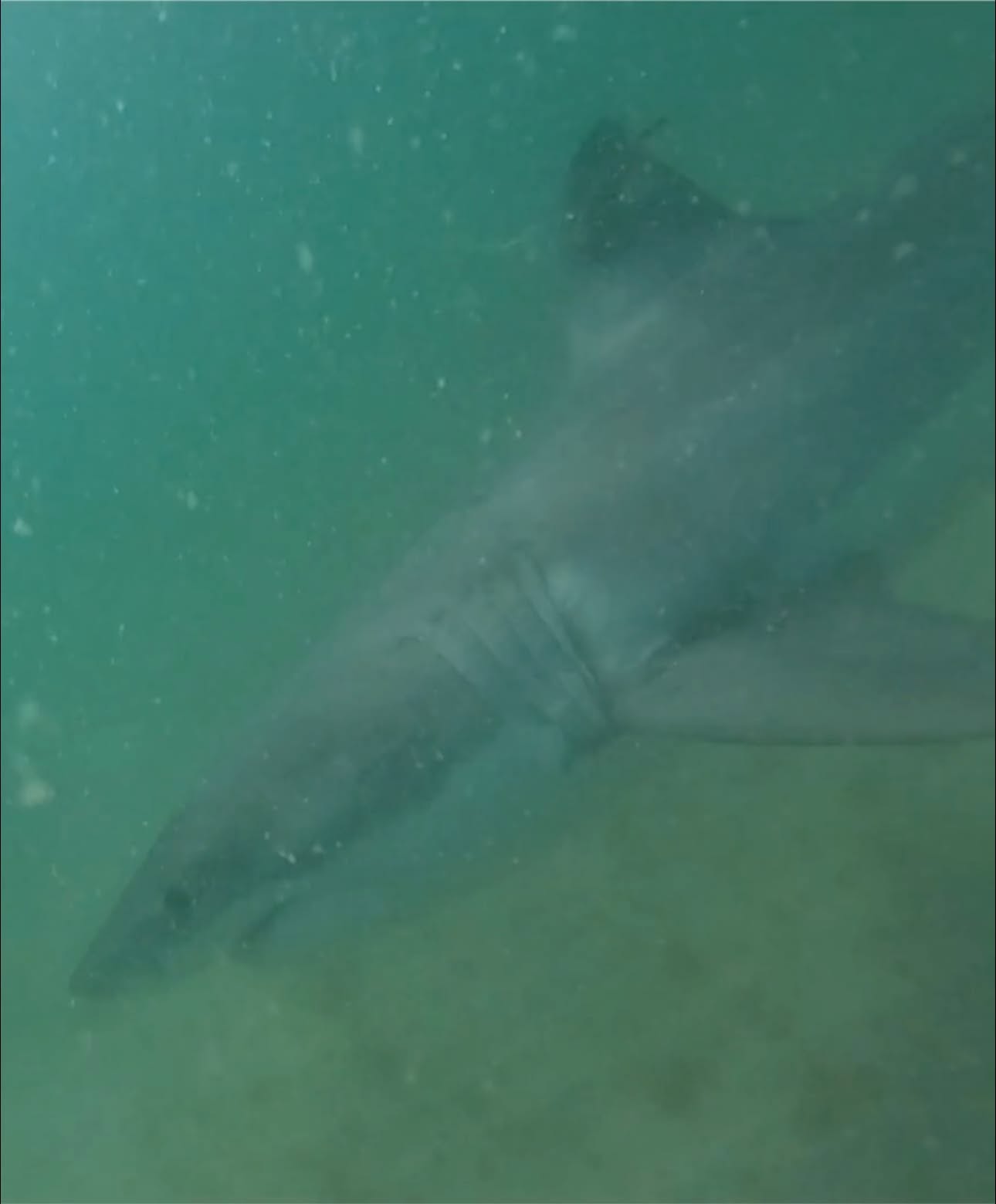
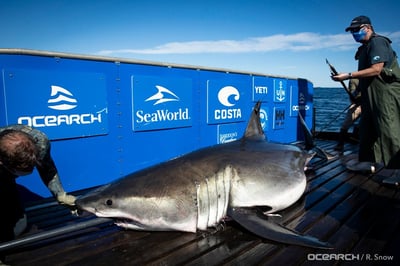
Looking through the clear water, he could see devastating injuries across her upper body. Carroll said experts told him afterward the attack was most likely carried out by a large tiger shark measuring between 12 and 14 feet long.
For Carroll, those details meant very little in that moment.
What mattered was the woman in front of him.
The Longest Swim
The realization that this was a shark attack didn’t erase Carroll’s fear. It simply forced him to decide what mattered most.
Later, he would admit there was a brief moment when everything stopped. Looking into the clear water, he understood the wounds he was seeing could only have been caused by a very large shark. Somewhere nearby, that animal might still be circling. He hadn’t prepared himself for this. He hadn’t raced into the ocean expecting to find a shark attack victim. He thought he was responding to a drowning, and in the span of only a few seconds the rescue had become something altogether different.
“I was shocked and I was scared,” Carroll recalled.
“But i knew if I didn’t get her back to shore and get her help she would certainly die.”
Carroll grabbed the woman by her uninjured arm, turned her into a rescue tow and began swimming toward shore. Years earlier he had learned the technique as a teenage lifeguard. His left arm crossed over the victim’s shoulder while his body supported her head above the surface. Each stroke required careful coordination to keep both of them moving while preventing her from slipping beneath the water. It was physically exhausting under normal circumstances. Doing it while wondering if a shark remained nearby elevated the effort to something almost unimaginable.
As he swam, another reality settled into his thoughts.
The shark could still be there.
He never saw it. There was no dramatic fin slicing through the surface and no sudden second attack. Yet the possibility never left his mind. Every stroke toward shore carried with it the knowledge that whatever had inflicted such devastating injuries might still be somewhere beneath him. The ocean, which only minutes earlier had been a place of recreation and beauty, had suddenly become a place of uncertainty.
Later, Carroll would say that thought never really went away.
“I just kept thinking the shark’s still here. The shark’s going to hit me. What am I going to do if it hits me?”
That statement captures something most of us can only imagine. Movies often portray acts of heroism as fearless charges into danger, but real courage usually includes an ongoing conversation inside the mind. Fear doesn’t disappear. It simply loses the argument.
As Carroll approached shallower water, people finally began rushing out from the beach to help. Until then he had carried the victim entirely on his own, concentrating on nothing more than reaching the shoreline. The adrenaline that had propelled him into the rescue was beginning to give way to fatigue, and his body was reaching its limits.
As bystanders grabbed the injured woman and began pulling her toward the beach, no one noticed Carroll beneath her. Focused entirely on the victim, they inadvertently forced him underwater. Already exhausted from the swim and gasping for air, he suddenly found himself trapped below the surface as people stepped over him while moving the woman toward shore.
For a few terrifying seconds, the rescuer nearly became another victim.
“I almost drowned in that last few feet,” Carroll said.
When he finally surfaced, there was no time to recover. The rescue had simply entered another phase.
The group maneuvered the woman around limestone formations near the shoreline, and Carroll’s years as a nurse immediately took over. The lifeguard had delivered her to the beach. Now the operating room nurse began assessing catastrophic trauma.
He quickly asked for something that could be used as a tourniquet. Someone handed him a nylon strap from a beach bag, but almost immediately he recognized it wouldn’t work. The wounds were too high on the shoulder. There was simply no place to effectively apply one. His attention shifted to direct pressure before another devastating realization confronted him.
There was almost no bleeding.
To someone unfamiliar with emergency medicine, that might seem encouraging. Carroll knew it wasn’t.
The victim had already lost an enormous amount of blood in the water. Her body had reached the point where there was little left to lose.
“The only thing that’s going to save her is immediate transport and a blood transfusion,” he realized.
That kind of assessment doesn’t come from instinct alone. It comes from years spent caring for critically injured patients, making rapid decisions under pressure and understanding how quickly the human body can reach a point of no return. Even amid the emotional chaos, Carroll’s years of nursing experience took over. He directed bystanders to elevate the victim’s legs, organized those assisting and briefed arriving paramedics about the severity of her injuries.
When paramedics reached the beach, Carroll immediately briefed them.
“This is a shark attack. There’s massive blood loss,” he said.
He urged them to begin large-bore intravenous lines immediately, administer every available fluid and alert the hospital that a massive transfusion would be needed.
Within moments the woman was secured to a backboard and loaded into the ambulance.
The ambulance doors closed, the sirens faded into the distance and, for the first time since hearing the cries from the beach, Carroll was left alone with everything that had just happened.
Only then did Carroll realize what his own body had been carrying.
The adrenaline that had fueled every decision suddenly disappeared, leaving him exhausted, shaken and struggling to process everything that had happened. He remembered trying to answer people who spoke to him but hearing almost nothing they said. Instead, he wandered into the shade near the beach, dropped to one knee and fought simply to control his breathing.
“I was shaking uncontrollably,” he recalled.
“I was gasping for air.”
As he slowly made his way back toward the hotel, someone handed him the glasses he had thrown onto the beach before diving into the ocean. Another person simply looked at him and said, “Great job.”
Carroll nodded quietly.
He still didn’t know whether the woman he had risked his life to save would survive.
Grace After the Storm
As the ambulance disappeared from sight, Chris Carroll finally had a chance to stop moving. The adrenaline that had carried him through the swim, the rescue and the desperate efforts on the beach began to fade, leaving him physically exhausted and emotionally drained. He remembered trying to answer people who spoke to him, but their words barely registered. His legs felt weak, his breathing remained labored and his entire body shook from the combination of exertion, adrenaline and shock. For the first time since hearing those cries from the beach, he had an opportunity to process what had just happened.
Eventually he made his way back toward the hotel. Along the path someone handed him the glasses he had tossed onto the beach before diving into the water. Another man simply looked at him and said, “Great job.” Carroll appreciated the gesture, but his mind was somewhere else. He had done everything his training had prepared him to do, yet he knew the injuries he had witnessed were unlike anything most people could survive. Hope remained, but it was tempered by the reality he had seen with his own eyes.

When he reached the hotel, his wife still didn’t know what had unfolded. She simply asked what all the commotion had been about. Carroll’s answer was as brief as it was surreal.
“I think I just said, ‘Shark attack,’” he recalled.
Not long afterward, hotel staff informed him that police wanted to speak with him. He returned to the beach and gave investigators a witness statement, walking them through everything he had seen from the moment he heard someone asking for lifeguards until emergency responders transported the victim from the beach. During that conversation came the news he had dreaded since reaching her in the water.
Arlene Lillis had died.
“I knew it was bad,” Carroll told me.
“But you always hope. You have to pray and hope they’re going to make it. To hear that she didn’t… it was devastating.”
In today’s world, traumatic events don’t remain private for very long. Before Carroll had even returned home, videos of the rescue and his statement to police were circulating across social media. His own children learned about what had happened through TikTok, and his son called almost immediately, frightened after recognizing his father in videos that were spreading around the world.
Carroll was still trying to make sense of the experience himself when it suddenly became an international news story.
What happened next, however, is what affected him most.
Arlene Lillis’s husband and daughter eventually contacted Carroll after obtaining his phone number through investigators. He expected difficult conversations centered on the rescue, the attack or Arlene’s final moments. Instead, the first question both of them asked was whether he was alright.
“They both said, ‘Are you okay? This must have been so hard for you,’” Carroll remembered.
“These are people who had just lost their wife… their mom… and that was the first thing they asked me.”
That kind of grace says something about the family Arlene Lillis left behind. Even in the middle of unimaginable grief, they found compassion for the man who had done everything within his power to save someone they loved. Their response wasn’t rooted in anger or blame. It was rooted in gratitude, and in genuine concern for another person who had experienced the same tragedy from a different perspective.
When asked Carroll what he hoped people would take away from everything that happened that day, his answer had very little to do with sharks. Instead, he spoke about people.
“The most important lesson for me is for people to care enough about one another to help each other,” he said.
“When Jesus said, ‘Love your neighbor as yourself,’ that wasn’t describing an admirable personality trait. That was a commandment.”
Too often these incidents become ammunition for one side of the shark issue or the other. Some people respond by calling for sharks to be killed indiscriminately, while others become so committed to defending sharks that they unintentionally minimize the very real suffering experienced by victims and their families.
Neither response serves anyone well.
Tiger sharks are among the ocean’s great apex predators. They are magnificent animals that play an essential role in healthy marine ecosystems, and they deserve our respect and conservation. At the same time, they are large, powerful predators capable of inflicting devastating injuries when rare encounters occur.
Acknowledging that reality isn’t anti-shark. It’s simply honest. We can appreciate these remarkable animals while also recognizing that entering their world carries risks, just as hiking in grizzly country or exploring backcountry inhabited by venomous snakes requires awareness and preparation.
This story isn’t ultimately about a tiger shark.
It’s about a man who heard cries for help and ran toward them.
Chris Carroll never intended to become part of an international news story. He wasn’t trying to be a hero, and he certainly wasn’t looking for danger. He believed someone was drowning, and his instincts as both a former lifeguard and an experienced nurse compelled him to act.
Only after reaching the victim did he realize he had entered the aftermath of one of the most traumatic events imaginable.
He couldn’t change what had already happened, and despite every effort by him and the emergency responders who followed, he couldn’t save Arlene Lillis’s life. What he did accomplish, however, should never be forgotten. He made certain she wasn’t alone. He gave her every chance anyone could have given. He demonstrated what compassion looks like when it costs something.
Most of us will never face the decision Chris Carroll faced that afternoon on a quiet Caribbean beach. But every one of us will eventually encounter moments when another human being needs help. Those moments may never involve a shark or make national headlines, but they will reveal something about our character just the same.
On that January afternoon in St. Croix, Chris Carroll did exactly that. While everyone else watched in horror, he swam toward the shark attack.
Listen to the Full Interview
Chris Carroll shared much more than could fit into this feature. To hear our complete conversation—including additional details about the rescue, his medical response, his faith, and the lessons he hopes others will take from this tragedy—listen to the full interview on Dark Outdoors.
Apple Podcasts: Dark Outdoors on Apple Podcasts
Spotify: Dark Outdoors on Spotify
All podcast platforms: Dark Outdoors Linktree
Chester Moore
Follow Chester Moore and Higher Calling Wildlife® on the following social media platforms
@gulfgreatwhitesharksociety on Instagram
@thechestermoore on Instagram
Higher Calling Wildlife on Facebook
Email Chester at chester@chestermoore.com.
Subscribe to the Dark Outdoors podcast on all major podcasting platforms.


Leave a Reply