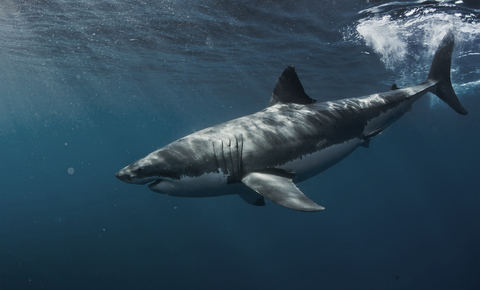

Every year, Shark Week captures the imagination of millions of viewers with breathtaking footage, fascinating science, and unforgettable stories about one of the ocean’s most iconic predators.
Viewers will see great white sharks breaching off South Africa, hunting seals off Cape Cod, and researchers working to unlock the mysteries of these incredible animals. But there is one story that rarely receives the attention it deserves—the growing body of evidence showing that great white sharks are an important and natural part of the Gulf of Mexico.

For more than two decades, I have investigated great white shark encounters in Gulf waters, interviewed scientists studying these remarkable predators, documented historical records, and followed the latest satellite-tagging and acoustic research. That work eventually led to the creation of Gulf Great White Sharks: Return of an Icon, a documentary exploring one of the least understood chapters in great white shark history.
As the always awesome Shark Week approaches, here are five things everyone should know about great white sharks in the Gulf.
1. Great White Sharks Have Always Been Part of the Gulf
One of the biggest misconceptions is that great white sharks are total newcomers to the Gulf of Mexico.
In reality, historical records dating back more than a century, combined with eyewitness accounts from commercial fishermen, offshore workers, anglers, and marine biologists, paint a very different picture. While they have never been as abundant as species such as bull sharks or blacktips, great whites have long been visitors to Gulf waters.

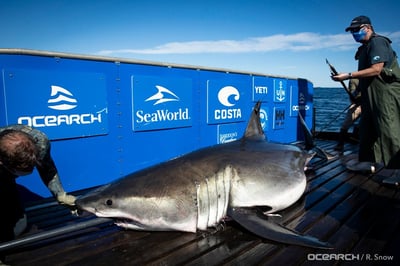
Modern science is confirming what many experienced watermen have observed for generations. Satellite-tagged sharks tracked by organizations such as OCEARCH and acoustic detections from the Atlantic White Shark Conservancy continue to demonstrate that great whites regularly enter Gulf waters.
2. Most People Will Never Encounter One
Despite their reputation, great white sharks are not cruising just beyond the breakers waiting for swimmers.
Most documented Gulf encounters occur offshore, particularly during the cooler months when larger sharks move through deeper water. The vast majority of sharks encountered by beachgoers and anglers are species such as bull sharks, spinner sharks, blacktip sharks, or Atlantic sharpnose sharks.
Understanding which sharks actually live along our coast helps replace fear with facts. And some of the Shark Week programming does a good job of awareness versus fear.
3. Every Confirmed Sighting Helps Science
Each verified observation helps scientists better understand where great white sharks travel, when they enter the Gulf, and how they use this enormous ecosystem.
Satellite tracking, acoustic monitoring, historical documentation, and credible eyewitness reports all contribute valuable pieces to the puzzle.
The more we learn, the clearer it becomes that the Gulf should be recognized as an important part of the life history of the western North Atlantic great white shark population.
4. Conservation Begins With Understanding
As apex predators, great white sharks play an important ecological role in maintaining healthy marine ecosystems. Like many shark species, they also face challenges ranging from bycatch to changing ocean conditions.
Helping people understand these remarkable animals has been one of the driving forces behind the Gulf Great White Shark Society. Through journalism, documentaries, educational programs, and public presentations, our mission has always been to replace myths with science and inspire appreciation for the undisputed star of Shark Week.
5. The Story Is Reaching a Wider Audience
One of the most encouraging developments in recent years has been seeing growing interest in the story of great white sharks in the Gulf of Mexico.
Gulf Great White Sharks: Return of an Icon recently earned top honors from both the Texas Outdoor Writers Association and the Press Club of Southeast Texas. While those awards are deeply appreciated, what matters most is that they recognize the importance of accurate conservation storytelling and help introduce more people to the science behind these remarkable animals.
That momentum continued when the Guy Harvey Foundation shared our work on great white sharks in the Gulf with its audience, helping introduce anglers, divers, conservationists, and ocean enthusiasts to the growing body of evidence showing that these apex predators are a natural part of Gulf waters.
The documentary includes an interview I conducted with Dr. Guy Harvey, whose work as a marine artist, scientist, conservationist, and educator has inspired generations of people to better understand and protect our oceans. Having the opportunity to speak with him for the film was a true honor, and it was especially meaningful to see the Guy Harvey Foundation recognize the project.
Every time a scientist, conservation organization, educator, or media outlet shares accurate information about great white sharks in the Gulf, it helps replace myths with facts. That kind of awareness is one of the most important tools we have for conserving these incredible animals.
A Story Still Being Written
Shark Week has inspired generations of people to appreciate sharks and the oceans they inhabit. Hopefully, this year’s programming will encourage viewers not only to marvel at great whites around the world, but also to learn more about one of the most overlooked marine wildlife stories in North America.
The Gulf of Mexico is home to an extraordinary diversity of sharks, and among them is one of the ocean’s greatest mysteries—the great white shark.
Its story is still being written.
If you’d like to explore that story in greater depth, I invite you to watch Gulf Great White Sharks: Return of an Icon, a documentary that brings together historical records, eyewitness accounts, interviews with leading shark researchers, and the latest scientific discoveries to reveal why the Gulf deserves a place in the global conversation about great white sharks.
As Shark Week reminds us of the wonder of these apex predators, let’s also remember that some of the most fascinating shark stories aren’t happening only off South Africa or Cape Cod but they’re unfolding right here in the Gulf of Mexico.
Chester Moore
Follow Chester Moore and Higher Calling Wildlife® on the following social media platforms
@gulfgreatwhitesharksociety on Instagram
@thechestermoore on Instagram
Higher Calling Wildlife on Facebook
Email Chester at chester@chestermoore.com.
Subscribe to the Dark Outdoors podcast on all major podcasting platforms.



Leave a Reply