
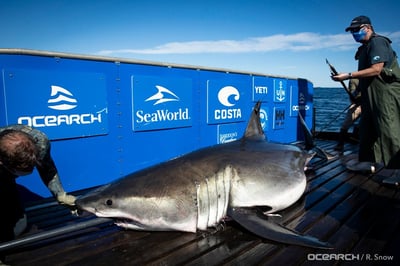
A four-foot blacktip shark hangs alongside a Texas Parks and Wildlife Department longline boat, but something is missing.
A large chunk of its body has been bitten away by an even larger shark.
The dramatic image recently drew attention during the Great White Sharks in the Gulf event at the Museum of the Gulf Coast, where Texas Parks and Wildlife Department used the photo as part of its educational outreach efforts. The image helped illustrate an often-overlooked reality of life in Gulf waters: sharks are not only predators. They are also prey.

The photograph was taken during one of the agency’s routine surveys conducted along the upper Texas coast. Led by veteran fisheries biologist Derek York and his team, the surveys use longlines equipped with circle hooks that are typically set for about an hour before being retrieved. The research provides valuable information about shark abundance, movement patterns, species diversity, and overall population health in Texas waters.
Over the years, Texas Parks and Wildlife’s shark monitoring efforts have produced a wealth of information. Researchers have tagged large numbers of sharks, helping scientists better understand where these animals travel and how they use Gulf habitats. One notable bull shark tagged during the program traveled a considerable distance up the Mississippi River within just a few weeks, demonstrating the remarkable adaptability of a species capable of thriving in both saltwater and freshwater environments.
The surveys have also provided a firsthand look at one of nature’s more brutal realities.
Sometimes sharks eat other sharks.
The damaged blacktip in the photograph is far from an isolated case. According to fisheries staff, larger sharks have frequently attacked smaller sharks hooked during survey operations. Atlantic sharpnose sharks, bonnetheads, blacktips, and other species occasionally become targets for larger predators attracted to an easy meal.
Scientists refer to this type of behavior as intraguild predation, but most people would simply call it shark-on-shark predation.
Among the Gulf’s most significant shark predators is the bull shark. Famous for its adaptability and powerful build, the bull shark is an opportunistic feeder that consumes a wide variety of prey. Studies have documented smaller sharks and rays as regular components of the species’ diet. Bull sharks are known to prey on blacktips, Atlantic sharpnose sharks, bonnetheads, and other species when the opportunity presents itself.
Tiger sharks are perhaps even more famous for eating fellow sharks. With one of the broadest diets in the animal kingdom, tiger sharks consume sea turtles, fish, birds, marine mammals, and numerous shark species. Researchers have documented tiger sharks feeding on blacktips, bonnetheads, smoothhound sharks, and even other tiger sharks.
Great hammerheads also rank among the ocean’s most effective shark hunters. While they are well known for feeding on stingrays, large hammerheads regularly prey on smaller sharks. Their unique head structure allows them to detect prey hidden beneath the sand, while their powerful jaws make them formidable predators of both rays and sharks.
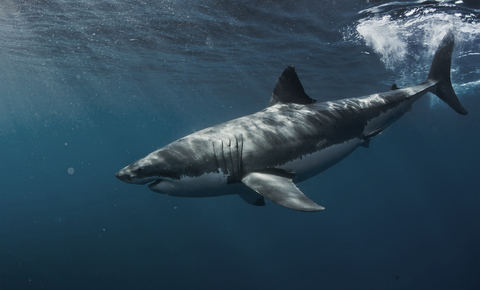
Even great white sharks sometimes feed on other sharks. Around the world, researchers have documented white sharks preying on smaller shark species as part of their role as apex predators. While marine mammals often receive attention as white shark prey, other sharks can also become targets.
The reality of shark-on-shark predation highlights an important truth about the natural world. While humans have become one of the greatest threats facing sharks through overfishing, habitat degradation, and illegal harvest, sharks have always faced dangers from natural predators as well.
Life in the ocean is competitive.
For young sharks especially, survival can be difficult. A juvenile blacktip that spends its days hunting schools of baitfish may eventually encounter a tiger shark, bull shark, or great hammerhead many times its size. In those encounters, the predator-prey relationship can change quickly.
That is one reason images like the one displayed by Texas Parks and Wildlife at the Museum of the Gulf Coast are so powerful. They help people understand that sharks are not simply fearsome predators sitting at the top of the food chain. They are participants in a complex ecosystem where survival often depends on avoiding becoming someone else’s meal.
The work conducted by Derek York and the Texas Parks and Wildlife shark survey team continues to reveal important insights into that ecosystem. Through tagging, monitoring, and public education, they are helping Texans gain a better understanding of the sharks that inhabit Gulf waters and the important role they play in maintaining healthy marine environments.
Sometimes, that story includes a surprising lesson:
Even sharks have to watch out for sharks.
SEE US AT SHARK CELEBRATION
The Gulf Great White Shark Society will be participating in Shark Celebration at Sea Center Texas in Lake Jackson on Saturday, July 18, from 11 a.m. to 3 p.m.
We’ll have an educational booth featuring information on shark research, conservation, and the growing body of knowledge surrounding great white sharks in the Gulf. Chester Moore will also present a special program on great white sharks in Gulf waters, covering recent discoveries, historical records, and ongoing research efforts.
Hosted by Sea Center Texas, Shark Celebration features shark-themed activities, educational exhibits, shark experts, crafts, shark tooth identification, and hands-on opportunities for visitors of all ages to learn about these remarkable predators.
Sea Center Texas is located at 302 Medical Drive in Lake Jackson. Admission is free.
Stop by and visit with us—we’d love to talk sharks.
Chester Moore
Follow Chester Moore and Higher Calling Wildlife® on the following social media platforms
@gulfgreatwhitesharksociety on Instagram
@thechestermoore on Instagram
Higher Calling Wildlife on Facebook
Email Chester at chester@chestermoore.com.
Subscribe to the Dark Outdoors podcast on all major podcasting platforms.


Leave a Reply