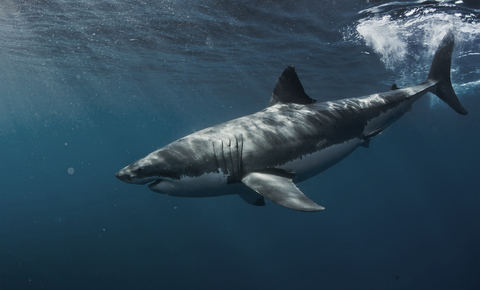

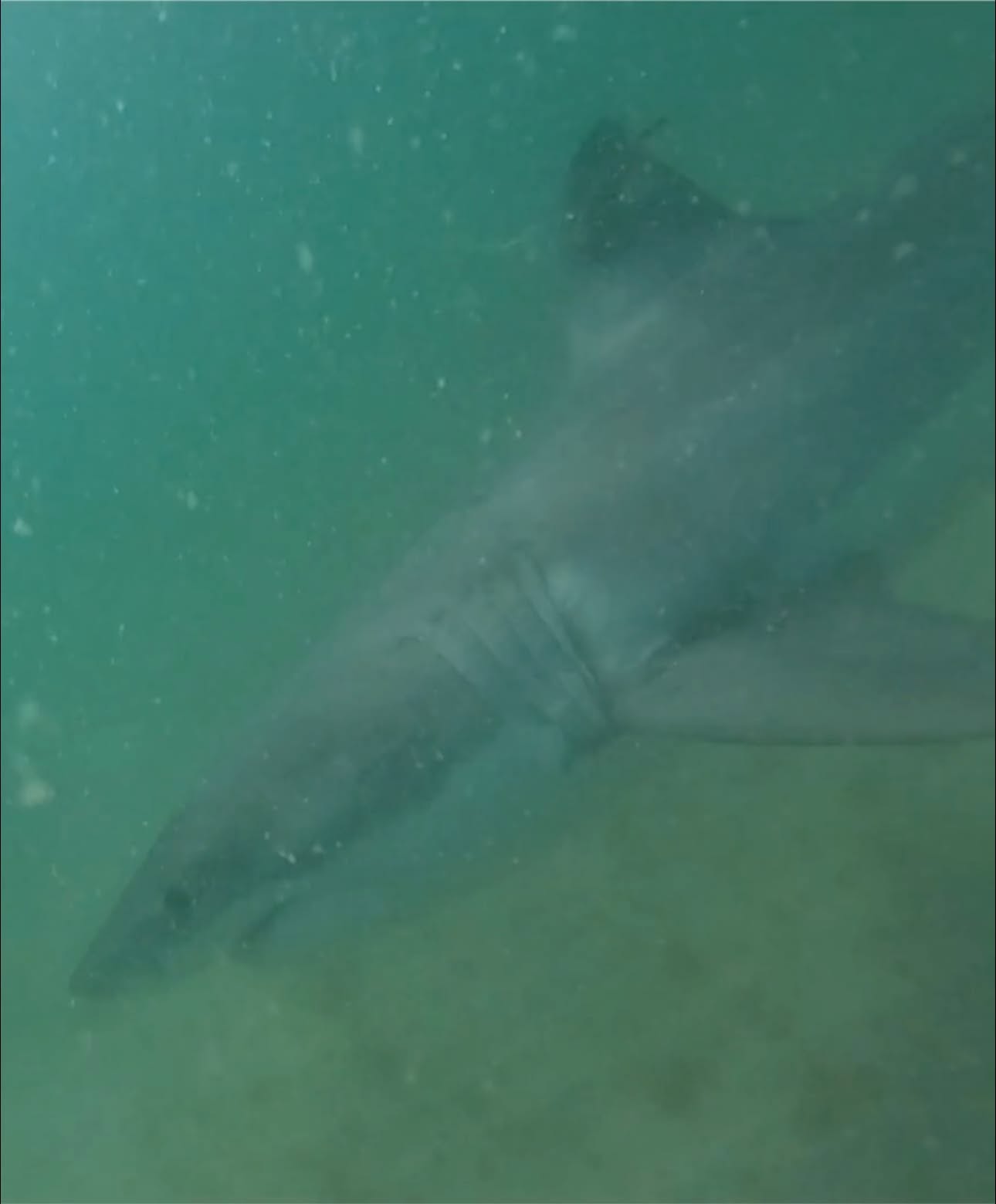
Mako sharks -close relatives of the great white-are among the most fascinating and misunderstood predators in our oceans. Fast, powerful, and elegant, they’re famous for their aerial acrobatics and incredible speed—but in the Gulf of Mexico, they’ve long remained a mystery.
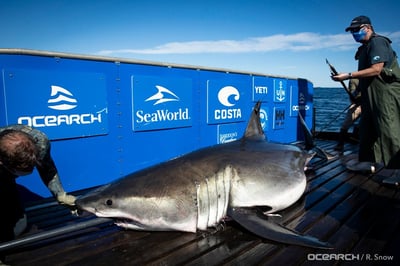
That’s beginning to change thanks to the work of Dr. Kesley Banks of the Center for Sportfish Science and Conservation at the Harte Research Institute in Corpus Christi, Texas. Her research is revealing how makos live, travel, and survive in Gulf waters—and what we need to do to protect them.
Discoveries in the Deep
When Dr. Banks began tagging mako sharks in 2017, her team quickly realized that these sharks weren’t following the same patterns as those in the Atlantic or Pacific. In fact, they found a surprising variety in behavior.
Two adult male makos, nicknamed Harvey and Pico, were each around seven feet long. Harvey made annual trips to the Caribbean. Pico, on the other hand, headed to New England. Both sharks left the Gulf on the same day every year, swam straight to their destinations, and returned to the same oil platform each time—evidence of strong navigation instincts and possibly long-term habitat associations.
Meanwhile, the females and smaller males stayed in the Gulf year-round. These findings hint at the existence of subpopulations—distinct groups that behave differently depending on age or sex. It’s the kind of data that could eventually lead to more precise and effective conservation strategies.
Conservation on the Clock
The timing of this research couldn’t be more critical. Mako populations in the Atlantic have declined significantly, mostly due to bycatch in commercial longline fishing. Though the species was once prized as a sportfish, it is now protected internationally.
Through the International Commission for the Conservation of Atlantic Tunas (ICCAT), a total ban on mako shark retention is in place for member countries, including the United States. Still, projections show the population might not fully recover until 2070—even if no additional sharks are killed.
That’s because makos mature slowly and reproduce infrequently. Males mature around age seven, while females don’t reach sexual maturity until about 18 years old. Litters are small, and the pups are born live after developing internally. These biological constraints make recovery a long, slow process.

Unexpected Encounters
While makos are known for roaming the open ocean, they’re not always as far offshore as people assume. Dr. Banks and her team have tracked large makos along the Texas coast, including in the surf zone of Padre Island.
One ten-foot female was caught, tagged, released—and then recaptured by accident just three hours later, in the same location. That kind of behavior reinforces how resilient these animals can be when handled properly, and it challenges assumptions about where large sharks spend their time.
Makos are opportunistic predators, feeding on fast-swimming fish like tuna, wahoo, and jacks. Their sharp, protruding teeth and streamlined bodies are designed for high-speed hunting, often involving tactics like slicing off a prey’s tail to immobilize it before circling back to feed.
Looking Ahead
Dr. Banks’ journey to shark research wasn’t straightforward. She began her scientific career studying freshwater snails, mussels, and even millipedes in landlocked Tennessee. But her passion for sharks never faded, and over time, she found her way to the Gulf and into a role where she now leads one of the region’s most important highly migratory species programs.
Her advice to young scientists is simple: take every opportunity, even if it doesn’t look like your dream job right away. The experience matters, and you never know where it will lead.
As the research continues, the hope is not just to learn more about makos, but to influence smarter management across marine ecosystems. Understanding how these sharks move, breed, and survive will help protect not only them, but the oceans they help keep in balance.
To learn more about the research or get involved, visit the Harte Research Institute at hartresearchinstitute.org.
Chester Moore
Follow Chester Moore and Higher Calling Wildlife® on the following social media platforms
To support the efforts of Higher Calling Wildlife® click here.
Subscribe to the Dark Outdoors podcast on all major podcasting platforms.
Higher Calling Wildlife on Facebook
Email Chester at chester@chestermoore.com.



Leave a Reply