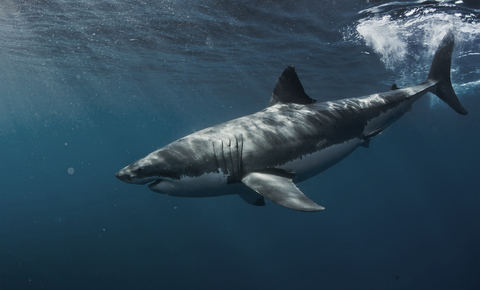
When Steven Spielberg set out to make Jaws (1975), one of the most iconic films of all time, he faced a terrifying problem: his mechanical shark, nicknamed “Bruce,” was constantly malfunctioning. For a film built around the terror of a great white shark, the lack of convincing footage was threatening to sink the project entirely.
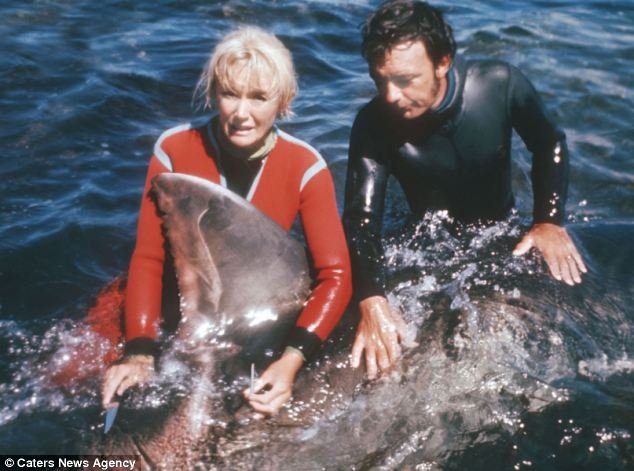
The solution would come from 9,000 miles away, in Australia, where Ron and Valerie Taylor—pioneering underwater filmmakers and shark experts—were leading the world in capturing real great whites on film. Their work not only rescued Spielberg’s production but helped create some of the most memorable and realistic shark sequences in movie history.

The Taylors are personal heroes of mine for their pioneering work so I thought with the “Jaws” anniversary upon us, it was time to give the Taylors a tribute.
From Spearfishing to “Jaws”-Sized Global Fame
According to Vanity Fair, Ron and Valerie Taylor’s rise to prominence began in the 1960s with their work on documentaries like Shark Hunters (1962) and Blue Water, White Death (1969), the latter filmed with cameraman Peter Gimbel. Their footage of shark encounters immediately captivated audiences and earned them international acclaim for their courage and expertise in photographing sharks up close.
By the early 1970s, the Taylors had established themselves as world-class underwater cinematographers. “We were known for getting close to sharks when others wouldn’t,” Ron recalled years later, according to lafcpug.org.
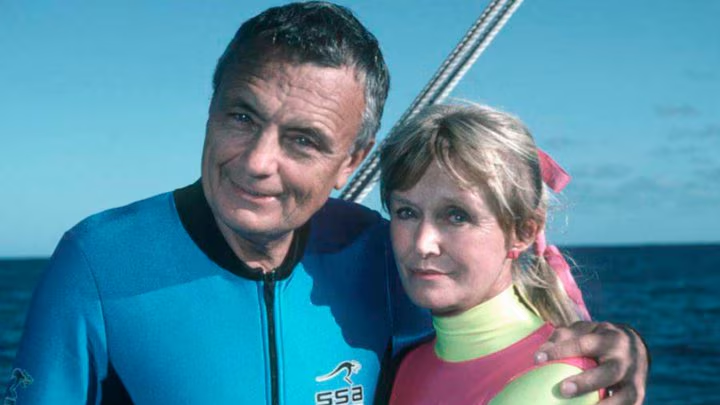
Valerie was particularly fearless. “I’ve been bitten four times, only once badly. And always, I stayed still and waited for the shark to let go,” she told The Guardian in a 2016 interview.
Spielberg’s Desperation
Steven Spielberg initially planned to use only mechanical sharks for Jaws, but as filming progressed, the limitations of the technology became painfully clear. The salt water wreaked havoc on the hydraulics; the shark often failed to work at all.
As Spielberg told Vanity Fair, “I had this idea that maybe we could shoot real shark footage. I was always afraid that the mechanical shark wouldn’t look like a real one. I wanted to mix the live footage with the special effects to create a more terrifying reality.”

That’s when producer Richard Zanuck suggested hiring Ron and Valerie Taylor, whose shark work he’d seen in Blue Water, White Death.
According to The Guardian, Spielberg was immediately impressed by their reputation: “Ron and Valerie Taylor were well-known for having escaped the jaws of death and danger to make these outstanding documentaries on great white sharks.”
Filming the Real Beast
The Taylors set out to capture the live shark footage off Dangerous Reef in South Australia, one of the few places in the world where great whites reliably congregated. But how could they film a 25-foot shark when great whites rarely grow that large?
According to lafcpug.org, Spielberg’s production team devised a clever illusion: they built a miniature shark cage and placed a stuntman of smaller stature (or in some cases a dummy) inside, making the real sharks appear enormous by comparison.
What they captured was both breathtaking and terrifying.
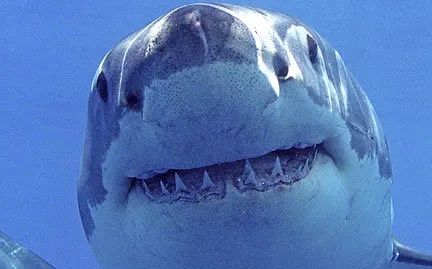
In one now-famous sequence, a real great white became entangled in the cables of the empty miniature cage and thrashed violently. As Ron Taylor recounted to Wikipedia, “This shark got caught up in the ropes of the cage and just tore it apart while the camera was rolling.”
When Spielberg saw the footage, he was thrilled. According to Business Insider, “The footage was so stunning that Spielberg rewrote the script, having Hooper (Richard Dreyfuss) survive the shark attack after hiding on the ocean floor.”
Without anyone in the cage at the time of the shark’s attack, the footage was both visually spectacular and, luckily, safe for the crew. It ended up becoming one of the most intense and memorable scenes in Jaws.
A Calculated Risk
Working with live sharks came with constant risk, but the Taylors approached the work with calm professionalism. In a light-hearted interview years later, Ron joked to lafcpug.org: “Feeding your wife to sharks? Well, Valerie’s had a few little nips and I’ve had a nip also. But it’s always been our fault.”
Valerie, who developed an almost intuitive understanding of shark behavior, explained to The Guardian: “When a shark is trapped, it goes crazy. But if you stay calm and understand them, they generally won’t attack.”
Their composure allowed them to capture intimate, natural footage that few others could approach.
A Complicated Legacy
Though Jaws was a critical and commercial triumph, it left behind unintended consequences for shark populations worldwide. Peter Benchley, the author of the novel Jaws was based on, later expressed deep regret for demonizing sharks, as did Spielberg himself.
In a 2022 interview with Entertainment Weekly, Spielberg said, “I truly and to this day regret the decimation of the shark population because of the book and the film. I really, truly regret that.”

The Taylors also became passionate advocates for shark conservation. As Valerie stated to The Guardian, “Sharks are like dogs: if you offer them a treat, eventually they’ll become your companion. They’re not mindless killers.”
The couple spent decades working to undo the harm caused by Jaws, producing educational documentaries and speaking out against the slaughter of sharks driven by public fear.
Without the Taylors, No Jaws
Had Ron and Valerie Taylor not contributed their extraordinary footage, Jaws might have become just another troubled 1970s production bogged down by technical failure. Instead, their real shark sequences brought a visceral realism that mechanical effects alone couldn’t match.
As Spielberg later admitted to Vanity Fair, “Without their footage, I don’t know how we would have sold the illusion.”Now, 50 years after its release, Jaws continues to captivate audiences, in part because it remains grounded in reality—a reality that Ron and Valerie Taylor risked their lives to capture.
Chester Moore
Follow Chester Moore and Higher Calling Wildlife® on the following social media platforms
To support the efforts of Higher Calling Wildlife® click here.
Subscribe to the Dark Outdoors podcast on all major podcasting platforms.
Higher Calling Wildlife on Facebook
Email Chester at chester@chestermoore.com.


Leave a Reply